After dark & night sky things to do in Dallas
After-dark and night-sky things to do in Dallas: 9 of them, from Rafes Urban Astronomy Center (UNT), Frisco StarFest and Full Moon Paddle on the Trinity River (TC Paddlesports). Late-opening oddities, dark-sky spots and places that only make sense once the sun is down. They spread across Ponder / Denton, Frisco, Fort Worth, Glen Rose and 4 more areas, so two or three can make a whole afternoon. Every entry is hand-vetted against real sources — not scraped off a top-ten list or averaged out of crowd ratings.
-
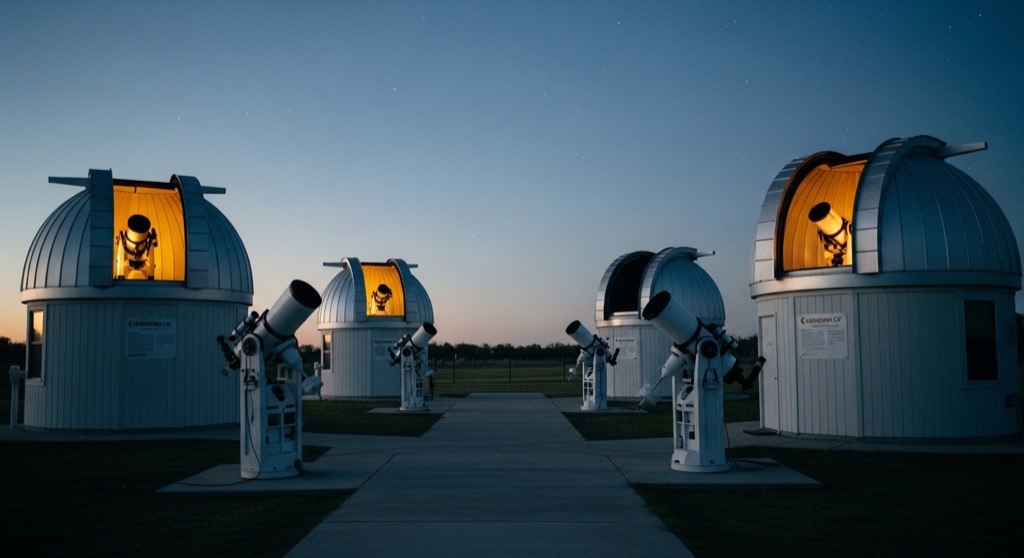 Rafes Urban Astronomy Center (UNT)
The University of North Texas runs this working teaching observatory out past the edge of Denton, and on the first and third Saturday of each month it opens to the public for star parties. Four telescope huts each hold four Celestron C8s, and two domes house an 8-inch refractor plus a vintage 6-inch Unitron refractor that students and staff aim at whatever is up that night. Admission is about $6 a person, start time slides with sunset, and they post a go/no-go weather call at 2pm the day of.
Rafes Urban Astronomy Center (UNT)
The University of North Texas runs this working teaching observatory out past the edge of Denton, and on the first and third Saturday of each month it opens to the public for star parties. Four telescope huts each hold four Celestron C8s, and two domes house an 8-inch refractor plus a vintage 6-inch Unitron refractor that students and staff aim at whatever is up that night. Admission is about $6 a person, start time slides with sunset, and they post a go/no-go weather call at 2pm the day of.
-
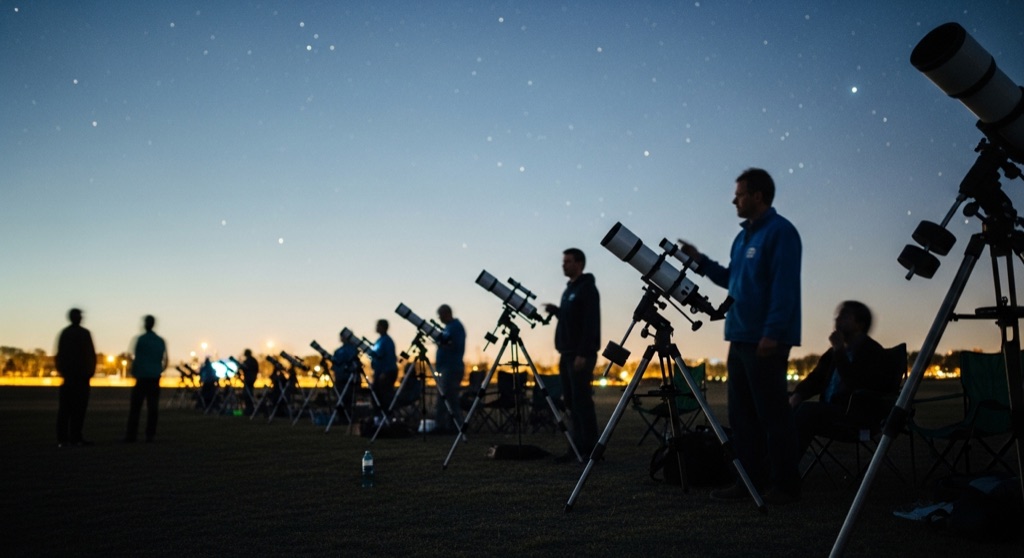 Frisco StarFest
On the second Saturday of most months, members of the Texas Astronomical Society of Dallas haul their personal telescopes out to a field at Frisco Commons Park and let strangers look through them, free of charge. It runs roughly 6pm to 10:30pm depending on the season (it starts about 30 minutes after sunset), and the lineup of scopes means you might catch Saturn's rings in one and a faint galaxy in the next. It is weather-dependent, so check the club's calendar at texasastro.org before driving out — cancellations are posted by 6pm. The club skips December for the holidays and resumes in January.
Frisco StarFest
On the second Saturday of most months, members of the Texas Astronomical Society of Dallas haul their personal telescopes out to a field at Frisco Commons Park and let strangers look through them, free of charge. It runs roughly 6pm to 10:30pm depending on the season (it starts about 30 minutes after sunset), and the lineup of scopes means you might catch Saturn's rings in one and a faint galaxy in the next. It is weather-dependent, so check the club's calendar at texasastro.org before driving out — cancellations are posted by 6pm. The club skips December for the holidays and resumes in January.
-
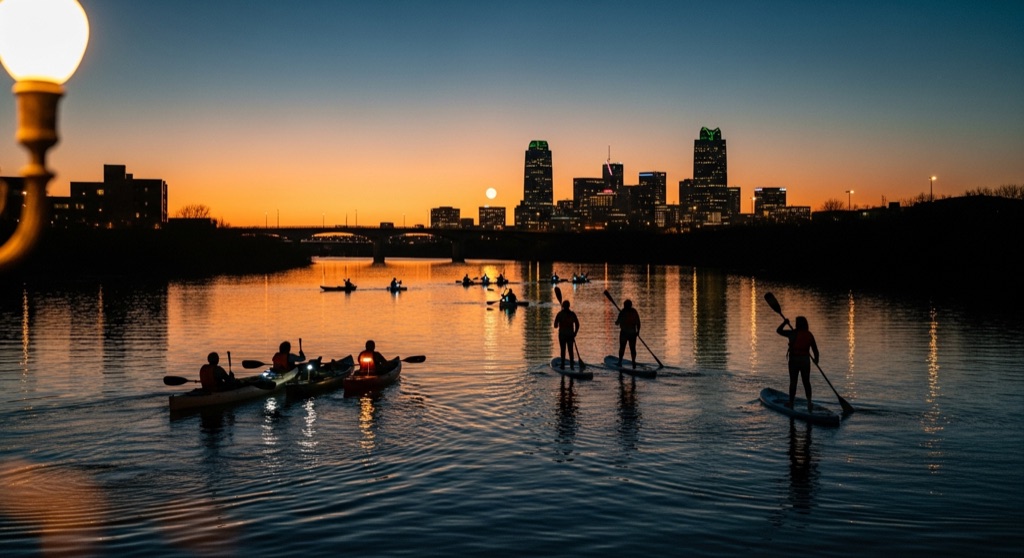 Full Moon Paddle on the Trinity River (TC Paddlesports)
This guided urban night paddle launches near downtown Fort Worth and heads out so you can stop and watch the sunset from the water, then clip on lights and paddle back toward the city as the full moon climbs over the skyline. You can take a kayak, canoe, or paddleboard, and the price covers the boat, paddle, vest, lights, and a guide. It is run as a beginner-friendly trip timed to the full moon, so dates shift each month.
Full Moon Paddle on the Trinity River (TC Paddlesports)
This guided urban night paddle launches near downtown Fort Worth and heads out so you can stop and watch the sunset from the water, then clip on lights and paddle back toward the city as the full moon climbs over the skyline. You can take a kayak, canoe, or paddleboard, and the price covers the boat, paddle, vest, lights, and a guide. It is run as a beginner-friendly trip timed to the full moon, so dates shift each month.
-
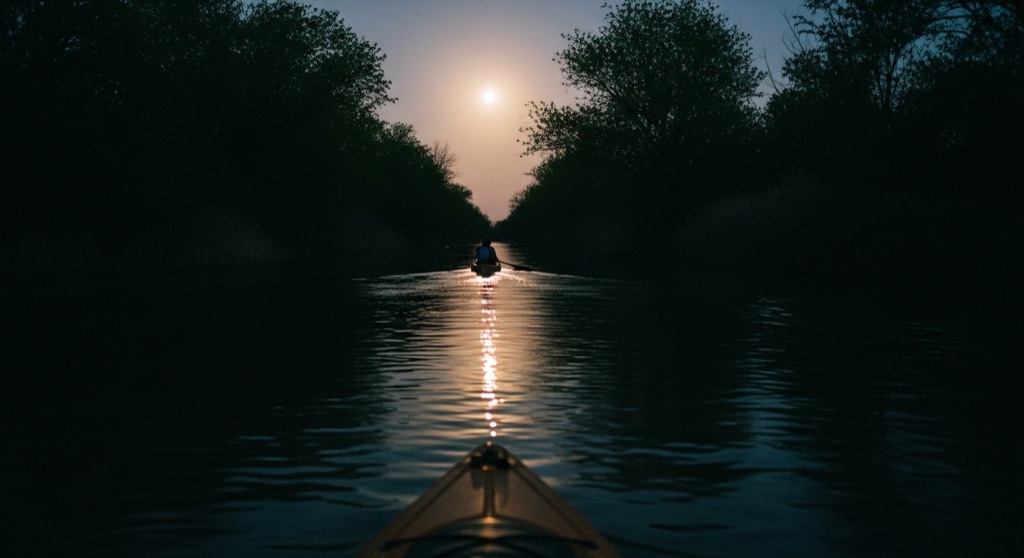 Fort Worth Nature Center & Refuge Moonlight Paddle
Inside this 3,600-acre refuge on the northwest edge of Fort Worth, the staff run guided moonlight paddles a few times a year, each named for that month's full moon (the Beaver Moon, the Blue Moon, and so on). Gliding across the water after dark gets you close to nocturnal wildlife you'd never see by day, including the resident beavers. Equipment is provided, pre-registration is required, and they ask paddlers to arrive about 15 minutes early at the Back Gate launch.
Fort Worth Nature Center & Refuge Moonlight Paddle
Inside this 3,600-acre refuge on the northwest edge of Fort Worth, the staff run guided moonlight paddles a few times a year, each named for that month's full moon (the Beaver Moon, the Blue Moon, and so on). Gliding across the water after dark gets you close to nocturnal wildlife you'd never see by day, including the resident beavers. Equipment is provided, pre-registration is required, and they ask paddlers to arrive about 15 minutes early at the Back Gate launch.
-
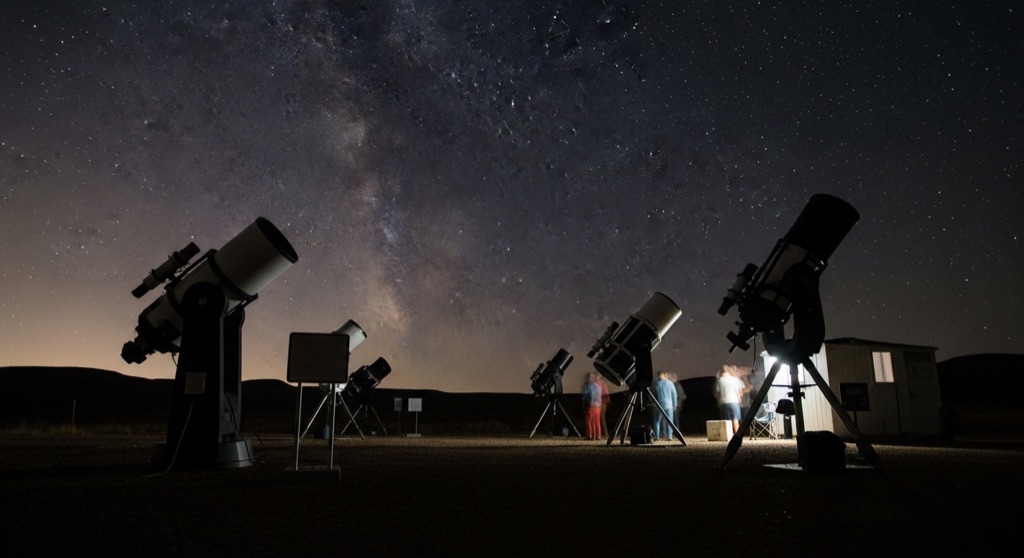 Dinosaur Valley State Park Star Party
Best known for dinosaur tracks in the riverbed, this park southwest of Fort Worth also hosts evening star parties run in partnership with the Fort Worth Astronomical Society. Volunteers set up telescopes in a dark field and walk visitors through planets, stars, and galaxies for a couple of hours after sundown. It is free with park admission (and free with a Texas State Parks Pass), and like all such events it is at the mercy of cloud cover.
Dinosaur Valley State Park Star Party
Best known for dinosaur tracks in the riverbed, this park southwest of Fort Worth also hosts evening star parties run in partnership with the Fort Worth Astronomical Society. Volunteers set up telescopes in a dark field and walk visitors through planets, stars, and galaxies for a couple of hours after sundown. It is free with park admission (and free with a Texas State Parks Pass), and like all such events it is at the mercy of cloud cover.
-
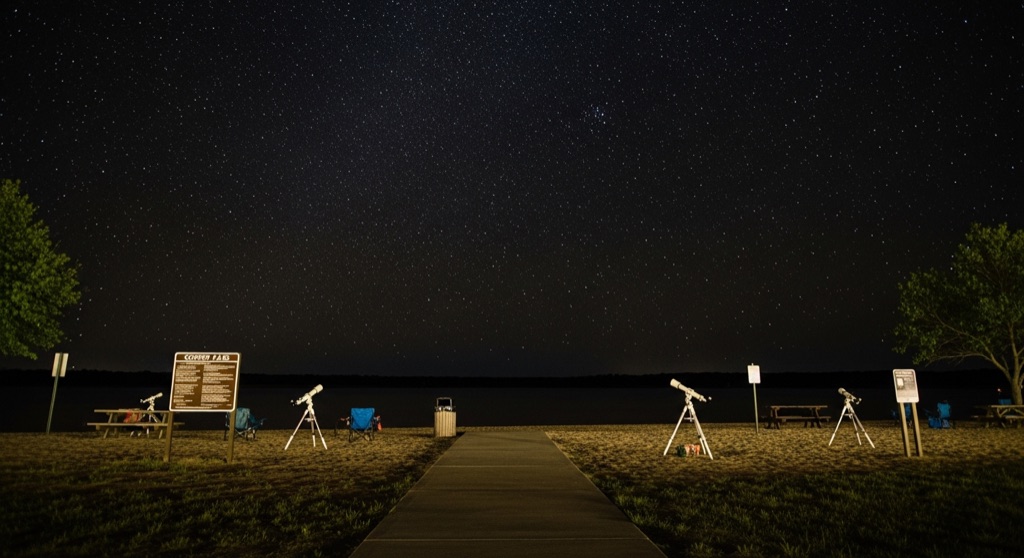 Cooper Lake State Park Stargazing
About 90 minutes northeast of Dallas, Cooper Lake is one of the darkest skies you can reach on a weeknight, and it's a favorite stargazing escape for North Texans looking to dodge city glare. The park runs free stargazing programs that meet at the far east end of the Swimming Beach at 6pm, with parking at the Heron Harbor day-use area and park telescopes on hand. Entry is $5 a person for ages 13 and up, free for kids and Texas State Parks Pass holders.
Cooper Lake State Park Stargazing
About 90 minutes northeast of Dallas, Cooper Lake is one of the darkest skies you can reach on a weeknight, and it's a favorite stargazing escape for North Texans looking to dodge city glare. The park runs free stargazing programs that meet at the far east end of the Swimming Beach at 6pm, with parking at the Heron Harbor day-use area and park telescopes on hand. Entry is $5 a person for ages 13 and up, free for kids and Texas State Parks Pass holders.
-
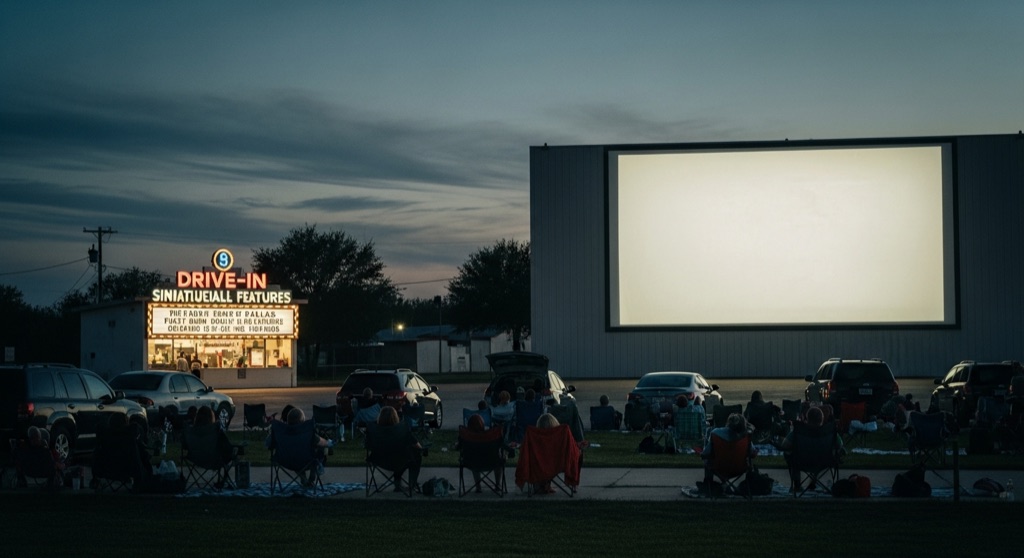 Galaxy Drive-In Theatre
A nine-screen drive-in south of Dallas on I-45 that runs 365 nights a year, showing first-run double features for $8 a head (kids $4). Parking is first-come, first-served, so regulars stake out a spot at dusk with lawn chairs and blankets. With nine simultaneous screens, it's one of the largest drive-ins in the country. Outside food and drink aren't allowed, so plan to hit the concession stand.
Galaxy Drive-In Theatre
A nine-screen drive-in south of Dallas on I-45 that runs 365 nights a year, showing first-run double features for $8 a head (kids $4). Parking is first-come, first-served, so regulars stake out a spot at dusk with lawn chairs and blankets. With nine simultaneous screens, it's one of the largest drive-ins in the country. Outside food and drink aren't allowed, so plan to hit the concession stand.
-
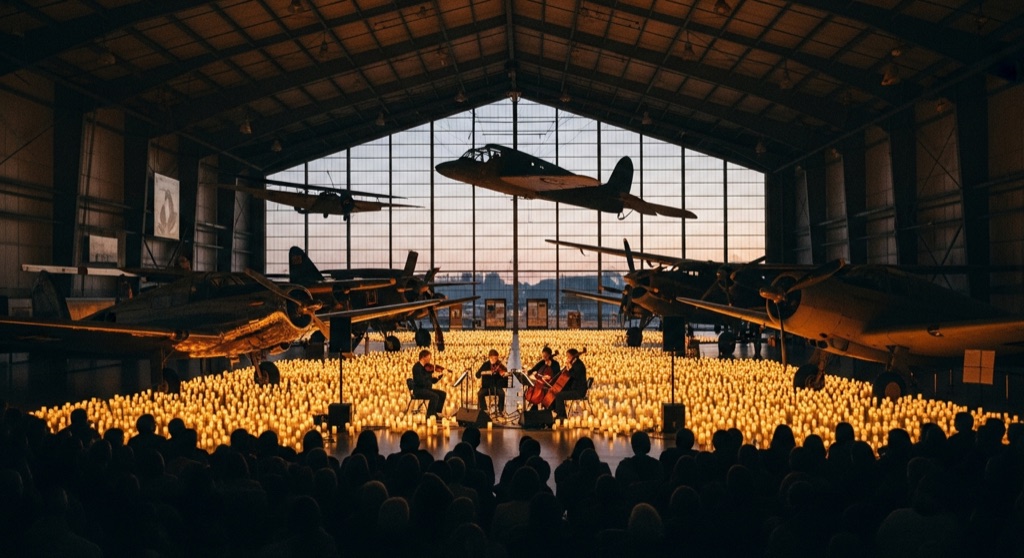 Candlelight Concerts at Frontiers of Flight Museum
Fever's Candlelight concert series stages live string-quartet performances inside the Frontiers of Flight Museum, surrounded by vintage aircraft and a 100,000-square-foot hangar of aviation history lit only by flickering (LED) candles. Programs rotate through tributes like Hans Zimmer, Taylor Swift and Halloween classics, each running about 60 minutes. Hearing strings echo beneath suspended planes is a genuinely odd, atmospheric pairing.
Candlelight Concerts at Frontiers of Flight Museum
Fever's Candlelight concert series stages live string-quartet performances inside the Frontiers of Flight Museum, surrounded by vintage aircraft and a 100,000-square-foot hangar of aviation history lit only by flickering (LED) candles. Programs rotate through tributes like Hans Zimmer, Taylor Swift and Halloween classics, each running about 60 minutes. Hearing strings echo beneath suspended planes is a genuinely odd, atmospheric pairing.
-
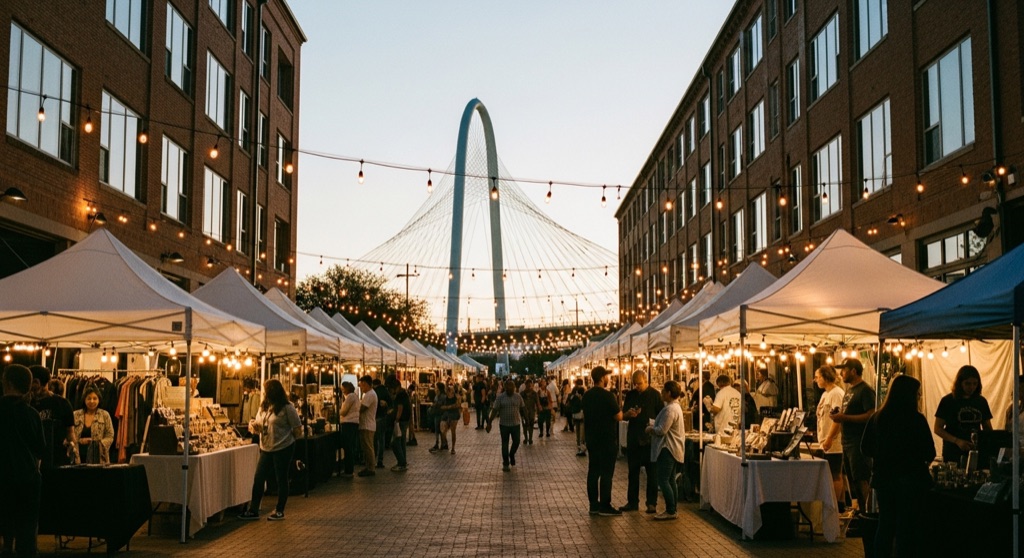 The Night Market at Trinity Groves
After sunset, the Trinity Groves district lights up with an outdoor night market of local makers, handcrafted goods, vintage and street food, set against the lit Margaret Hunt Hill Bridge. It runs as an evening event rather than a daytime farmers market, so the vibe is strings of lights, music and browsing in the dark. Surrounding restaurants and the bridge view make it a full night out.
The Night Market at Trinity Groves
After sunset, the Trinity Groves district lights up with an outdoor night market of local makers, handcrafted goods, vintage and street food, set against the lit Margaret Hunt Hill Bridge. It runs as an evening event rather than a daytime farmers market, so the vibe is strings of lights, music and browsing in the dark. Surrounding restaurants and the bridge view make it a full night out.
After dark & night sky things to do in Dallas — FAQ
What is there to do late at night in Dallas besides bars?
Rafes Urban Astronomy Center (UNT), Frisco StarFest and Full Moon Paddle on the Trinity River (TC Paddlesports) — 9 spots that only make sense after dark, 9 of them outdoors under the actual night sky. None of them are just a bar with the lights down.
Which after-dark & night-sky spots in Dallas are the strangest?
Ranked by how strange they actually are: Rafes Urban Astronomy Center (UNT), Dinosaur Valley State Park Star Party and Candlelight Concerts at Frontiers of Flight Museum. Rafes Urban Astronomy Center (UNT) — The University of North Texas runs this working teaching observatory out past the edge of Denton, and on the first and third Saturday of each month it opens to the public for star parties.
Where in Dallas are they?
Across Ponder / Denton, Frisco, Fort Worth, Glen Rose and Sulphur Springs / Cooper and 3 more. Each listing gives the neighborhood and address so you can cluster a couple into one outing.
Is this a good weird date in Dallas?
That's what the list is built for. Every entry has a specific move rather than a vague recommendation — at Rafes Urban Astronomy Center (UNT), for instance: Drive out past Denton on a clear Saturday, pay the few-dollar admission, and take turns at the telescope huts while a grad student talks you through the planets and deep-sky objects overhead.
How were these after-dark & night-sky spots chosen?
An agentic research system digs for the genuinely obscure — the spots even locals miss — and every one is verified against real sources before it makes the list. We deliberately skip the landmarks already on every Dallas guide.