Entry No. 21 — the Great Lakes & North Shore file — filed under: miscellanea
Elgin Public Museum
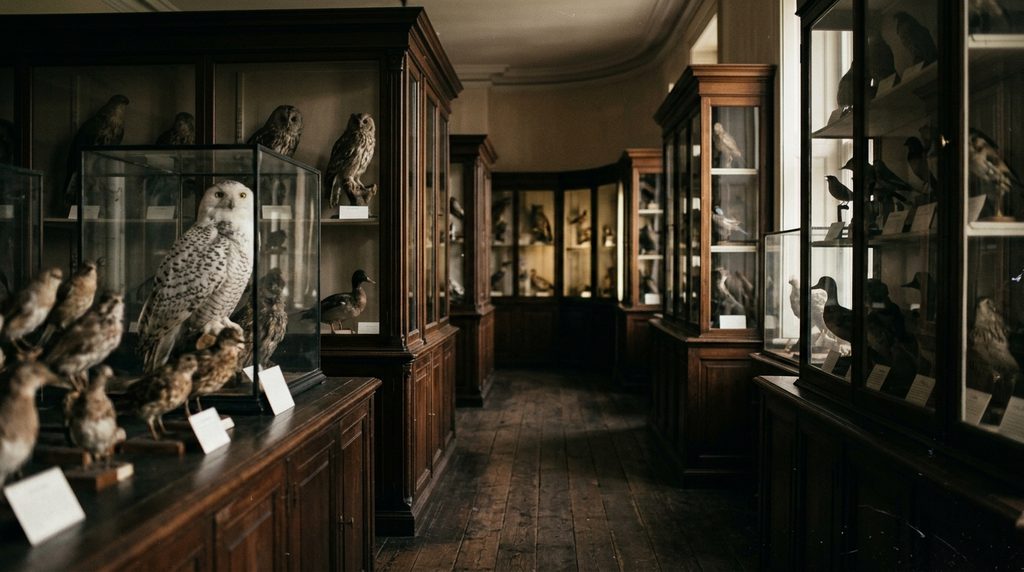
As the oldest purpose-built museum in Illinois, it houses an authentic collection of original Victorian taxidermy alongside natural history exhibits.
→ Three at a time, never the same twice — explore weird Great Lakes & North Shore
The story
In 1904, Elgin philanthropists George and Mary Lord commissioned architect David E. Postle to design a classical temple inside Lords Park to showcase their personal collection of zoological mounts and regional artifacts. Construction started in 1907, but both Lords died before it was completed, stalling the build after only the central hall and west wing were raised. In the messy interim, the unfinished structure was drafted into municipal service: it spent winters housing overflow animals from the park's menagerie and briefly functioned as the city dog pound. When the Elgin Audubon Society finally rescued the space and opened the doors on November 13, 1920, it established the site as the oldest purpose-built museum structure in Illinois still operating as one.
For decades, the institution embraced the uninhibited spirit of a Victorian cabinet of curiosities. Lifelong locals still reminisce about the two-headed calf and three-eyed cat that once headlined the displays. Although an institutional pivot in the early 1980s cleaned up the sideshow gaffs in favor of straighter natural history, the lingering eccentricity is undeniable. Glass vitrines hold Petey the American Bison and Tillie the Bear—former residents of the nearby Lords Park Zoo who were taxidermied and rolled into the museum upon dying. They share floor space with an ancient Irish elk mount, preserved passenger pigeons, and an avian collection donated by Nathan Leopold—half of the infamous Chicago thrill-killing duo Leopold and Loeb, who pursued amateur ornithology before committing the 1924 'crime of the century'.
What it's like
Sitting among the mature oaks of 108-acre Lords Park, this compact neoclassical outpost operates entirely free of interactive screens, touchpads, or corporate gloss. You pay nominal admission at the entrance and step into quiet, high-ceilinged galleries where creaking hardwood floors lead you past dark wood cabinets of Mazon Creek fossils, mounted raptors, and yellowed specimen cards. Operating hours are limited—generally afternoons from noon to 4 p.m., restricted to weekends outside of the summer season. You're unlikely to face a crowd, making it easy to examine the Victorian taxidermy without someone breathing down your neck.
The move: Step across creaking hardwood floors inside this neoclassical temple to inspect dark wood cabinets filled with Mazon Creek fossils, yellowed specimen cards, and authentic Victorian taxidermy mounts.
- 📍 Elgin, IL
- 💸 $$
- ⚡ Up for anything
- 🌗 Indoors
Where: 225 Grand Blvd, Elgin, IL 60120
Hours: Added 2026-11-18 — confirm current hours before you go.
Pair it with
- Cuba Road — Trade century-old vitrines of Victorian taxidermy for ten miles of desolate Lake County asphalt steeped in phantom hitchhikers and local ghost lore.
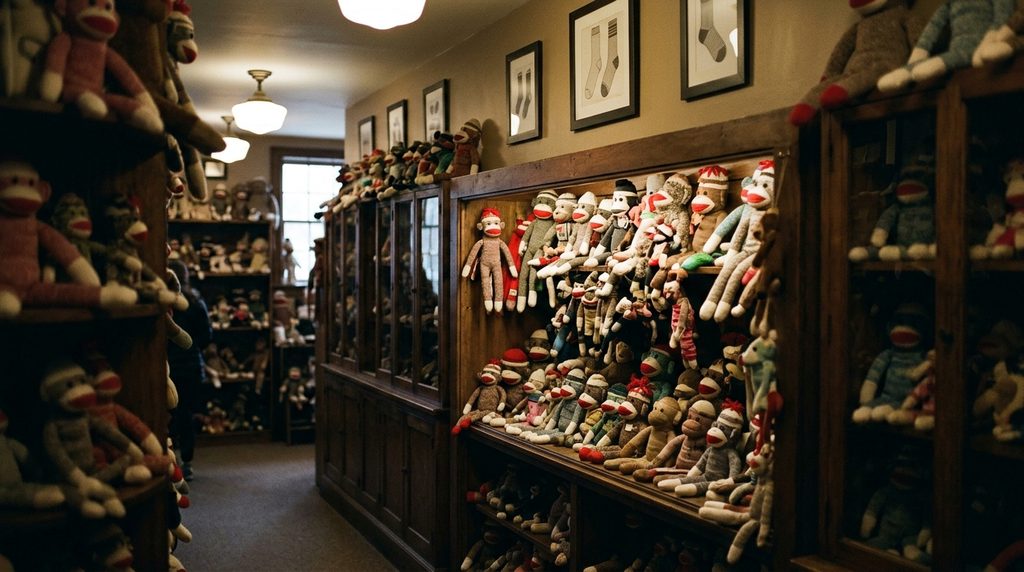
- Sock Monkey Museum — Swap historical wildlife taxidermy for another hyper-focused Midwestern curio collection featuring thousands of folk-art sock primates in Long Grove.
- Volo Museum & Jurassic Gardens — If a quiet room of vintage specimen cabinets sparks your appetite for unrestrained Americana, Volo expands the curio concept into a chaotic 35-acre empire of Hollywood vehicles and arcade relics.
More weird in Great Lakes & North Shore

Good to know
What are the regular hours and admission rates?
General hours are 12:00 p.m. to 4:00 p.m., running Thursday through Sunday during the summer (Memorial Day to Labor Day) and Saturday through Sunday the rest of the year. Entry is $2 to $3 for adults and $1 to $2 for children.
Are the two-headed calf and mutant specimens still on display?
No. While the two-headed calf and three-eyed cat were famous draws in the mid-20th century, the museum retired those sideshow oddities in the early 1980s to refocus on regional natural science and anthropology.
Is the Leopold bird collection genuinely connected to the Leopold and Loeb trial?
Yes. Before Nathan Leopold and Richard Loeb carried out their 1924 kidnapping and murder in Chicago, Leopold was an active amateur field ornithologist who contributed bird mounts to regional institutions, including the Elgin Audubon Society.
Where is the museum situated?
It is located at 225 Grand Boulevard inside the 108-acre municipal Lords Park on Elgin's east side, steps away from the park's historic outdoor animal pens.
Plan a visit & invite your people →
Further reading: Atlas Obscura · chicagoloop.macaronikid.com · Wikipedia · Official site
last checked: 2026-11-18