Entry No. 64 — the London, UK file — filed under: miscellanea
The World Turned Upside Down
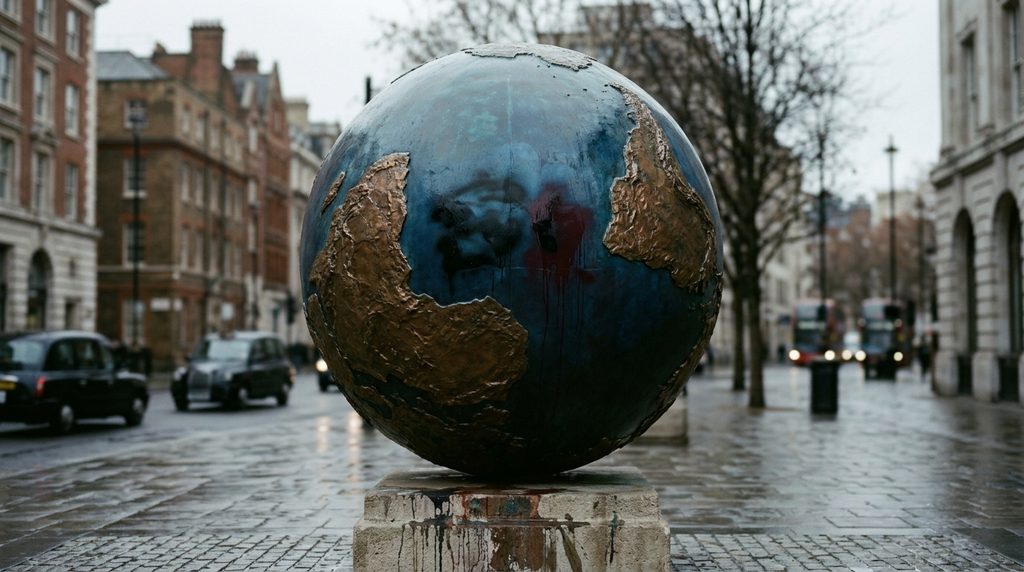
A giant inverted globe that sparked controversy and was vandalized soon after its unveiling.
→ Three more weird outdoor & roadside oddities in London, UK — never the same twice
The story
In March 2019, the London School of Economics unveiled a £200,000 public artwork by Turner Prize-winner Mark Wallinger on Sheffield Street. Dubbed The World Turned Upside Down—borrowing its title from a 17th-century English ballad—the piece is a four-metre-wide enamel globe resting directly on its North Pole, hoisting Antarctica into the air. Wallinger re-lettered every country, ocean, and capital city so that the names read right-side up from their reversed vantage point. Seen at this scale, the standard Mercator projection vanishes: the global south dominates the sky, the cavernous breadth of the oceans becomes obvious, and the British Isles look like a tiny, downward-dangling afterthought near the pavement.
Wallinger meant to challenge conventional cartographic authority, but dropping a detailed, UN-modeled political globe onto a fiercely international university campus ignited a diplomatic row. The original painting rendered Taiwan in a different color from mainland China and labeled Taipei—along with Lhasa in Tibet—with red dots denoting sovereign capitals. Mainland Chinese students protested immediately. When the university administration considered repainting Taiwan to fold it into China, Taiwanese diplomats, British MPs, and free-expression advocates intervened. The LSE eventually retained the distinct coloration, but compromised by painting an asterisk next to Taiwan and installing an institutional disclaimer plaque declaring that the artwork's borders imply no official endorsement.
The friction didn't stop there. Because the globe adhered to a UN-derived base map that marked Jerusalem as Israel's capital and excluded the state of Palestine, the four-metre orb became an open canvas for student dissent. Agitators repeatedly crossed out 'Israel' in black permanent marker, wrote in 'Palestine' and 'Gaza Strip', and plastered the enamel with political stickers and Post-it notes. What was conceived as a conceptual head-scratcher about visual perspective ended up functioning as a literal, physical record of the planet's unresolved border wars.
What it's like
Sheffield Street is a narrow pedestrian canyon flanked by the angular brick of the Saw Swee Hock Student Centre, so you round a corner and stumble straight into a 13-foot planet jammed into the pavement. Because it stands entirely in the open, you can walk right up to it at any hour of the day or night without tickets or barriers. Lean down to see the North Pole anchored to the ground, look closely for the controversial asterisk beside Taiwan, and read the LSE's careful bureaucratic disclaimer plaque bolted nearby. It is best visited on quiet weekend mornings or late on weekday evenings when the campus clears out, leaving the street empty and the inverted planet quietly towering over you.
The move: Wander onto pedestrian Sheffield Street to stand beneath the massive inverted globe, leaning down to view the North Pole anchored to the pavement while Antarctica looms in the sky above.
- 📍 London
- 💸 Free
- ⚡ Up for anything
- 🌗 Outdoors
Where: Sheffield Street, London WC2A 2AE (outside LSE Saw Swee Hock Student Centre / corner with Portugal Street)
Hours: Added 2026-11-18 — confirm current hours before you go.
Pair it with
- Hunterian Museum — A two-minute walk north across Lincoln's Inn Fields takes you from an inverted planet to thousands of 18th-century anatomical specimens preserved in jars at the Royal College of Surgeons.
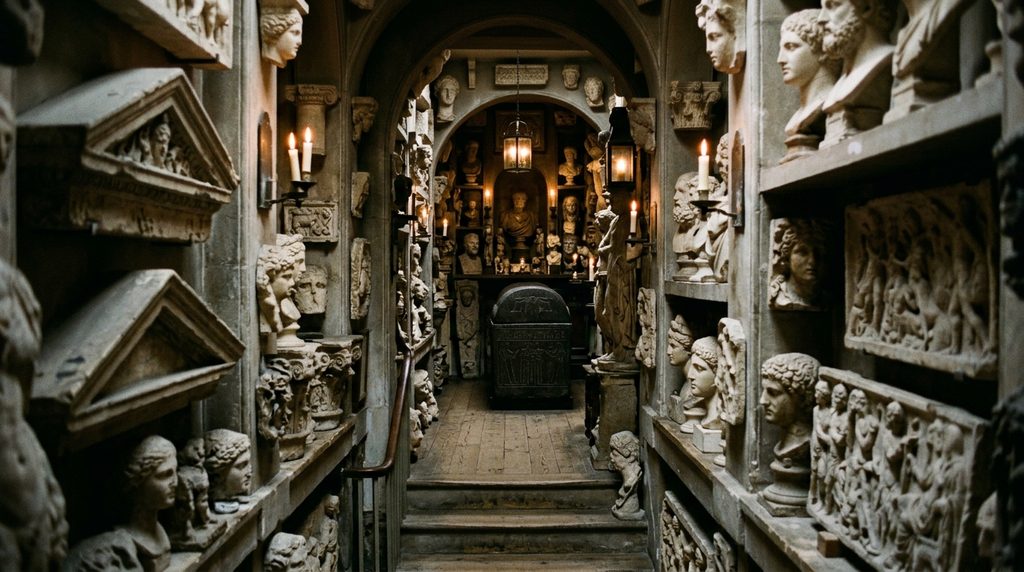
- Sir John Soane's Museum — Located two blocks north on Lincoln's Inn Fields, this untouched 19th-century home offers a claustrophobic labyrinth of Roman antiquities that pairs well with Wallinger's disorienting public art.
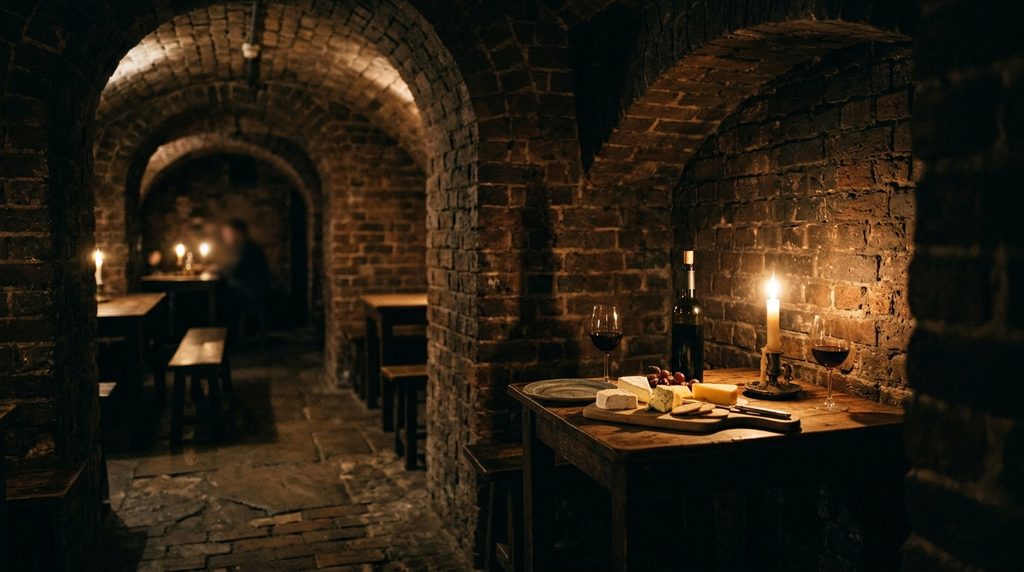
- CellarDoor — A short walk south toward Aldwych leads you down the stairs of a converted subterranean public toilet that now hosts intimate cabaret and burlesque.
More weird in London, UK
Good to know
Where exactly is the globe located?
It stands outdoors on the pedestrianized stretch of Sheffield Street at the corner of Portugal Street, directly outside the LSE Saw Swee Hock Student Centre.
What are the hours and admission costs?
It is completely free and accessible 24/7, as it sits on an open, outdoor street on the university campus.
Why was the sculpture vandalized and protested?
It showed Taiwan as distinct from mainland China and labeled Taipei and Lhasa as national capitals, triggering fierce disputes between student groups and diplomats. It was also defaced with marker pens and stickers protesting the omission of Palestine and the depiction of Jerusalem.
Does the globe rotate or spin?
No. The four-metre globe is a rigid, stationary public sculpture fixed permanently in place, balancing firmly on its North Pole.
Plan a visit & invite your people →
Further reading: Atlas Obscura · Wikipedia · londonist.com · ianvisits.co.uk
last checked: 2026-11-18