Entry No. 7 — the Norfolk & Hampton Roads file — filed under: revolutionary-war
St. Paul’s Episcopal Church & The 1776 Cannonball
The sole structure to survive Lord Dunmore British naval bombardment in 1776 that reduced colonial Norfolk to ash, featuring an actual 24-pound British cannonball still lodged in its southeast brick wall.
→ Three at a time, never the same twice — explore weird Norfolk & Hampton Roads
The story
On New Year Day 1776, Royal Navy ships anchored off Norfolk unleashed a catastrophic cannonade. The entire town burned for three days, leaving only the brick shell of this 1739 Episcopal sanctuary standing amidst the smoking ruins.
During the bombardment, a 24-pound iron ball fired from the HMS Liverpool slammed into the brickwork near the eaves. In the 1840s, parishioners discovered the ball in the graveyard rubble and cemented it firmly back into its original impact crater.
What it's like
The churchyard is open daylight hours for self-guided walks. Walk around to the southeast corner of the exterior transept wall and look up roughly ten feet to spot the iron cannonball nestled into the brick masonry. Curbside parking nearby on City Hall Avenue.
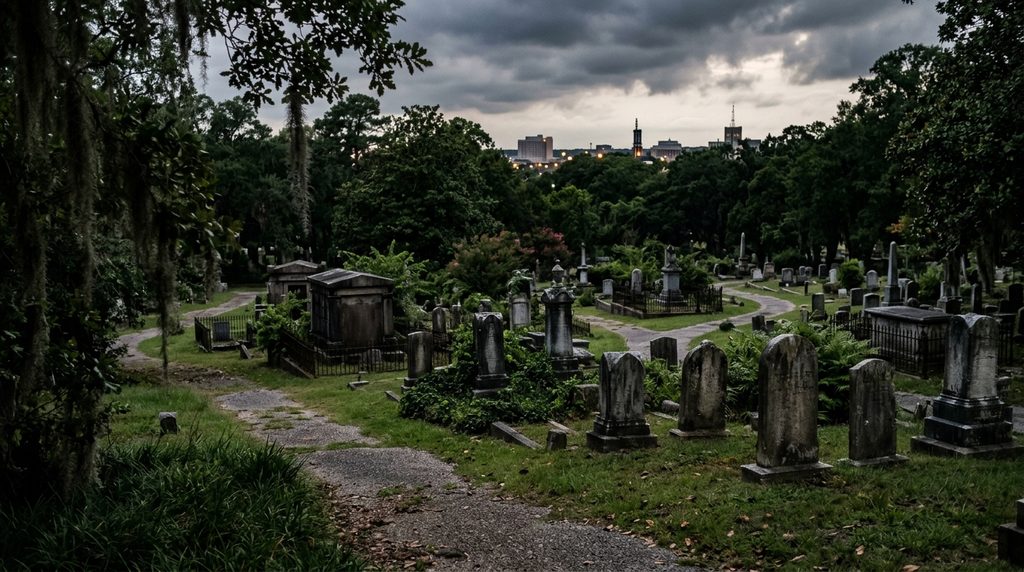
The move: Walk the ancient 1739 churchyard to find the embedded cannonball in the exterior brickwork, then read the centuries-old colonial headstones under mossy live oaks.
- 📍 Downtown Norfolk
- 💸 Free
- 🌗 Outdoors
Where: 201 St Pauls Blvd, Norfolk, VA 23510
Hours: Added 2026-11-14 — confirm current hours before you go.
Pair it with
- MacArthur Memorial & Sunken Crypt — Walk two blocks west to the domed MacArthur Memorial and its marble burial rotunda.
More weird in Norfolk & Hampton Roads

Good to know
Is the cannonball real?
Yes, it is the authentic 24-pound British naval cannonball fired on January 1, 1776.
Plan a visit & invite your people →
Further reading: stpaulsnorfolk.org
last checked: 2026-11-14