Entry No. 46 — the Orlando file — filed under: haunted-theater
The Beacham
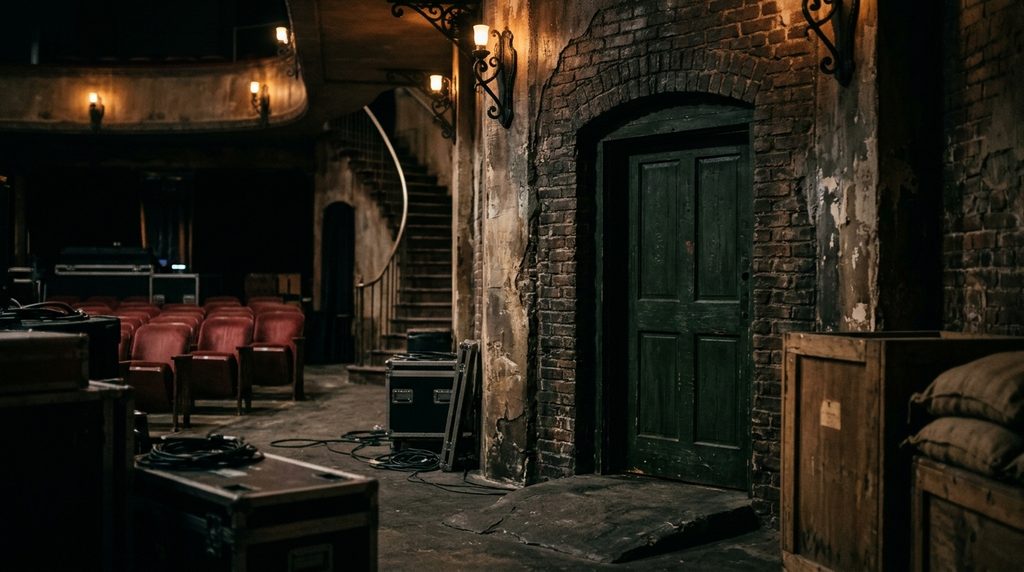
Built in 1921 on the exact site of Orlando's old county jail and execution ground (with unmarked prisoner graves beneath), the historic theater/nightclub is connected by now-sealed secret tunnels once allegedly used for vaudeville performers or Prohibition liquor runs; a vaudeville performer was reportedly found dead at a tunnel entrance.
→ Three at a time, never the same twice — explore weird Orlando
The story
Long before touring rock acts and bass-heavy DJ rigs took over 46 North Orange Avenue, the ground beneath your feet served as Orange County's municipal machinery of punishment. In the late nineteenth century, the county jail and gallows stood on this exact parcel. Executions were public spectacles held right in the yard, and dead prisoners who had nobody to claim them were buried behind the cells in shallow, unmarked dirt. When former Orlando mayor Braxton Beacham acquired the property in 1920 to build a premier vaudeville palace, the surface headstones were cleared away, but nobody bothered exhuming the bones under the foundation slab.
Opening in December 1921, the Beacham Theatre quickly masked its grim real estate with Spanish-Mediterranean plaster flourishes, velvet drapery, and an orchestral pipe organ. But the building harbored sub-street secrets of its own. Directly under the stage floor, a low, brick-and-mortar tunnel was carved beneath Orange Avenue, allegedly excavated so headline vaudevillians could dart across to the luxury Angebilt Hotel without being swarmed by crowds. During the dry years of the 1920s, it doubled as a subterranean stash point for illicit liquor running into downtown watering holes. Lore claims the tunnel's working days ended when a performer was found dead near the subterranean portal; today, about thirty feet into the damp, crawling passage, a modern cinderblock bulkhead seals off whatever remains on the other side.
Over the subsequent decades, the building shed skins constantly—pioneering sound-on-film talkies, hosting sit-ins during the Civil Rights era, and anchoring the birth of the Florida rave and breakbeat scene as club 'Aahz' in the late 1980s. Yet the early twentieth-century tenants never quite evacuated. Sound technicians and late-night janitorial crews still report sudden sub-stage drops in temperature, the disembodied wheeze of a phantom pipe organ in an empty auditorium, and sightings of a pale woman in white pacing the old balcony rails after the soundboard powers down.
What it's like
Arriving on Orange Avenue puts you under the glowing neon marquee amidst a dense queue of concertgoers or weekend clubbers filtering through tight security pat-downs. Inside, the venue opens into a dark, cavernous general-admission pit bordered by the original tiered mezzanine and upper balcony wings. Expect it to get loud, sweaty, and shoulder-to-shoulder during headliner sets, with floor bass rattling straight through the soles of your shoes. Look upward above the modern truss lighting to spot the surviving 1920s ornate plasterwork, and arrive right when doors open if you want to eyeball the stage apron and perimeter architecture before the crush takes over the floor.
The move: Catch a live concert or nightclub event, then explore the lower levels or ask staff about the blocked tunnel access under the stage; look for the lady in white or residual party sounds from the 1920s.
- 📍 Downtown Orlando
- 💸 $$
- ⚡ Up for anything
- 🌗 Indoors
Where: 46 N Orange Ave, Orlando, FL 32801
Hours: Added 2026-11-07 — confirm current hours before you go.
Pair it with
- Hanson's Shoe Repair — Slip across the corner to the rooftop terrace of Orlando's oldest surviving brick commercial building (1883) for a password-protected cocktail that matches the Beacham's century-old vintage.
- Mathers Social Gathering — Walk one block over to the 1894 Phoenix Building and ride a vintage cage elevator up to this antique-filled parlor hidden behind a revolving bookcase.
- Cool Kats Club (inside Taco Kat) — Duck through a vintage soda vending machine disguise just down Orange Avenue for tacos and late-night mezcal once the venue clears out.
More weird in Orlando
Good to know
Can you visit the underground tunnel under the stage?
No. Access hatches behind and beneath the stage lead to the crawl space, but the corridor dead-ends into a cinderblock wall roughly thirty feet in, is structurally restricted, and is strictly off-limits to patrons.
Was the venue actually built over graves?
Yes. Prior to the theater's 1921 construction, the site housed the county jail and execution yard. Executed and unclaimed inmates were buried on-site; when the land was redeveloped, surface markers were removed while the graves remained beneath.
What ghosts are rumored to haunt the building?
Common folklore from staff and touring crews centers on a woman in white seen roaming the mezzanine levels, unexplained cold spots around the stage wings, and residual sounds of crowd revelry and phantom organ music after hours.
What is the venue's role in music history?
Beyond hosting vaudeville stars and mid-century legends like Ray Charles and B.B. King, the theater was home to club Aahz in the late 1980s and early 1990s, which is widely recognized as a catalyst for the American breakbeat and electronic dance music scene.
Plan a visit & invite your people →
Further reading: Wikipedia · clickorlando.com · orlandosentinel.com · citydistrictorlando.com
last checked: 2026-11-07