Abandoned places in Pueblo
10 abandoned and forgotten places around Pueblo, Cokedale Coke Ovens, Forgotten Grumman TLRV Hovertrains and Ludlow Massacre Memorial among them — and for each one, whether you can legally visit. Ruins, ghost towns and shuttered industry, with the ones that are trespassing or genuinely unsafe marked as such rather than romanticised. They spread across Cokedale (7 mi west of Trinidad, Hwy 12), Pueblo, Ludlow (15 mi NW of Trinidad), Florence and 6 more areas, so two or three can make a whole afternoon. 8 of them cost nothing. Every entry is hand-vetted against real sources — not scraped off a top-ten list or averaged out of crowd ratings.
Every abandoned place we've verified, nationwide — with its legal-access status →
-
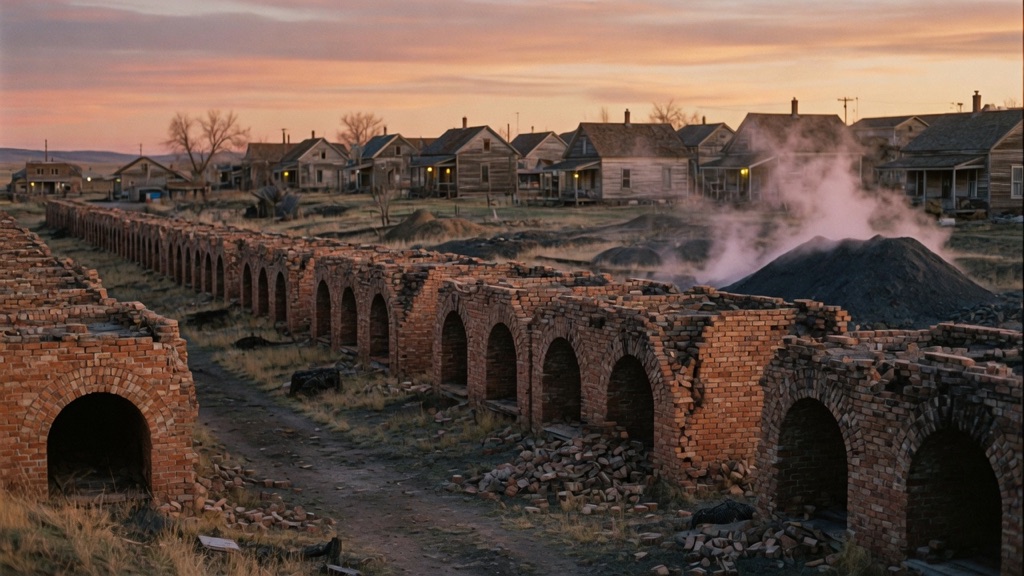 Cokedale Coke OvensView only
ASARCO built 350 beehive coke ovens here in 1906, and when the mine quit in 1947 nobody bothered to tear them down. So two double-sided rows still run along Highway 12 like a collapsed Roman aqueduct, the largest surviving set in Colorado, once baking 800 tons of coke a day for the smelters. On cold mornings steam still curls off the slag pile. And the company camp behind them never died: about a hundred people still live in Cokedale, the most intact coal town in the state.
Cokedale Coke OvensView only
ASARCO built 350 beehive coke ovens here in 1906, and when the mine quit in 1947 nobody bothered to tear them down. So two double-sided rows still run along Highway 12 like a collapsed Roman aqueduct, the largest surviving set in Colorado, once baking 800 tons of coke a day for the smelters. On cold mornings steam still curls off the slag pile. And the company camp behind them never died: about a hundred people still live in Cokedale, the most intact coal town in the state.
-
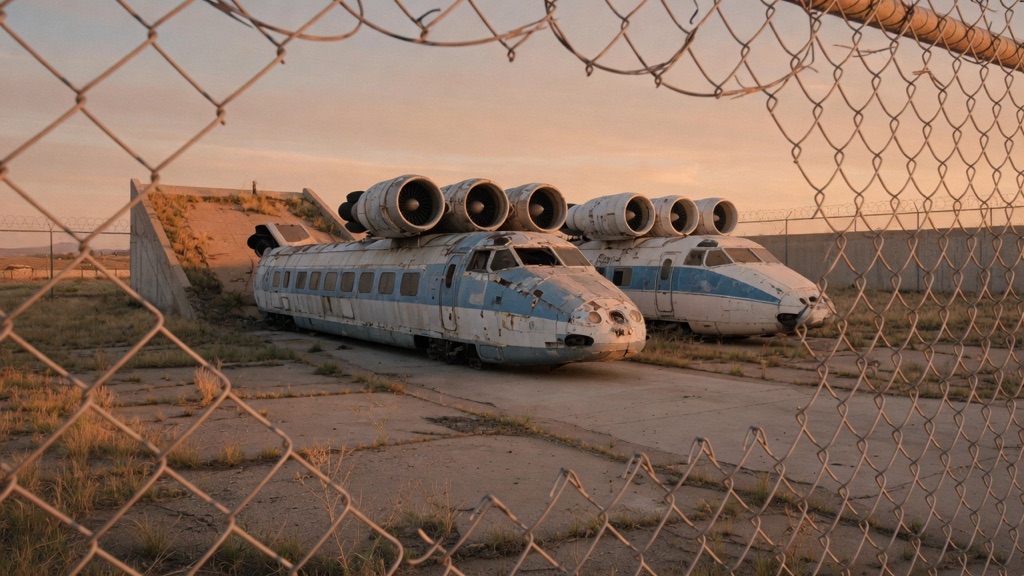 Forgotten Grumman TLRV HovertrainsView only
In 1972 Grumman Aerospace built a wheelless train meant to scream down a U-shaped concrete trough at 300 mph, riding compressed air from three turbofans bolted to its roof. The DOT tested it at Pueblo's high-speed track until the funding died in August 1975 — it topped out at 91. Now the TLRV rusts at the dead end of West D Street beside the French-licensed Rohr Aerotrain, behind chain-link, barbed wire, and a Beware of Dog sign, still waiting on a museum exhibit that never opened.
Forgotten Grumman TLRV HovertrainsView only
In 1972 Grumman Aerospace built a wheelless train meant to scream down a U-shaped concrete trough at 300 mph, riding compressed air from three turbofans bolted to its roof. The DOT tested it at Pueblo's high-speed track until the funding died in August 1975 — it topped out at 91. Now the TLRV rusts at the dead end of West D Street beside the French-licensed Rohr Aerotrain, behind chain-link, barbed wire, and a Beware of Dog sign, still waiting on a museum exhibit that never opened.
-
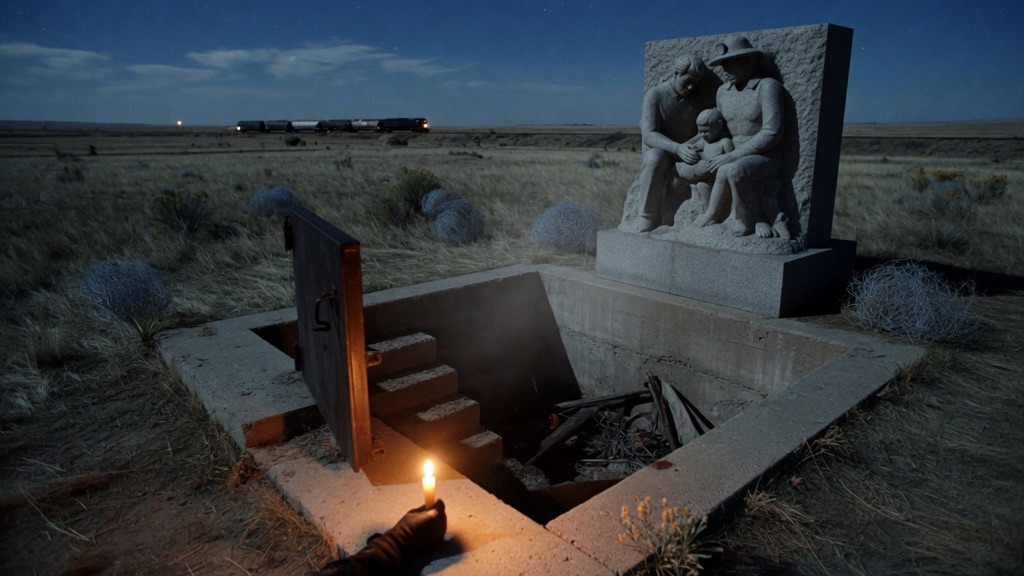 Ludlow Massacre MemorialOpen to visit
On April 20, 1914, Colorado National Guardsmen and company gunmen machine-gunned and torched a tent colony of striking coal miners. Two women and eleven children suffocated in a dirt cellar under a burning tent. The UMWA bought the field, raised a granite miner and mother in 1918, and encased the death pit in concrete — steel door, steps down, and you can still peer in. Vandals took the miner’s head and the mother’s arm in 2003; the union recarved them. Wind, prairie, passing trains, almost nobody else.
Ludlow Massacre MemorialOpen to visit
On April 20, 1914, Colorado National Guardsmen and company gunmen machine-gunned and torched a tent colony of striking coal miners. Two women and eleven children suffocated in a dirt cellar under a burning tent. The UMWA bought the field, raised a granite miner and mother in 1918, and encased the death pit in concrete — steel door, steps down, and you can still peer in. Vandals took the miner’s head and the mother’s arm in 2003; the union recarved them. Wind, prairie, passing trains, almost nobody else.
-
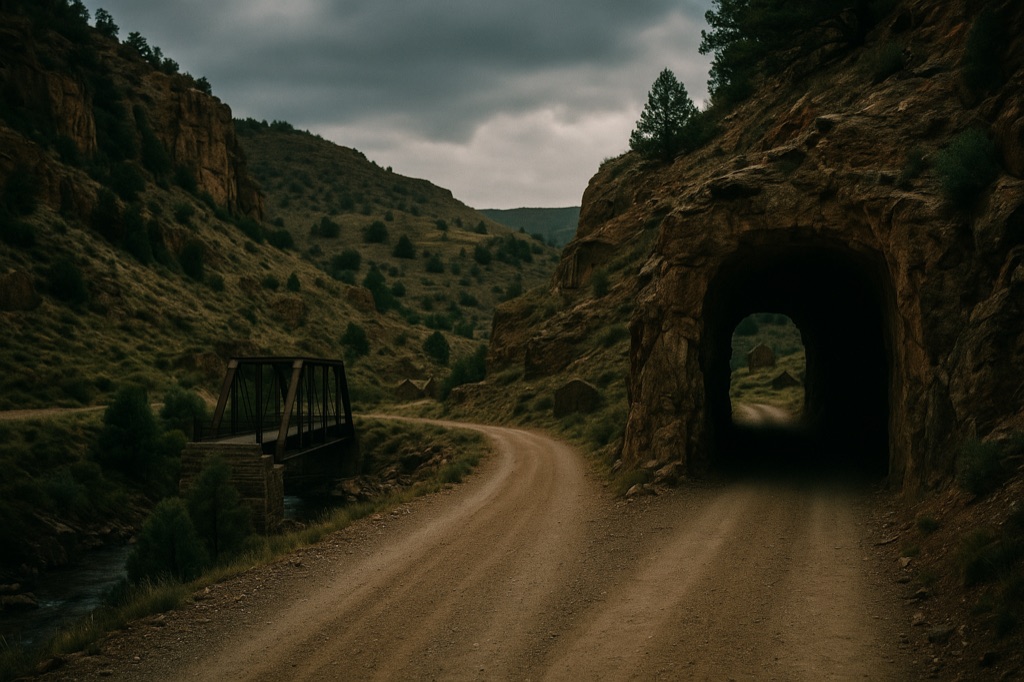 Phantom Canyon RoadOpen to visit
The road doesn't pave over history here — it is the history. Thirty miles of gravel trace the exact grade where the Florence & Cripple Creek narrow-gauge ran gold ore out of the mountains starting in 1894, until a flash flood on July 30, 1895 tore out miles of track and killed three people at the ghost town of Adelaide. You'll thread one-lane stone tunnels the railroad crews hand-cut, cross a steel bridge built in 1897 that's the only original F&CC span still standing, and pass the cellar-hole silhouette of Wilbur — a town of fifteen families that had a schoolhouse and then didn't have anything. The canyon got its name from something people saw out here; locals disagree on the specifics, which is exactly the kind of answer a place like this deserves.
Phantom Canyon RoadOpen to visit
The road doesn't pave over history here — it is the history. Thirty miles of gravel trace the exact grade where the Florence & Cripple Creek narrow-gauge ran gold ore out of the mountains starting in 1894, until a flash flood on July 30, 1895 tore out miles of track and killed three people at the ghost town of Adelaide. You'll thread one-lane stone tunnels the railroad crews hand-cut, cross a steel bridge built in 1897 that's the only original F&CC span still standing, and pass the cellar-hole silhouette of Wilbur — a town of fifteen families that had a schoolhouse and then didn't have anything. The canyon got its name from something people saw out here; locals disagree on the specifics, which is exactly the kind of answer a place like this deserves.
-
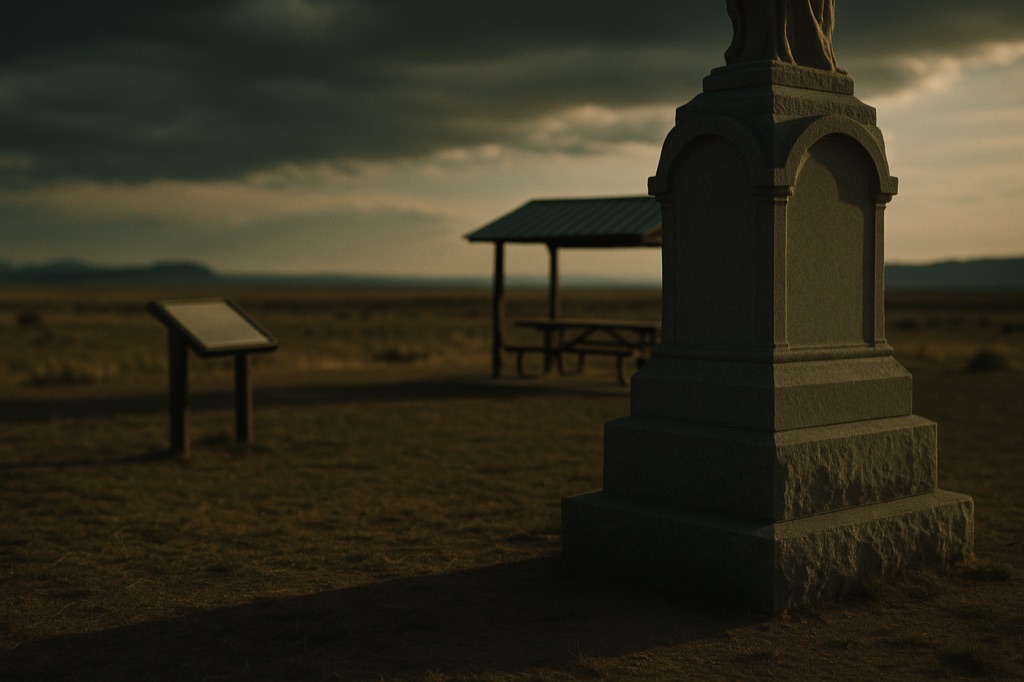 Ludlow Massacre SiteOpen to visit
On April 20, 1914, Colorado National Guard soldiers machine-gunned and torched a tent city of striking coal miners; eleven children and two women suffocated in a hand-dug pit beneath a burning tent they thought would protect them. The United Mine Workers bought the land two years later and have held it ever since — making this the only National Historic Landmark in America owned by a labor union. A 1918 granite monument, covered picnic tables, and interpretive panels sit on the old tent-camp footprint, largely bypassed by the I-25 traffic humming a quarter-mile away.
Ludlow Massacre SiteOpen to visit
On April 20, 1914, Colorado National Guard soldiers machine-gunned and torched a tent city of striking coal miners; eleven children and two women suffocated in a hand-dug pit beneath a burning tent they thought would protect them. The United Mine Workers bought the land two years later and have held it ever since — making this the only National Historic Landmark in America owned by a labor union. A 1918 granite monument, covered picnic tables, and interpretive panels sit on the old tent-camp footprint, largely bypassed by the I-25 traffic humming a quarter-mile away.
-
 Pueblo Ghost Tour at the Weisbrod Aircraft MuseumOpen to visit
This is a paranormal night tour set among the parked warbirds of an aircraft museum on decommissioned military grounds, where guides hand out EMF detectors and flashlights. The big draw is climbing into a medical rescue aircraft that once carried wounded soldiers, where visitors report apparitions of fallen servicemen. Tours run on the first Saturday of each month at 8pm and routinely sell out.
Pueblo Ghost Tour at the Weisbrod Aircraft MuseumOpen to visit
This is a paranormal night tour set among the parked warbirds of an aircraft museum on decommissioned military grounds, where guides hand out EMF detectors and flashlights. The big draw is climbing into a medical rescue aircraft that once carried wounded soldiers, where visitors report apparitions of fallen servicemen. Tours run on the first Saturday of each month at 8pm and routinely sell out.
-
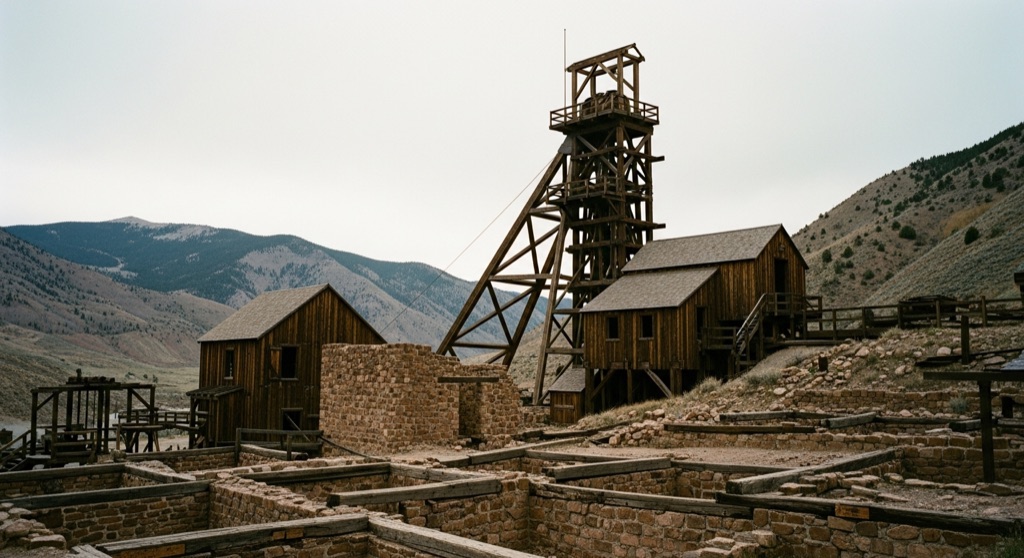 Stratton's Independence Mine and MillView only
Winfield Scott Stratton staked his claim here on July 4, 1891, discovering a massive gold vein that made him the district's first millionaire. The mine was a major producer during the Cripple Creek gold rush until its closure in 1928. Today, the towering, restored wooden headframe, the ruins of the mill foundations, and the historic ore house and powerhouse still remain standing.
Stratton's Independence Mine and MillView only
Winfield Scott Stratton staked his claim here on July 4, 1891, discovering a massive gold vein that made him the district's first millionaire. The mine was a major producer during the Cripple Creek gold rush until its closure in 1928. Today, the towering, restored wooden headframe, the ruins of the mill foundations, and the historic ore house and powerhouse still remain standing.
-
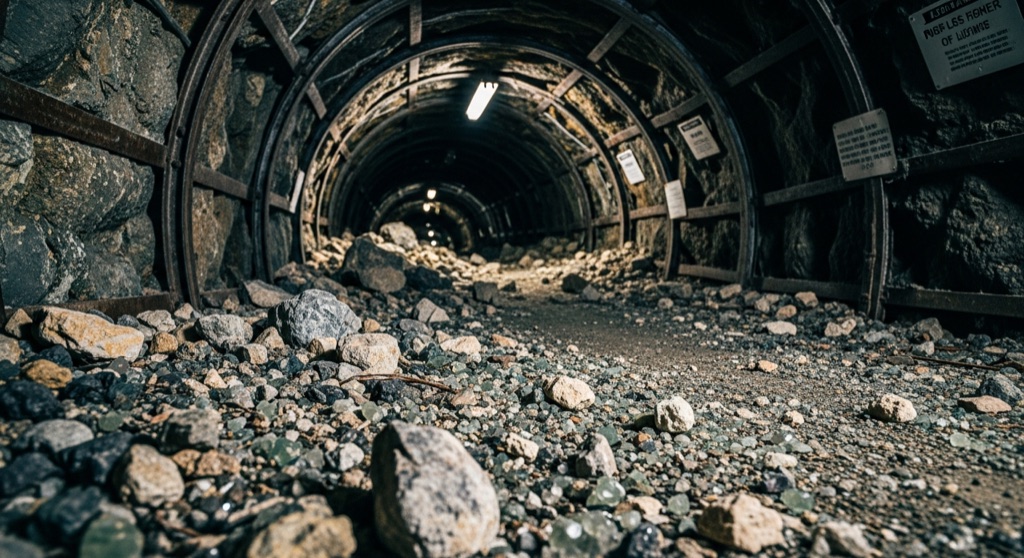 Eureka Tunnel MineView only
Located in the St. Peters Dome mining district within Pike National Forest, the Eureka Tunnel is a historic, abandoned fluorine-fluorite mine dating back to the late 19th century. Originally worked for cryolite and thomsenolite used in glass bottle manufacturing, the site is now a famous mineral-collecting locality. Today, visitors can find remnants of the old mine dumps littered with colorful fluorite, quartz, and tiny zircon crystals.
Eureka Tunnel MineView only
Located in the St. Peters Dome mining district within Pike National Forest, the Eureka Tunnel is a historic, abandoned fluorine-fluorite mine dating back to the late 19th century. Originally worked for cryolite and thomsenolite used in glass bottle manufacturing, the site is now a famous mineral-collecting locality. Today, visitors can find remnants of the old mine dumps littered with colorful fluorite, quartz, and tiny zircon crystals.
-
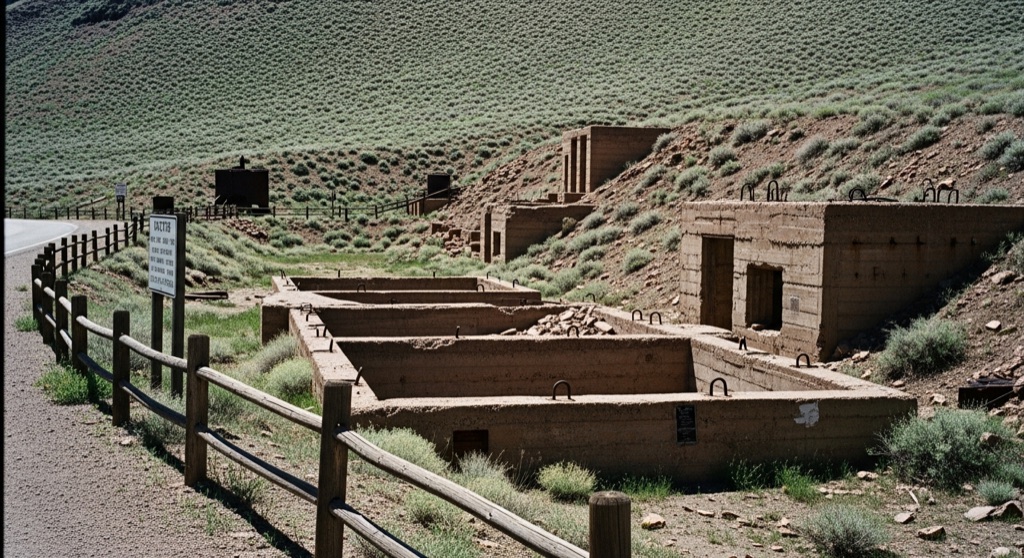 Old Pictou MineView only
Established in 1887 as a coal camp initially called Sulphur Springs, Pictou was renamed in 1889 and operated by the Colorado Fuel and Iron Company until its closure in 1954. During its peak, the mine supported a diverse community of around 300 residents and produced millions of tons of coal. Today, the site is a ghost town where only concrete foundations, old mine dumps, and tailings remain visible on private, fenced lots.
Old Pictou MineView only
Established in 1887 as a coal camp initially called Sulphur Springs, Pictou was renamed in 1889 and operated by the Colorado Fuel and Iron Company until its closure in 1954. During its peak, the mine supported a diverse community of around 300 residents and produced millions of tons of coal. Today, the site is a ghost town where only concrete foundations, old mine dumps, and tailings remain visible on private, fenced lots.
-
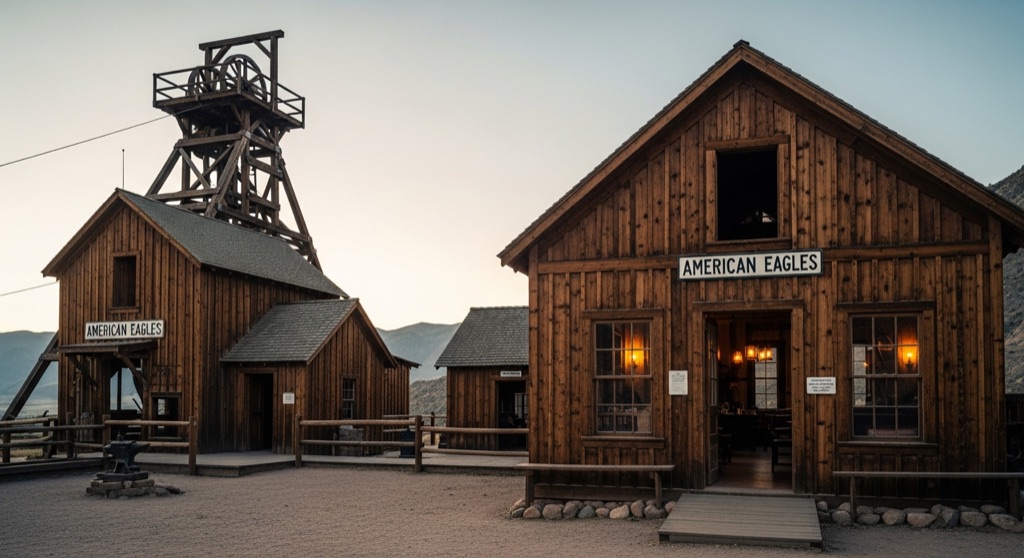 American Eagles MineView only
Originally established in 1895 by gold baron Winfield Scott Stratton, the American Eagles Mine was once the highest underground mine in the Cripple Creek District, operating at 10,570 feet. To save its historic structures from active open-pit mining, its massive 1890s wooden headframe, blacksmith shop, and superintendent's home were relocated to a scenic overlook in 2017. Today, these preserved relics stand as a silent monument to the area's gold rush era, accessible via a short hike.
American Eagles MineView only
Originally established in 1895 by gold baron Winfield Scott Stratton, the American Eagles Mine was once the highest underground mine in the Cripple Creek District, operating at 10,570 feet. To save its historic structures from active open-pit mining, its massive 1890s wooden headframe, blacksmith shop, and superintendent's home were relocated to a scenic overlook in 2017. Today, these preserved relics stand as a silent monument to the area's gold rush era, accessible via a short hike.
Abandoned places in Pueblo — FAQ
Is it legal to visit abandoned places around Pueblo?
It depends on the site, and each listing here says explicitly — with the reason. Of the 10 with a verified access status: 4 are legal to enter (like Ludlow Massacre Memorial and Phantom Canyon Road), 6 are view-only from public land or roadside, and 0 are private property or genuinely unsafe — those are marked "do not enter" rather than romanticised.
Which abandoned & forgotten places in Pueblo are the strangest?
Ranked by how strange they actually are: Ludlow Massacre Memorial, Stratton's Independence Mine and Mill and Eureka Tunnel Mine. Ludlow Massacre Memorial — On April 20, 1914, Colorado National Guardsmen and company gunmen machine-gunned and torched a tent colony of striking coal miners.
Where in Pueblo are they?
Across Cokedale (7 mi west of Trinidad, Hwy 12), Pueblo, Ludlow (15 mi NW of Trinidad), Florence and Ludlow and 5 more. Each listing gives the neighborhood and address so you can cluster a couple into one outing.
Are any of the abandoned & forgotten places in Pueblo free?
Yes — 8 are free to visit, including Cokedale Coke Ovens, Forgotten Grumman TLRV Hovertrains and Phantom Canyon Road. The rest are mostly low-cost.
Is this a good weird date in Pueblo?
That's what the list is built for. Every entry has a specific move rather than a vague recommendation — at Ludlow Massacre Memorial, for instance: Read the names on the granite aloud to each other, look down into the death pit together, then drive into Trinidad for green chile and let the silence sit.
How were these abandoned & forgotten places chosen?
An agentic research system digs for the genuinely obscure — the spots even locals miss — and every one is verified against real sources before it makes the list. We deliberately skip the landmarks already on every Pueblo guide.