Abandoned places in Las Vegas
15 abandoned and forgotten places around Las Vegas, The Neon Museum — Night Tours, Goldwell Open Air Museum and St. Thomas Ghost Town among them — and for each one, whether you can legally visit. Ruins, ghost towns and shuttered industry, with the ones that are trespassing or genuinely unsafe marked as such rather than romanticised. They spread across Downtown / Naked City, Rhyolite ghost town, near Beatty, NV, Moapa Valley, Sandy Valley and 9 more areas, so two or three can make a whole afternoon. 14 of them cost nothing. Every entry is hand-vetted against real sources — not scraped off a top-ten list or averaged out of crowd ratings.
Every abandoned place we've verified, nationwide — with its legal-access status →
-
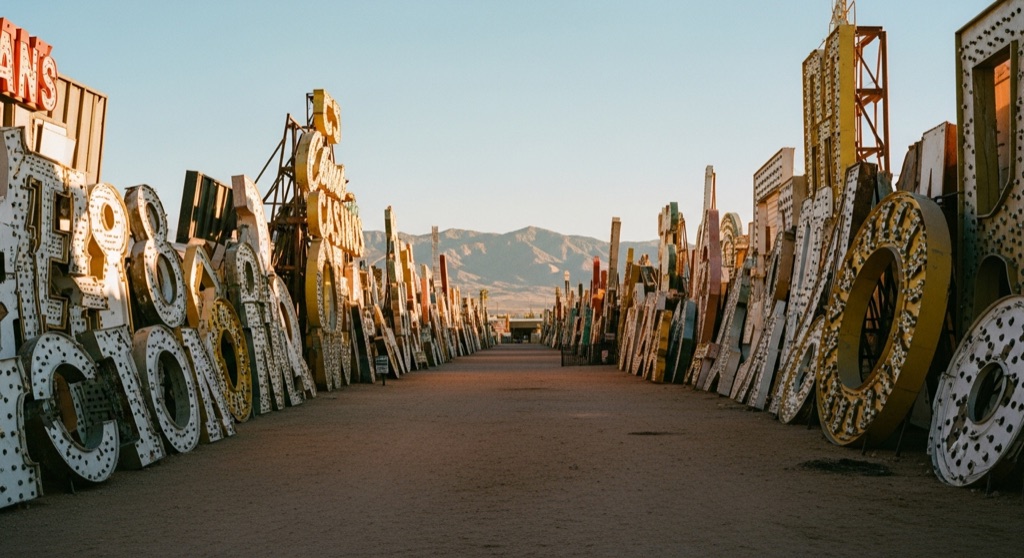 The Neon Museum — Night ToursOpen to visit
Most of the vintage casino signs in this boneyard are dead — they don't light up on their own anymore — so after dark the museum trains theatrical spotlights and colored floods across the graveyard of neon to fake the old glow, turning rows of derelict signage into a lit garden between 8pm and midnight.
The Neon Museum — Night ToursOpen to visit
Most of the vintage casino signs in this boneyard are dead — they don't light up on their own anymore — so after dark the museum trains theatrical spotlights and colored floods across the graveyard of neon to fake the old glow, turning rows of derelict signage into a lit garden between 8pm and midnight.
-
 Goldwell Open Air MuseumOpen to visit
Since 1984, Belgian sculptor Albert Szukalski's ghostly plaster-and-burlap recreation of "The Last Supper" has stood life-sized out in the open desert, next to a cyclist-shaped ghost, a pixelated cinderblock "Venus," and a giant pink concrete couch — a free, unattended, 24-hour sculpture park sitting right beside the crumbling gold-rush ruins of Rhyolite.
Goldwell Open Air MuseumOpen to visit
Since 1984, Belgian sculptor Albert Szukalski's ghostly plaster-and-burlap recreation of "The Last Supper" has stood life-sized out in the open desert, next to a cyclist-shaped ghost, a pixelated cinderblock "Venus," and a giant pink concrete couch — a free, unattended, 24-hour sculpture park sitting right beside the crumbling gold-rush ruins of Rhyolite.
-
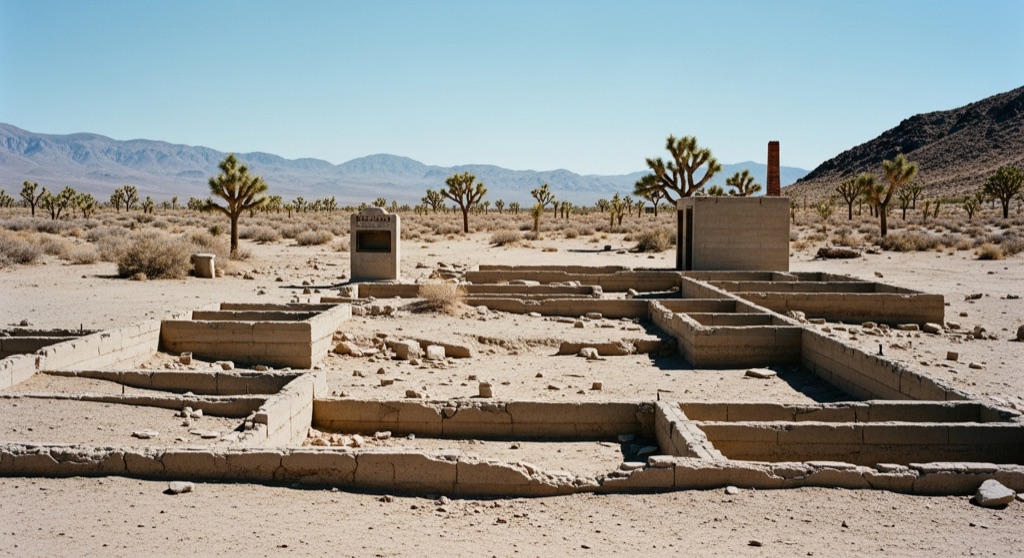 St. Thomas Ghost TownOpen to visit
Established by Mormon settlers in 1865, St. Thomas was a frontier town that was completely submerged under Lake Mead in 1938 following the construction of the Hoover Dam. Due to severe, ongoing droughts, the town's ruins re-emerged in 2002 and have remained dry ever since. Visitors can explore the exposed concrete foundations, including the remains of the local schoolhouse, post office, and an ice cream parlor chimney.
St. Thomas Ghost TownOpen to visit
Established by Mormon settlers in 1865, St. Thomas was a frontier town that was completely submerged under Lake Mead in 1938 following the construction of the Hoover Dam. Due to severe, ongoing droughts, the town's ruins re-emerged in 2002 and have remained dry ever since. Visitors can explore the exposed concrete foundations, including the remains of the local schoolhouse, post office, and an ice cream parlor chimney.
-
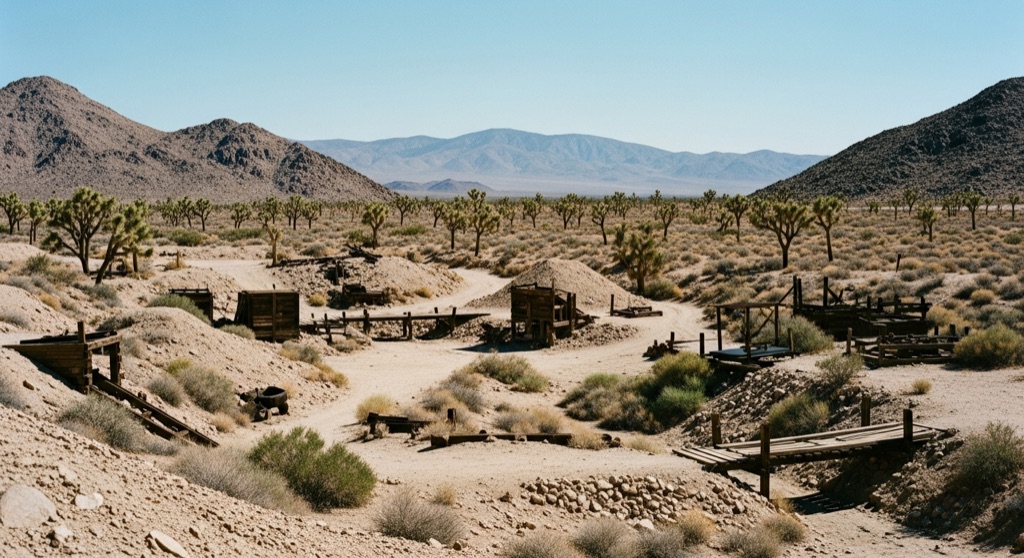 Saint Louis MineView only
Located in Clark County between Nelson and Searchlight, the Saint Louis Mine is a historic gold mine that also yielded copper, lead, silver, and zinc. The site features a built-up trucking trail carved into the mountain and small tailings piles. Today, only a few weathered timbers, rickety footbridges, and dangerous vertical shafts remain of this forgotten operation.
Saint Louis MineView only
Located in Clark County between Nelson and Searchlight, the Saint Louis Mine is a historic gold mine that also yielded copper, lead, silver, and zinc. The site features a built-up trucking trail carved into the mountain and small tailings piles. Today, only a few weathered timbers, rickety footbridges, and dangerous vertical shafts remain of this forgotten operation.
-
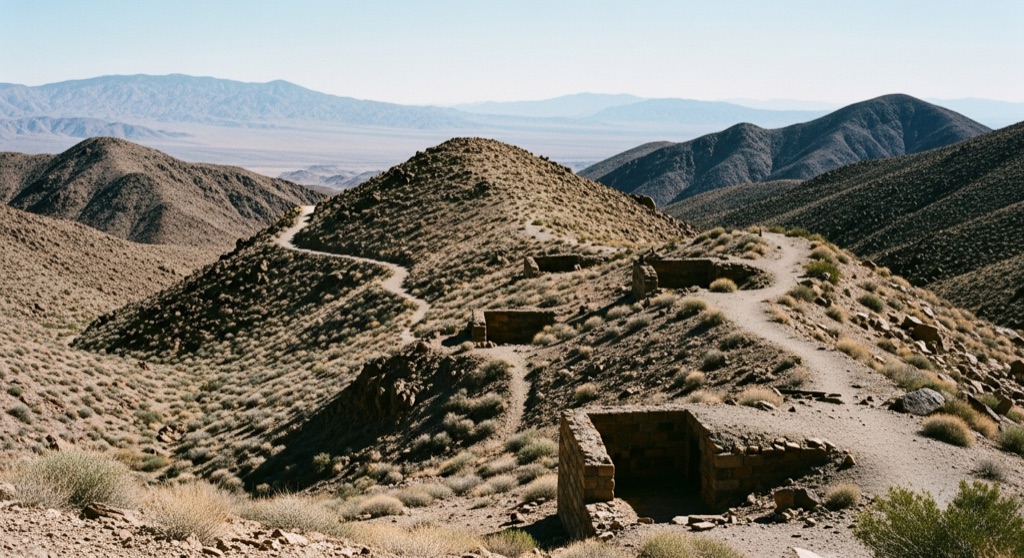 Azurite MineView only
Discovered in 1899, the Azurite Mine is a historic copper, gold, and zinc mine located on the southwestern slopes of the Shenandoah Mountains near Sandy Valley. The site features three main adits and extensive tailings piles scattered along the rugged desert ridge. Today, the abandoned workings remain as a quiet testament to the region's early 20th-century mining boom.
Azurite MineView only
Discovered in 1899, the Azurite Mine is a historic copper, gold, and zinc mine located on the southwestern slopes of the Shenandoah Mountains near Sandy Valley. The site features three main adits and extensive tailings piles scattered along the rugged desert ridge. Today, the abandoned workings remain as a quiet testament to the region's early 20th-century mining boom.
-
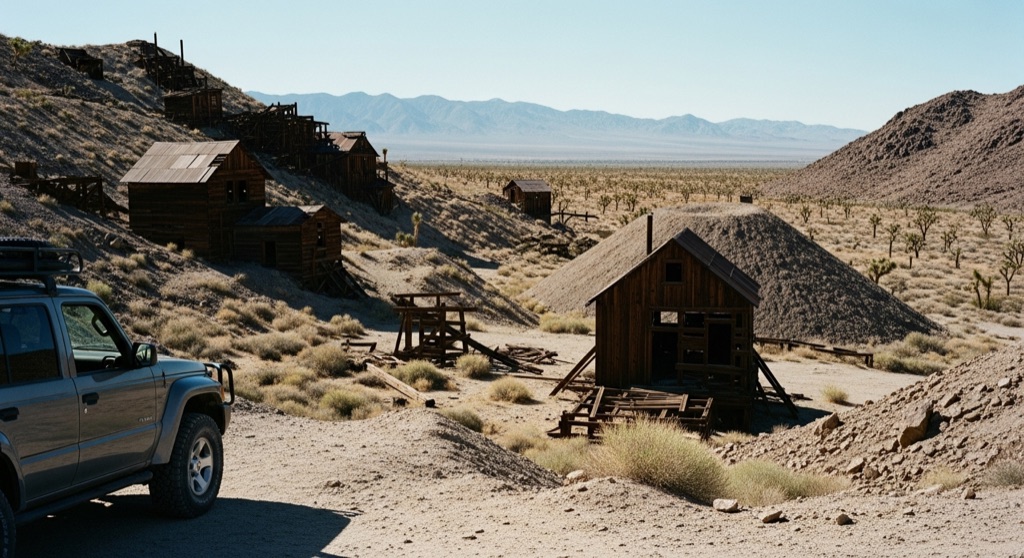 Sultan MineView only
Located in the Goodsprings Mining District, the Sultan Mine was a productive lead, zinc, and silver operation active from the early 1900s through the 1950s. Today, the remote desert site features extensive tailings piles, crumbling wooden structures, and dangerous open shafts clinging to the slopes below Little Devil Peak. While the underground workings are highly unstable, the surface ruins offer a stark glimpse into Nevada's rugged mining history.
Sultan MineView only
Located in the Goodsprings Mining District, the Sultan Mine was a productive lead, zinc, and silver operation active from the early 1900s through the 1950s. Today, the remote desert site features extensive tailings piles, crumbling wooden structures, and dangerous open shafts clinging to the slopes below Little Devil Peak. While the underground workings are highly unstable, the surface ruins offer a stark glimpse into Nevada's rugged mining history.
-
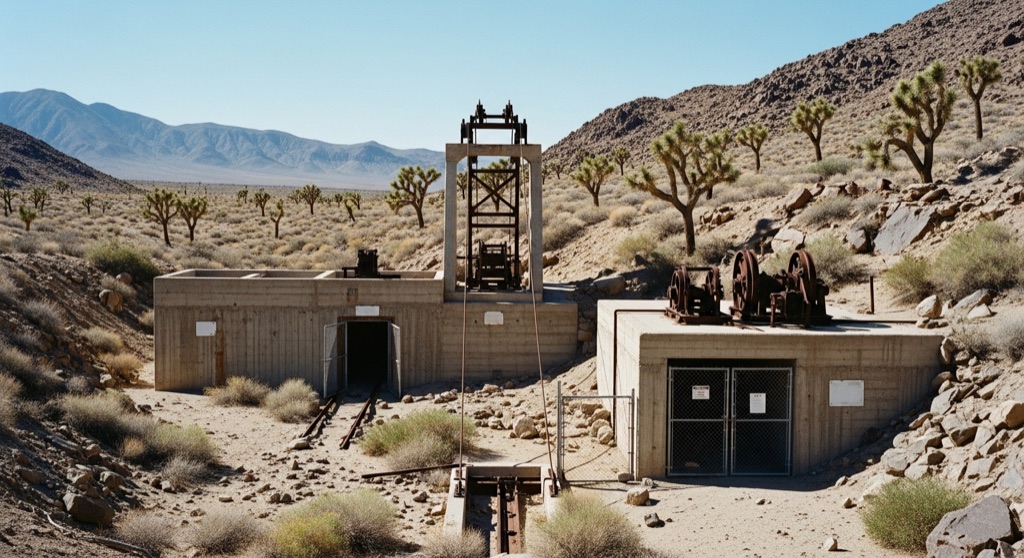 Potosi MineView only
Potosi Mine is Nevada's oldest lode mine, established by Mormon settlers in 1856 to extract lead. It later became a major producer of zinc, silver, and lead, especially during World War I, before operations ceased entirely in the mid-20th century. Today, the site features concrete foundations of an old aerial tramway, rusted mining equipment, and gated mine portals set against the rugged desert mountain landscape.
Potosi MineView only
Potosi Mine is Nevada's oldest lode mine, established by Mormon settlers in 1856 to extract lead. It later became a major producer of zinc, silver, and lead, especially during World War I, before operations ceased entirely in the mid-20th century. Today, the site features concrete foundations of an old aerial tramway, rusted mining equipment, and gated mine portals set against the rugged desert mountain landscape.
-
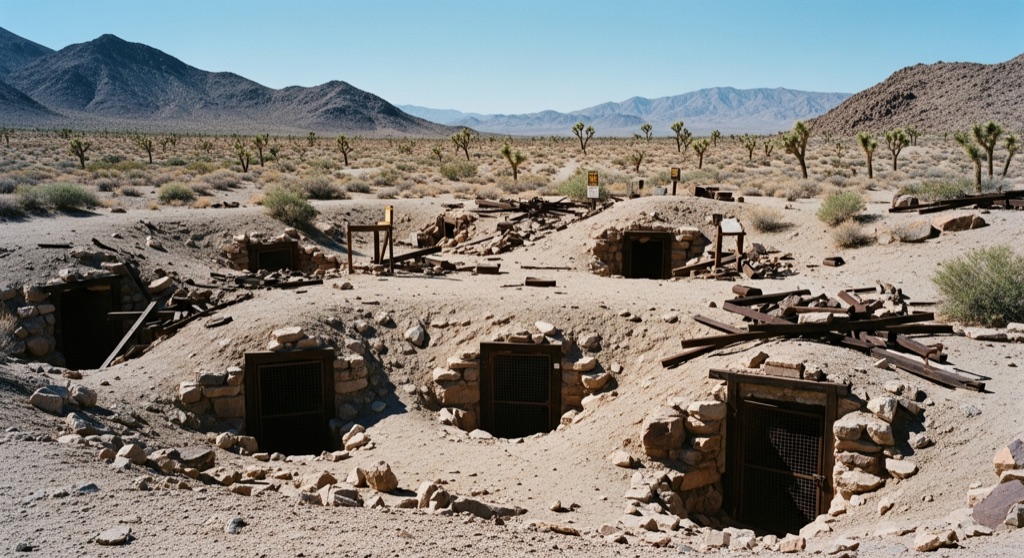 Dawn MineView only
Tucked away in the historic Potosi Mining District south of Las Vegas, the Dawn Mine was a prominent early 20th-century producer of zinc, lead, and silver. Today, the remote desert site features several tailings piles, scattered historic miner debris, and multiple gated or collapsed adits. The main incline shaft is sealed with a protective iron bat gate to preserve the underground habitat while keeping visitors safe.
Dawn MineView only
Tucked away in the historic Potosi Mining District south of Las Vegas, the Dawn Mine was a prominent early 20th-century producer of zinc, lead, and silver. Today, the remote desert site features several tailings piles, scattered historic miner debris, and multiple gated or collapsed adits. The main incline shaft is sealed with a protective iron bat gate to preserve the underground habitat while keeping visitors safe.
-
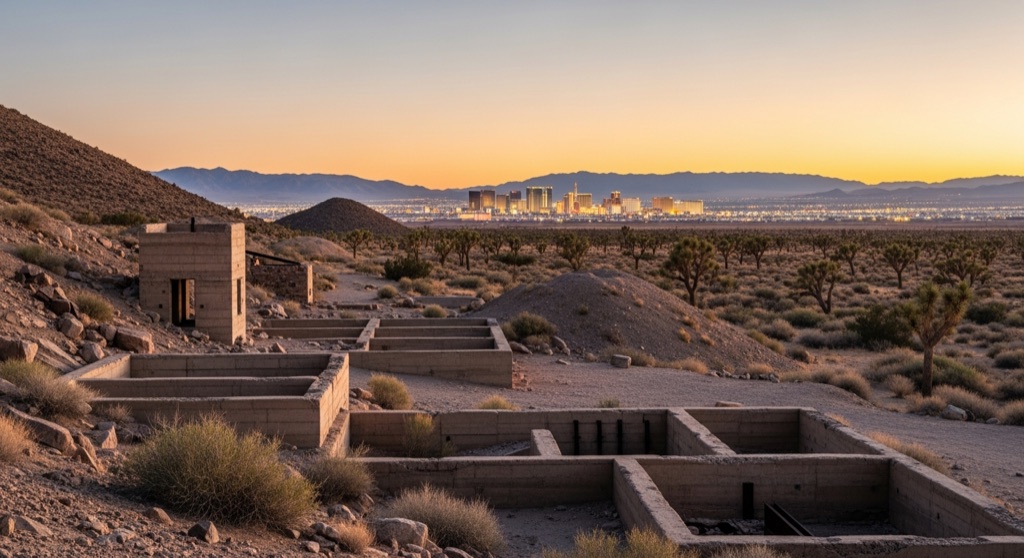 Frenchman MineView only
Established in 1907, the Frenchman Mine was a notorious stock scam orchestrated by a Belgian immigrant who was mistaken for French. The promoters lured investors with false claims of rich gold and gypsum veins, building a 100-ton mill in 1913 before abruptly fleeing the area. Today, only concrete foundations of the mill and scattered tailings piles remain at the base of Frenchman Mountain.
Frenchman MineView only
Established in 1907, the Frenchman Mine was a notorious stock scam orchestrated by a Belgian immigrant who was mistaken for French. The promoters lured investors with false claims of rich gold and gypsum veins, building a 100-ton mill in 1913 before abruptly fleeing the area. Today, only concrete foundations of the mill and scattered tailings piles remain at the base of Frenchman Mountain.
-
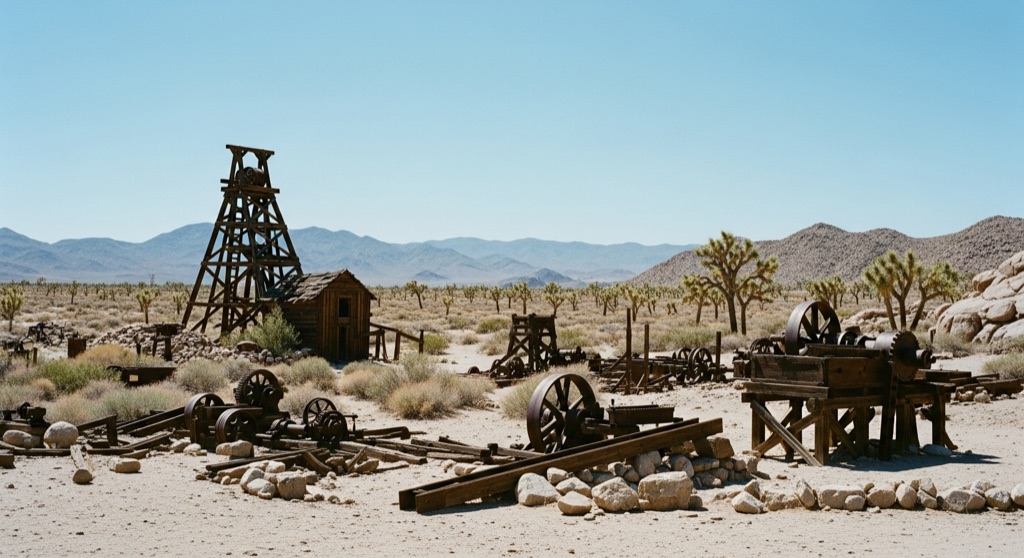 Southern Nevada MineView only
Located just off Highway 95 north of Searchlight, this historic gold and silver mine was established in the early 1900s with the sinking of the Spokane Shaft. Development ceased when miners hit water at 200 feet, prompting them to divert the water to supply a nearby ten-stamp mill. Today, visitors can spot the weathered remains of the mill house, a wooden headframe, and rusted machinery scattered across the desert landscape.
Southern Nevada MineView only
Located just off Highway 95 north of Searchlight, this historic gold and silver mine was established in the early 1900s with the sinking of the Spokane Shaft. Development ceased when miners hit water at 200 feet, prompting them to divert the water to supply a nearby ten-stamp mill. Today, visitors can spot the weathered remains of the mill house, a wooden headframe, and rusted machinery scattered across the desert landscape.
-
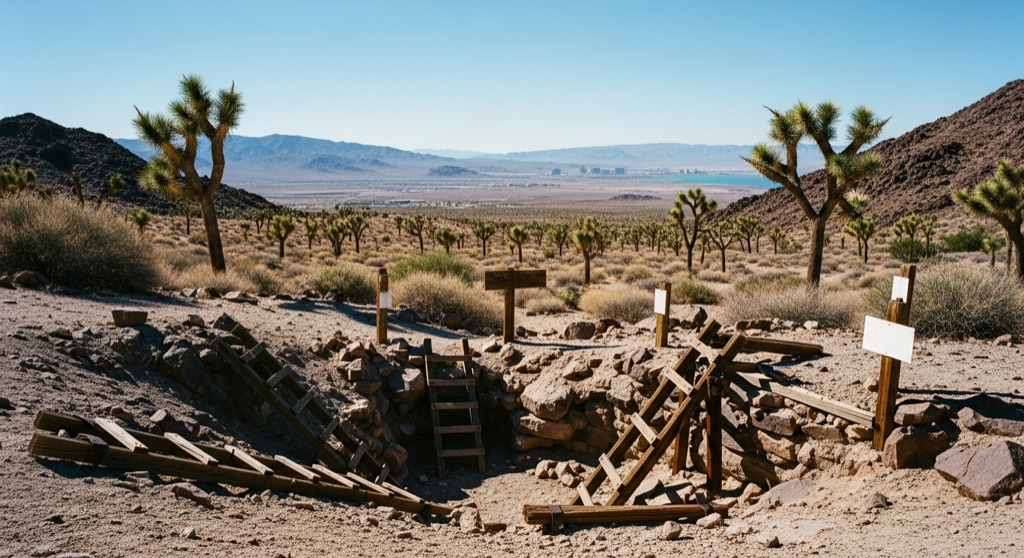 Old Pope MineView only
The Old Pope Mine is a defunct prospecting site located in the rugged Black Mountains of Mohave County, Arizona, within the Lake Mead National Recreation Area. Little is documented about its active years, but it represents early 20th-century desert prospecting efforts in the region. Today, very little physical evidence remains aside from a few shallow shafts containing rickety, dangerous wooden ladders and minor debris.
Old Pope MineView only
The Old Pope Mine is a defunct prospecting site located in the rugged Black Mountains of Mohave County, Arizona, within the Lake Mead National Recreation Area. Little is documented about its active years, but it represents early 20th-century desert prospecting efforts in the region. Today, very little physical evidence remains aside from a few shallow shafts containing rickety, dangerous wooden ladders and minor debris.
-
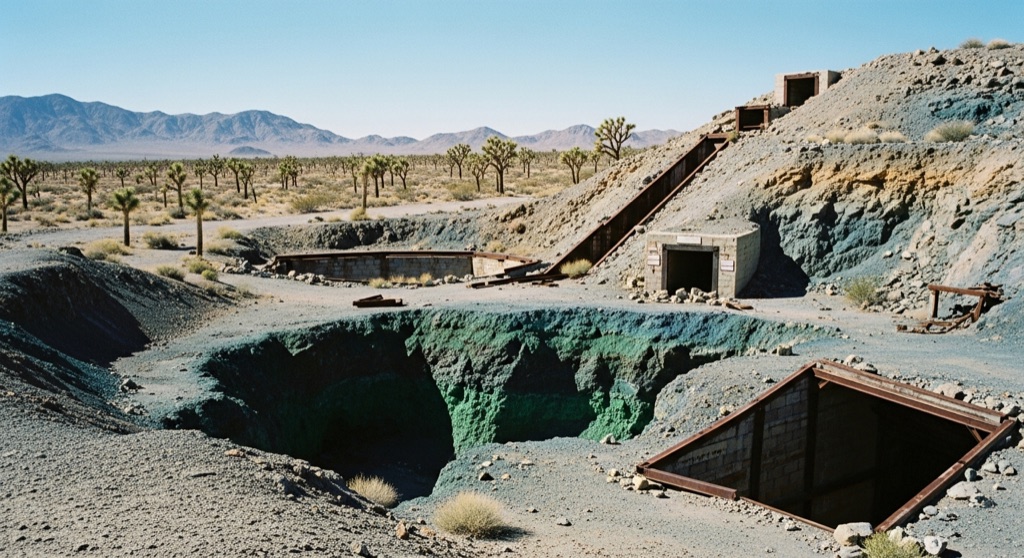 Columbia MineView only
Established in 1886 within the Goodsprings Mining District, the Columbia Mine was a notable producer of copper, lead, and zinc. Today, the desert site features several abandoned adits, a large inclined shaft, and massive open stopes. Visitors can still spot vibrant green malachite and blue azurite veins running through the surface rocks and tailings piles.
Columbia MineView only
Established in 1886 within the Goodsprings Mining District, the Columbia Mine was a notable producer of copper, lead, and zinc. Today, the desert site features several abandoned adits, a large inclined shaft, and massive open stopes. Visitors can still spot vibrant green malachite and blue azurite veins running through the surface rocks and tailings piles.
-
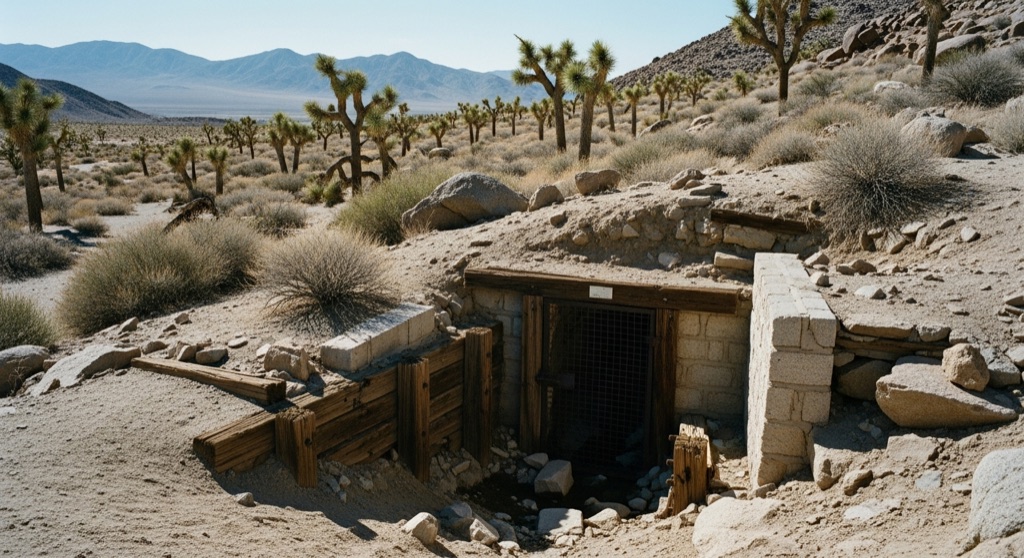 Griffith MineView only
Tucked away in the cool pine forests of Mount Charleston, the Griffith Mine is a historic lead mine dating back to the early 20th century. Today, hikers can find two abandoned adits along the East Fork of the Stanley B Springs Trail, complete with old tailings piles and weathered wooden support beams. The mine entrances are now secured with iron grates, serving as a protected sanctuary for local forest bats.
Griffith MineView only
Tucked away in the cool pine forests of Mount Charleston, the Griffith Mine is a historic lead mine dating back to the early 20th century. Today, hikers can find two abandoned adits along the East Fork of the Stanley B Springs Trail, complete with old tailings piles and weathered wooden support beams. The mine entrances are now secured with iron grates, serving as a protected sanctuary for local forest bats.
-
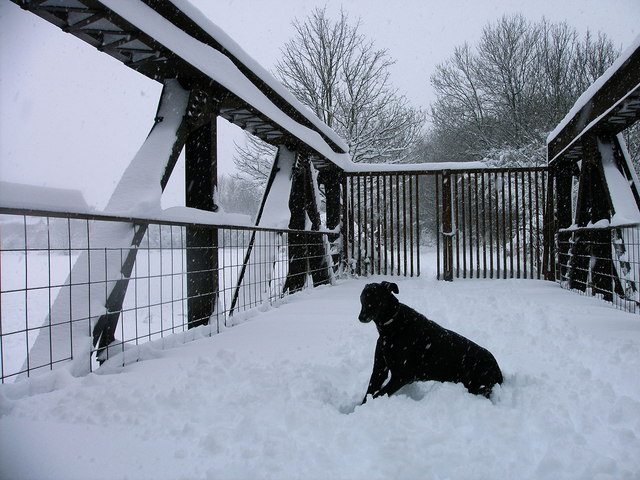 Sunday MineDo not enter
The Sunday Mine was an isolated gypsum mining complex of the historic Arden Plaster Mines, which operated in southwest Las Vegas from 1907 to 1930. The ore was originally hauled via a narrow-gauge railroad to the Arden Plaster Mill before the mine was abandoned when deposits were exhausted. Today, the site features remnants of old railroad grades, concrete foundations, and sealed adits, though modern residential developments have encroached right up to the hillside.
Sunday MineDo not enter
The Sunday Mine was an isolated gypsum mining complex of the historic Arden Plaster Mines, which operated in southwest Las Vegas from 1907 to 1930. The ore was originally hauled via a narrow-gauge railroad to the Arden Plaster Mill before the mine was abandoned when deposits were exhausted. Today, the site features remnants of old railroad grades, concrete foundations, and sealed adits, though modern residential developments have encroached right up to the hillside.
-
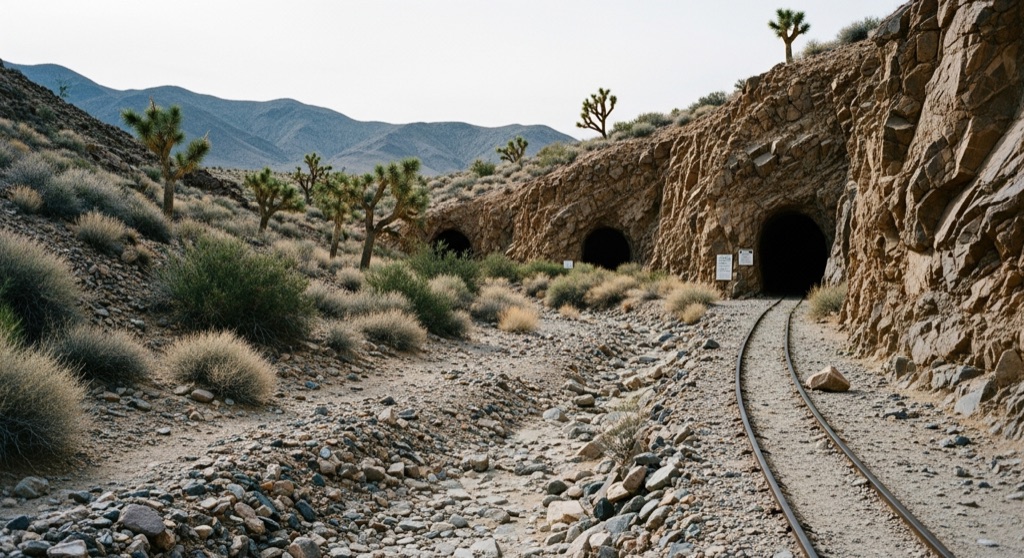 Ore Car MineView only
Located along the trail to the Anniversary Narrows, the Ore Car Mine is a historic 1920s borax mining site that once served as an adit for the nearby Anniversary Mine. Today, the area is a designated rockhounding claim owned by the Southern Nevada Gem & Mineral Society, littered with colorful agates, travertine, and jasper. Visitors can still see the remnants of the old ore car track trail and two short tunnels carved directly into the canyon walls.
Ore Car MineView only
Located along the trail to the Anniversary Narrows, the Ore Car Mine is a historic 1920s borax mining site that once served as an adit for the nearby Anniversary Mine. Today, the area is a designated rockhounding claim owned by the Southern Nevada Gem & Mineral Society, littered with colorful agates, travertine, and jasper. Visitors can still see the remnants of the old ore car track trail and two short tunnels carved directly into the canyon walls.
Abandoned places in Las Vegas — FAQ
Is it legal to visit abandoned places around Las Vegas?
It depends on the site, and each listing here says explicitly — with the reason. Of the 15 with a verified access status: 3 are legal to enter (like The Neon Museum — Night Tours and Goldwell Open Air Museum), 11 are view-only from public land or roadside, and 1 are private property or genuinely unsafe — those are marked "do not enter" rather than romanticised.
Which abandoned & forgotten places in Las Vegas are the strangest?
Ranked by how strange they actually are: St. Thomas Ghost Town, Saint Louis Mine and Azurite Mine. St. Thomas Ghost Town — Established by Mormon settlers in 1865, St.
Where in Las Vegas are they?
Across Downtown / Naked City, Rhyolite ghost town, near Beatty, NV, Moapa Valley, Sandy Valley and Las Vegas and 8 more. Each listing gives the neighborhood and address so you can cluster a couple into one outing.
Are any of the abandoned & forgotten places in Las Vegas free?
Yes — 14 are free to visit, including Goldwell Open Air Museum, St. Thomas Ghost Town and Saint Louis Mine. The rest are mostly low-cost.
Is this a good weird date in Las Vegas?
That's what the list is built for. Every entry has a specific move rather than a vague recommendation — at St. Thomas Ghost Town, for instance: Take a scenic drive to the northern end of Lake Mead National Recreation Area and hike the 2.5-mile loop trail together to photograph the sun-bleached foundations and historic ruins.
How were these abandoned & forgotten places chosen?
An agentic research system digs for the genuinely obscure — the spots even locals miss — and every one is verified against real sources before it makes the list. We deliberately skip the landmarks already on every Las Vegas guide.