Entry No. 48 — the Manchester, UK file — filed under: miscellanea
Stag Cottage
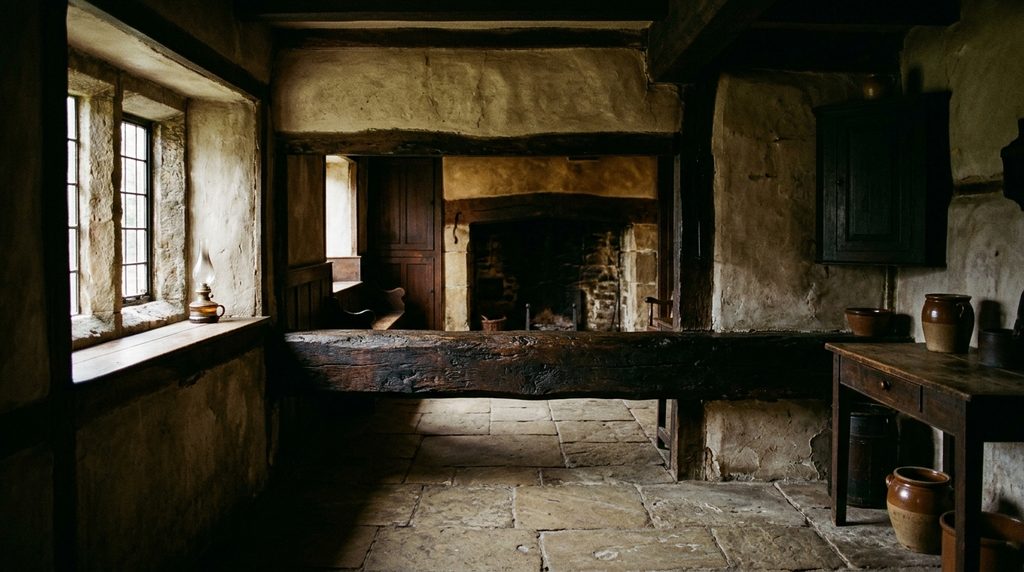
A tucked-away Elizabethan cottage dating to around 1580, with wattle-and-daub infill, stone mullioned windows and a beam only four feet six inches above the floor between the kitchen and living area.
→ Three more oddity shops & curiosities in Manchester, UK — never the same twice
The story
Tucked into Stag Fold—a tiny, flagged yard off Town Gate in the hilltop settlement of Heptonstall—Stag Cottage is reputed to be the oldest domestic dwelling in the village, dating to around 1580. From the path, its weathered millstone grit walls and stone-mullioned windows look like typical upland Yorkshire masonry, but the interior structure preserves genuine Elizabethan framing. Up in the roof space, an original king-post truss still holds exposed panels of 16th-century wattle-and-daub infill—woven wooden laths packed with mud and straw that have stayed bone-dry for over four hundred years.
The layout is inverted and unforgiving to anyone built to modern proportions. The bedrooms are tucked into the lower ground level, pushing the kitchen and living quarters into the open roof space upstairs. Dividing the cooking area from the sitting room is an original transverse oak timber suspended exactly four feet six inches above the floorboards. Unless you stand under four-and-a-half feet tall, you have to duck or fold yourself nearly in half every single time you carry a cup of tea between rooms.
Down on the lower slope at the back of the building sits an entirely different era of civic control. Accessible from the parking area near the old stone pinfold is the entrance to the "dungeon"—a 19th-century village lock-up built into the cottage's basement. Local constables used the cell to stash drunks and petty lawbreakers overnight before hauling them down to the local magistrates. In an odd modern twist of utility, guests renting the cottage are handed the key to the iron padlock so they can park their bicycles inside the old parish drunk tank.
What it's like
Stag Cottage sits in a tiny courtyard tucked behind Town Gate, steps away from the village churchyard where Sylvia Plath is buried. Because it operates as a private holiday rental, you can only see the low beam and wattle-and-daub if you book an overnight stay, but anyone can wander into Stag Fold to inspect the exterior stone mullions or walk around to the rear to see the barred, padlocked doorway of the 19th-century dungeon. Do not attempt to drive into the historic village core; the streets are viciously narrow cobbles with strictly limited parking. Either leave your vehicle at the clearly signed bowling club on Acres Lane or walk up from Hebden Bridge via the Buttress, an unforgivingly steep medieval packhorse path.
The move: Book an overnight stay in this 1580 cottage, heading upstairs to duck beneath the four-foot-six oak beam and admire four-hundred-year-old mud-and-straw wattle in the roof frame.
- 📍 Heptonstall, West Yorkshire
- 💸 $$
- ⚡ Up for anything
- 🌗 Indoors
Where: 38 Town Gate, Heptonstall, Hebden Bridge, West Yorkshire, HX7 7LW
Hours: Added 2026-11-20 — confirm current hours before you go.
Pair it with
- Ellenroad Engine House Steam Museum — After seeing how domestic weavers worked at cottage scale on the moors, head 11 miles south to Rochdale to stand next to the world's largest working mill steam engine that industrialized the trade.
- Uppermill — Trade Heptonstall's hilltop packhorse alleys for another high Pennine stone village 14 miles away, where a self-guided route explores centuries of local canal lore and ghost stories.
- Ring O’ Bells Pub — Continue the theme of grim subterranean architecture at an ancient pub whose cellars hold stories of Royalist ambushes and secret church tunnels.
More weird in Manchester, UK


Good to know
Can you go inside if you aren't staying there?
No. The interior is privately let as self-catering accommodation. However, the exterior, the historic courtyard of Stag Fold, and the basement lock-up door at the rear are openly visible from the public rights of way and the car park by the pinfold.
Why is the beam only four feet six inches high?
It is an unaltered tie beam from the cottage's circa-1580 king-post roof truss. When the upper floor was adapted into living space under the rafters, the structural timber remained fixed in its original Elizabethan position.
What was the basement lock-up used for?
Built into the rear foundations in the 19th century, the stone vault served as Heptonstall's village lock-up, holding local brawlers and offenders overnight. Guests staying at the cottage are now provided the key to store bicycles inside it.
How do you reach Heptonstall without a car?
Frequent local buses run directly from Hebden Bridge railway station up the hillside to Heptonstall. Alternatively, you can hike up the Buttress, a very steep, cobbled packhorse path starting near Hebden Bridge Town Hall.
Plan a visit & invite your people →
Further reading: airbnb.com · historicengland.org.uk · britishlistedbuildings.co.uk · visitcalderdale.com · heptonstall.org
last checked: 2026-11-20