Abandoned places in New York City
16 abandoned and forgotten places around New York City, Renwick Smallpox Hospital Ruin, Opus 40 and Andover Mine among them — and for each one, whether you can legally visit. Ruins, ghost towns and shuttered industry, with the ones that are trespassing or genuinely unsafe marked as such rather than romanticised. They spread across Roosevelt Island, Manhattan, Saugerties, Newton, Ringwood and 12 more areas, so two or three can make a whole afternoon. 16 of them cost nothing. Every entry is hand-vetted against real sources — not scraped off a top-ten list or averaged out of crowd ratings.
Every abandoned place we've verified, nationwide — with its legal-access status →
-
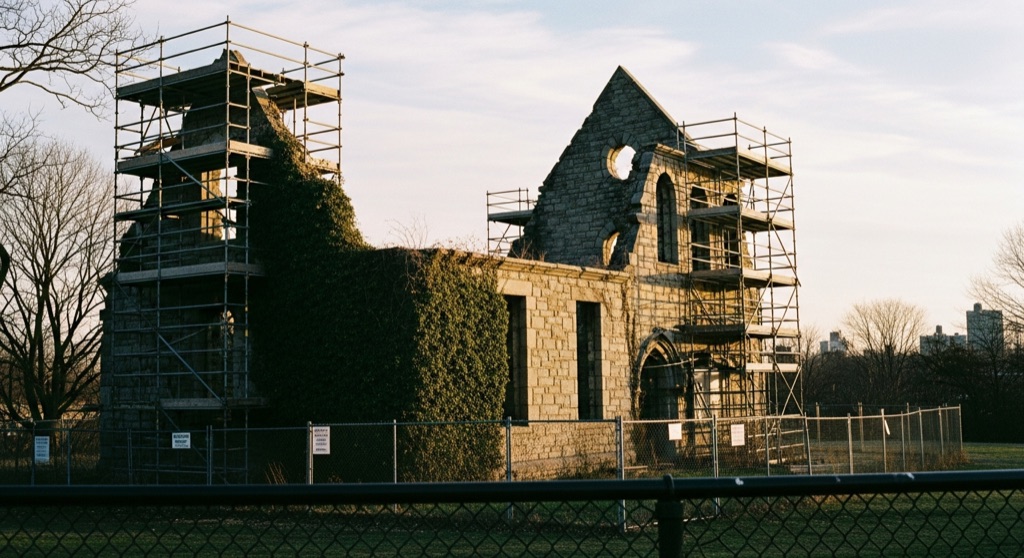 Renwick Smallpox Hospital RuinView only
NYC's only landmarked ruin: a Gothic Revival stone hospital designed in 1856 by James Renwick Jr. (architect of St. Patrick's Cathedral) to isolate smallpox victims. Now a roofless shell of ivy-laced granite walls held up by scaffolding, fenced off but fully visible at the southern tip of Roosevelt Island. You reach it via the Roosevelt Island Tram gliding over the East River, then walk through Southpoint Park and FDR Four Freedoms Park to the ruin's edge.
Renwick Smallpox Hospital RuinView only
NYC's only landmarked ruin: a Gothic Revival stone hospital designed in 1856 by James Renwick Jr. (architect of St. Patrick's Cathedral) to isolate smallpox victims. Now a roofless shell of ivy-laced granite walls held up by scaffolding, fenced off but fully visible at the southern tip of Roosevelt Island. You reach it via the Roosevelt Island Tram gliding over the East River, then walk through Southpoint Park and FDR Four Freedoms Park to the ruin's edge.
-
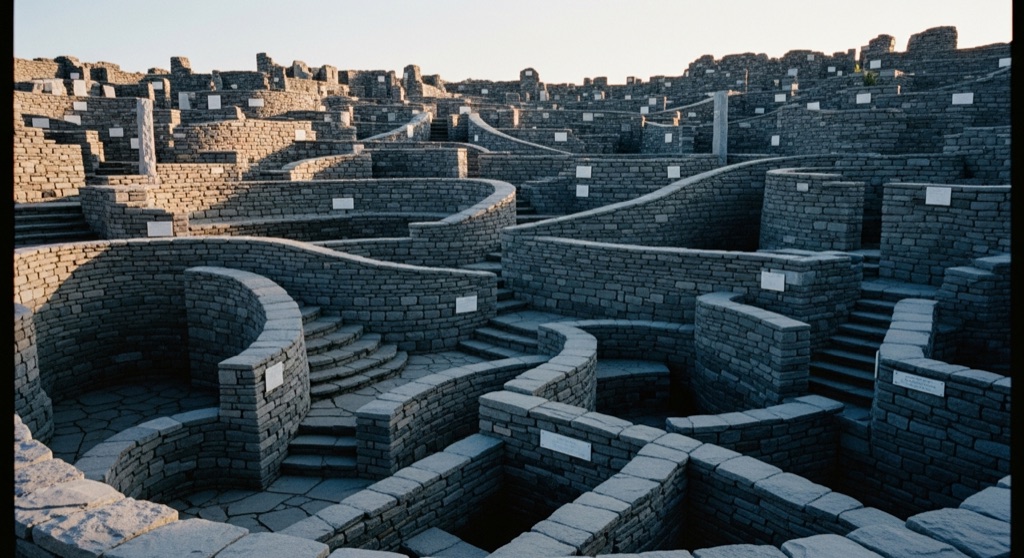 Opus 40Open to visit
Sculptor Harvey Fite spent 37 years single-handedly fitting thousands of bluestone pieces into a sprawling six-acre maze of terraces, ramps, pools, and steps, using only hand tools and no mortar. Inspired by restoring Mayan ruins in Honduras, he built it as a setting for his carvings, crowning it with a nine-ton monolith he raised himself. He died in 1976 after falling on the site, leaving the dry-stone landscape unfinished but open to walk. An on-site Quarryman's Museum displays the 19th-century stone-cutting tools he collected. (Correct address: 356 George Sickle Rd, Saugerties, NY 12477.)
Opus 40Open to visit
Sculptor Harvey Fite spent 37 years single-handedly fitting thousands of bluestone pieces into a sprawling six-acre maze of terraces, ramps, pools, and steps, using only hand tools and no mortar. Inspired by restoring Mayan ruins in Honduras, he built it as a setting for his carvings, crowning it with a nine-ton monolith he raised himself. He died in 1976 after falling on the site, leaving the dry-stone landscape unfinished but open to walk. An on-site Quarryman's Museum displays the 19th-century stone-cutting tools he collected. (Correct address: 356 George Sickle Rd, Saugerties, NY 12477.)
-
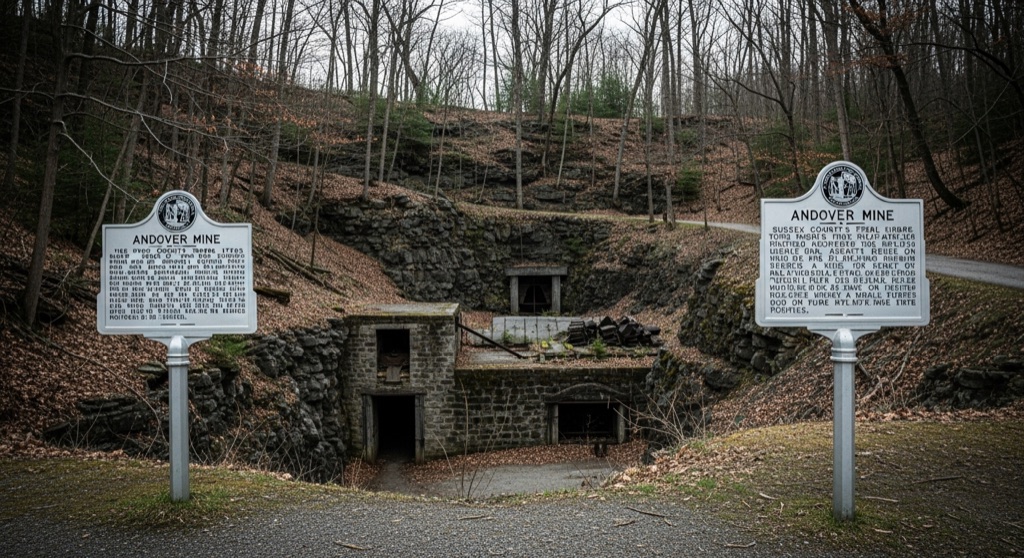 Andover MineDo not enter
Dating back to before 1763, the Andover Mine was once one of New Jersey's most prolific iron mines, famously confiscated during the Revolutionary War to supply steel for George Washington's army. Under the management of Cooper and Hewitt in the mid-19th century, its high-grade ore was used to manufacture the country's first structural steel and cable wire for the Niagara Falls suspension bridge. Today, the long-abandoned site features a dramatic 70-foot-deep open pit, sealed adit portals, and overgrown waste dumps along a rocky cliffside.
Andover MineDo not enter
Dating back to before 1763, the Andover Mine was once one of New Jersey's most prolific iron mines, famously confiscated during the Revolutionary War to supply steel for George Washington's army. Under the management of Cooper and Hewitt in the mid-19th century, its high-grade ore was used to manufacture the country's first structural steel and cable wire for the Niagara Falls suspension bridge. Today, the long-abandoned site features a dramatic 70-foot-deep open pit, sealed adit portals, and overgrown waste dumps along a rocky cliffside.
-
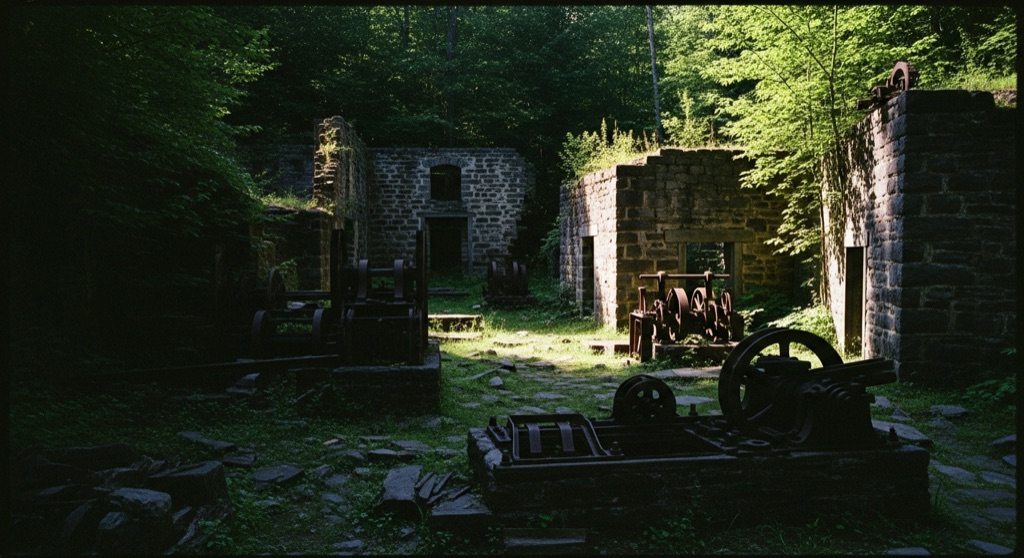 Ringwood Iron Plant MineDo not enter
Dating back to the 1700s, this historic 500-acre iron mining district once supplied raw materials for the American Revolution before closing in 1931. In the late 1960s and 1970s, the Ford Motor Company used the abandoned mine shafts to dump millions of gallons of toxic paint sludge and industrial waste. Today, the heavily contaminated site remains a notorious EPA Superfund area plagued by toxic soil, polluted groundwater, and dangerous sinkholes.
Ringwood Iron Plant MineDo not enter
Dating back to the 1700s, this historic 500-acre iron mining district once supplied raw materials for the American Revolution before closing in 1931. In the late 1960s and 1970s, the Ford Motor Company used the abandoned mine shafts to dump millions of gallons of toxic paint sludge and industrial waste. Today, the heavily contaminated site remains a notorious EPA Superfund area plagued by toxic soil, polluted groundwater, and dangerous sinkholes.
-
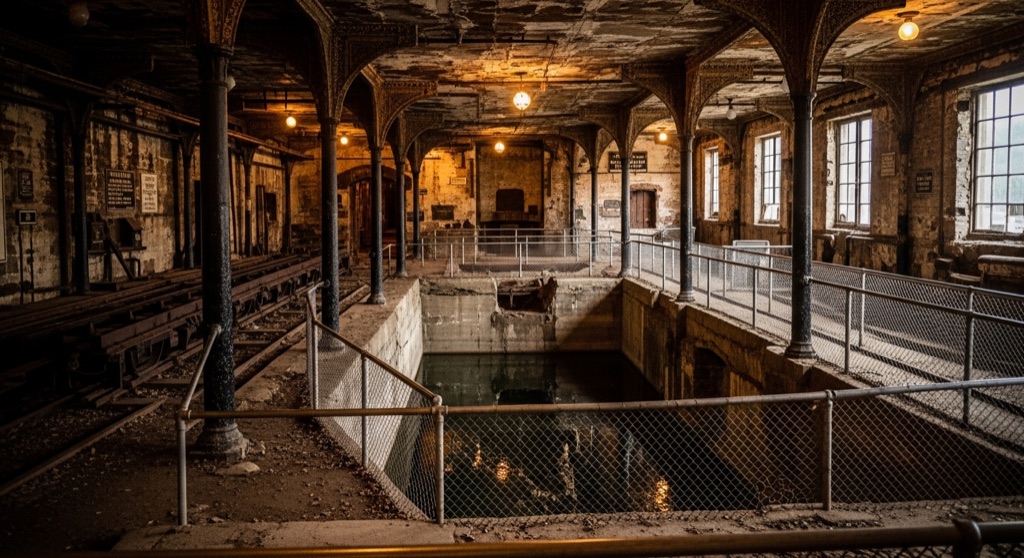 Old Ogden MineView only
The Old Ogden Mine, later incorporated into Thomas Edison's ill-fated Edison Mines complex, is a historic 19th-century iron mine located atop Sparta Mountain. In the 1890s, Edison built a massive magnetic ore-concentrating plant here, but the venture collapsed by 1900 due to cheaper Midwestern ore. Today, the forest has reclaimed the site, leaving behind concrete foundations, the water-filled Horseshoe Cut pit, and remnants of the old railroad.
Old Ogden MineView only
The Old Ogden Mine, later incorporated into Thomas Edison's ill-fated Edison Mines complex, is a historic 19th-century iron mine located atop Sparta Mountain. In the 1890s, Edison built a massive magnetic ore-concentrating plant here, but the venture collapsed by 1900 due to cheaper Midwestern ore. Today, the forest has reclaimed the site, leaving behind concrete foundations, the water-filled Horseshoe Cut pit, and remnants of the old railroad.
-
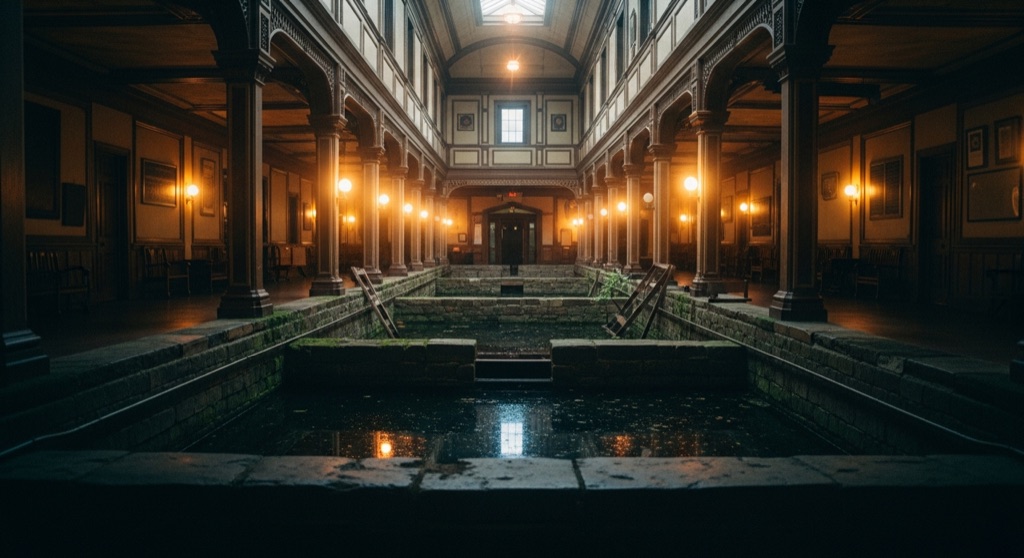 Waterloo MineView only
Located within Allamuchy Mountain State Park, the Waterloo Mine (also known as the Brookfield Mine) is a defunct 19th-century iron mine that operated from approximately 1855 to 1885. Miners extracted magnetite ore from several shafts, which was then transported via the Morris Canal and the Sussex Mine Railroad to nearby furnaces. Today, the site is completely abandoned, with water-filled pits, overgrown trenches, and faint traces of its industrial past hidden deep in the forested hills.
Waterloo MineView only
Located within Allamuchy Mountain State Park, the Waterloo Mine (also known as the Brookfield Mine) is a defunct 19th-century iron mine that operated from approximately 1855 to 1885. Miners extracted magnetite ore from several shafts, which was then transported via the Morris Canal and the Sussex Mine Railroad to nearby furnaces. Today, the site is completely abandoned, with water-filled pits, overgrown trenches, and faint traces of its industrial past hidden deep in the forested hills.
-
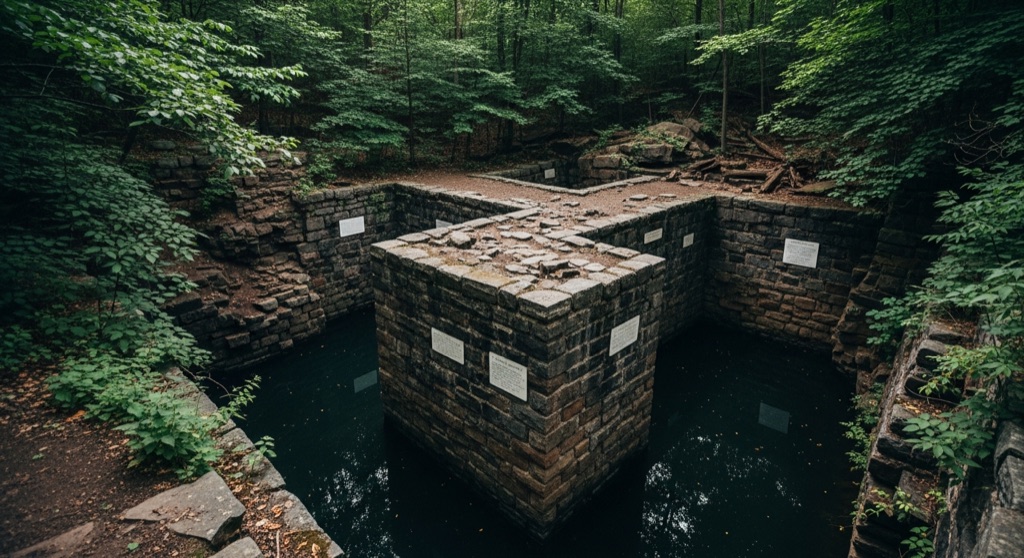 Boston MineView only
Located in Harriman State Park, the Boston Mine is a historic 19th-century iron mine that was last worked around 1880. The site features a striking T-shaped cut in the bedrock and a deep, water-filled pit where magnetite ore was once extracted. Today, hikers can find the quiet, flooded ruins tucked away along the yellow-blazed Dunning Trail.
Boston MineView only
Located in Harriman State Park, the Boston Mine is a historic 19th-century iron mine that was last worked around 1880. The site features a striking T-shaped cut in the bedrock and a deep, water-filled pit where magnetite ore was once extracted. Today, hikers can find the quiet, flooded ruins tucked away along the yellow-blazed Dunning Trail.
-
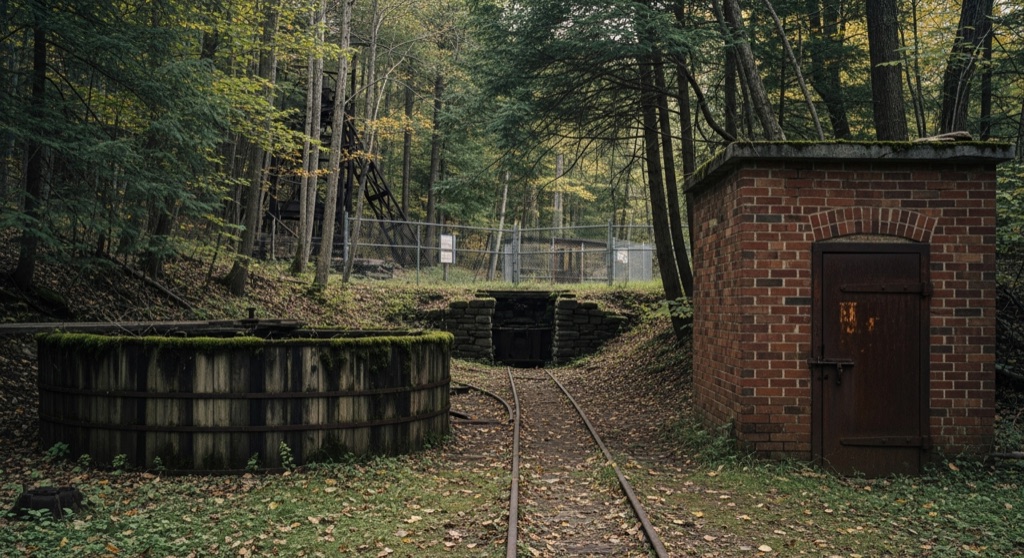 Staley MineView only
Discovered in 1832 to supply the nearby Oxford Furnace, the Staley Mine (also known as the Straley Mine) was a prominent magnetite iron mine that was abandoned before 1868. Today, the site lies within the West Oxford Mountain Natural Resource Area, where hikers can find remnants of the operation, including an old railroad bed, a wooden cistern, and a small brick structure with a rusty bolted door. The historic mine shafts themselves remain in the woods, safely sealed and fenced off by the county.
Staley MineView only
Discovered in 1832 to supply the nearby Oxford Furnace, the Staley Mine (also known as the Straley Mine) was a prominent magnetite iron mine that was abandoned before 1868. Today, the site lies within the West Oxford Mountain Natural Resource Area, where hikers can find remnants of the operation, including an old railroad bed, a wooden cistern, and a small brick structure with a rusty bolted door. The historic mine shafts themselves remain in the woods, safely sealed and fenced off by the county.
-
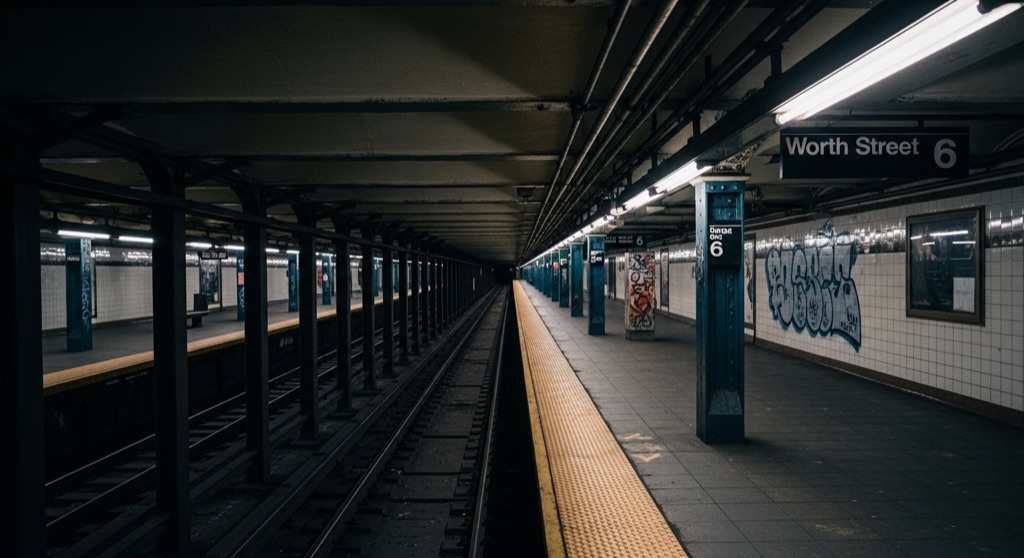 Abandoned Worth St. StationView only
Opened in 1904 as one of the original 28 stations of New York City's first subway line, the Worth Street station was permanently shuttered in 1962. It was decommissioned to accommodate platform extensions at the nearby Brooklyn Bridge-City Hall station, which rendered the stop redundant. Today, its dark, graffiti-covered platforms remain intact underground, bypassed daily by active transit lines.
Abandoned Worth St. StationView only
Opened in 1904 as one of the original 28 stations of New York City's first subway line, the Worth Street station was permanently shuttered in 1962. It was decommissioned to accommodate platform extensions at the nearby Brooklyn Bridge-City Hall station, which rendered the stop redundant. Today, its dark, graffiti-covered platforms remain intact underground, bypassed daily by active transit lines.
-
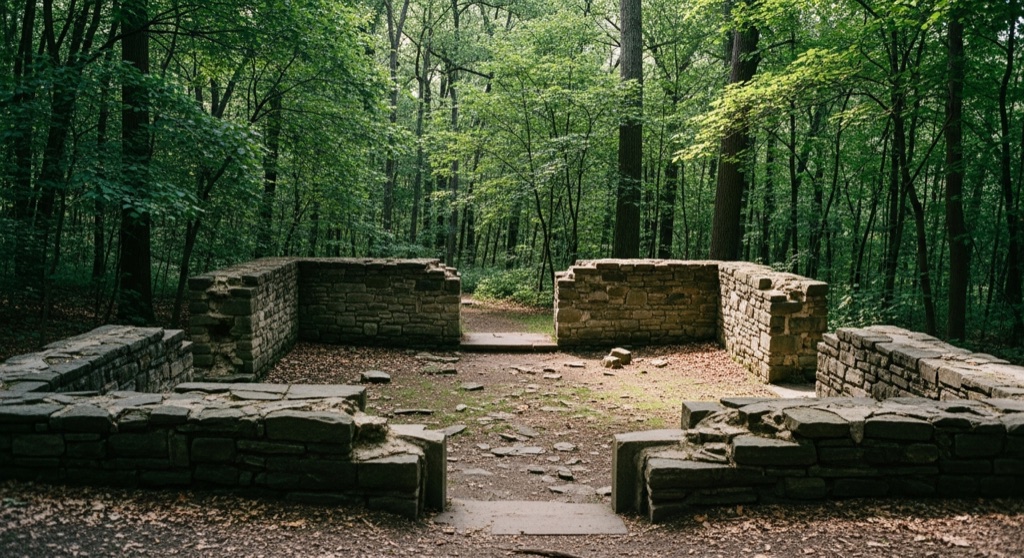 Heyerdahl RuinsOpen to visit
Tucked away in the Staten Island Greenbelt, these stone ruins are the remnants of a home built by Thorwald Heyerdahl in 1861. Heyerdahl attempted to establish a grape orchard on the surrounding acres, but the high magnesium content of the underlying serpentine rock doomed the agricultural venture. Today, only the crumbling stone foundations of the house remain, quietly reclaimed by the forest.
Heyerdahl RuinsOpen to visit
Tucked away in the Staten Island Greenbelt, these stone ruins are the remnants of a home built by Thorwald Heyerdahl in 1861. Heyerdahl attempted to establish a grape orchard on the surrounding acres, but the high magnesium content of the underlying serpentine rock doomed the agricultural venture. Today, only the crumbling stone foundations of the house remain, quietly reclaimed by the forest.
-
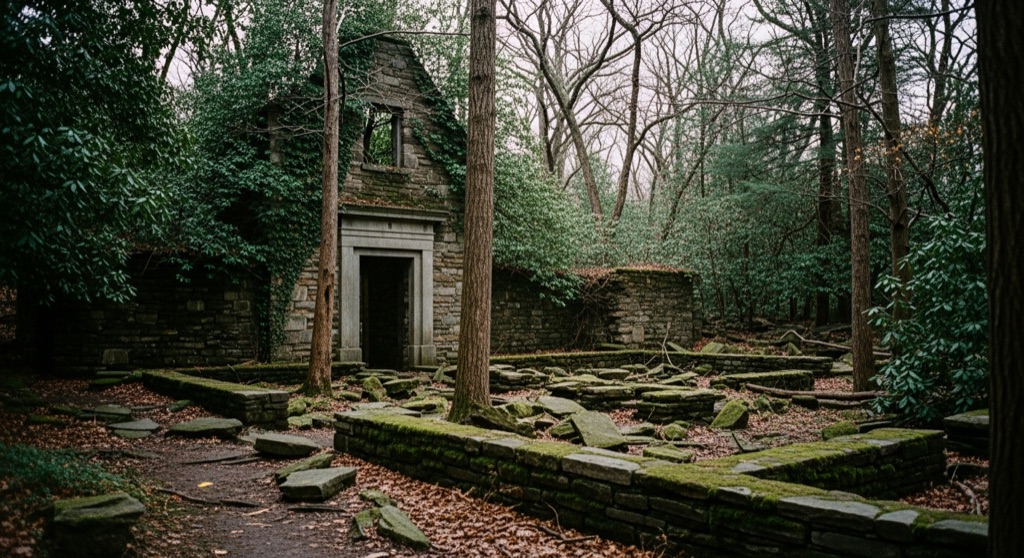 ORAK Mansion RuinsOpen to visit
Built in 1923 by George Briggs Buchanan, a vice president of the company that manufactured Karo syrup, this estate was named 'ORAK' by spelling the product's name backward. After Buchanan's death in 1939, the property was sold to the park and the mansion was eventually demolished in 1973. Today, hikers can explore the remaining stone gatehouse, retaining walls, and foundations as they are slowly reclaimed by the surrounding forest.
ORAK Mansion RuinsOpen to visit
Built in 1923 by George Briggs Buchanan, a vice president of the company that manufactured Karo syrup, this estate was named 'ORAK' by spelling the product's name backward. After Buchanan's death in 1939, the property was sold to the park and the mansion was eventually demolished in 1973. Today, hikers can explore the remaining stone gatehouse, retaining walls, and foundations as they are slowly reclaimed by the surrounding forest.
-
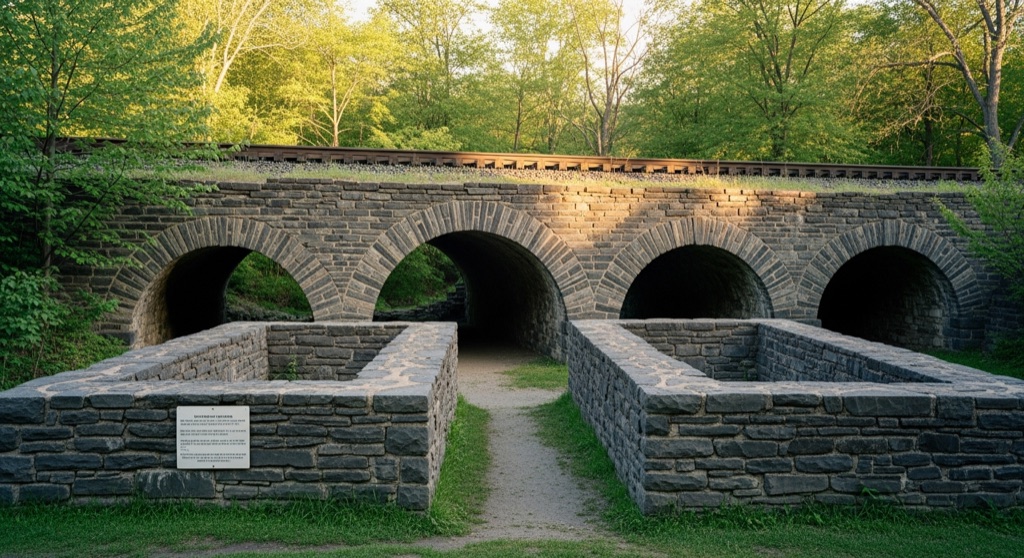 Boonton Iron Works RuinsOpen to visit
Established in 1830, the Boonton Iron Works was a massive iron manufacturing complex that utilized the Morris Canal and Rockaway River to produce nail rods and bar iron. After closing in 1911, the sprawling industrial site was reclaimed by nature and eventually integrated into Grace Lord Park. Today, visitors can explore the remnants of stone foundations, arched blast furnace tunnels, a historic 1866 Stone Arch Bridge, and a 1906 railroad trestle.
Boonton Iron Works RuinsOpen to visit
Established in 1830, the Boonton Iron Works was a massive iron manufacturing complex that utilized the Morris Canal and Rockaway River to produce nail rods and bar iron. After closing in 1911, the sprawling industrial site was reclaimed by nature and eventually integrated into Grace Lord Park. Today, visitors can explore the remnants of stone foundations, arched blast furnace tunnels, a historic 1866 Stone Arch Bridge, and a 1906 railroad trestle.
-
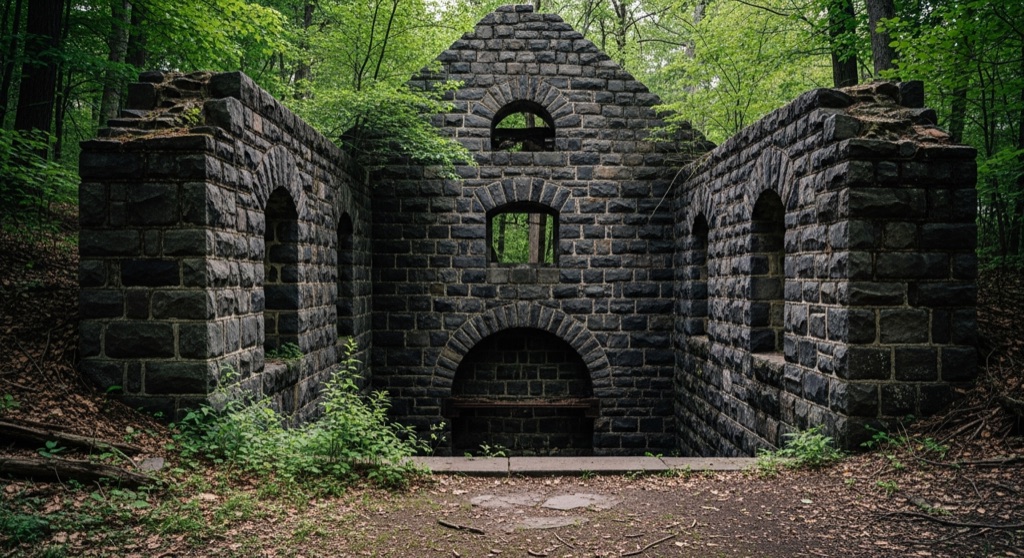 Pine Meadow Lake Pump House RuinsOpen to visit
These stone ruins are the remnants of a water pumping station built by the Civilian Conservation Corps (CCC) in the 1930s during the creation of Pine Meadow Lake. The facility was abandoned shortly after the reservoir was completed and the surrounding land was integrated into the state park. Today, the roofless stone walls and remnants of the old machinery stand quietly along the lake's northern shore, slowly being reclaimed by the forest.
Pine Meadow Lake Pump House RuinsOpen to visit
These stone ruins are the remnants of a water pumping station built by the Civilian Conservation Corps (CCC) in the 1930s during the creation of Pine Meadow Lake. The facility was abandoned shortly after the reservoir was completed and the surrounding land was integrated into the state park. Today, the roofless stone walls and remnants of the old machinery stand quietly along the lake's northern shore, slowly being reclaimed by the forest.
-
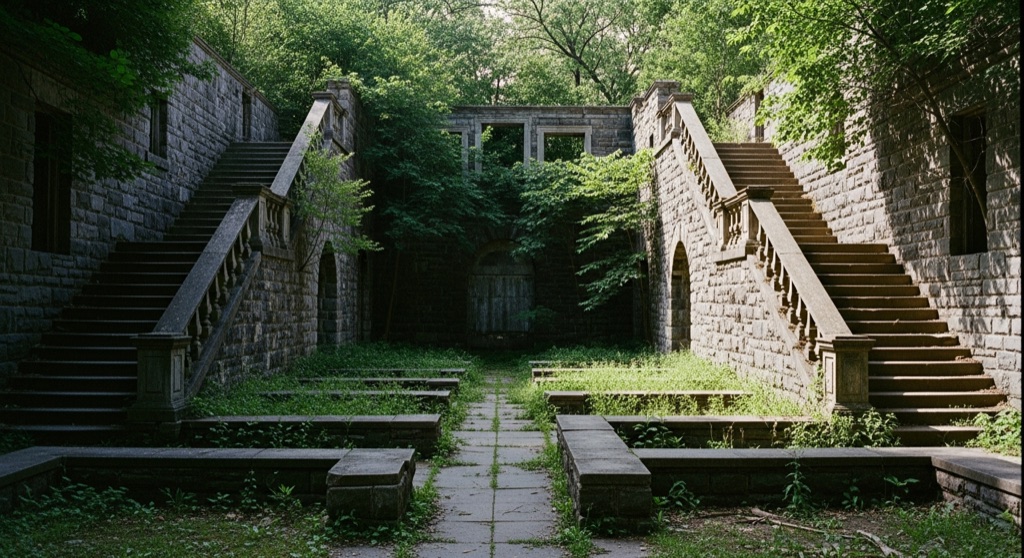 Ruins of King Zog EstateOpen to visit
Originally built between 1906 and 1920 as the Knollwood Estate, this grand 60-room mansion was purchased in 1951 by King Zog I of Albania to serve as his kingdom-in-exile. He never moved in, and rumors of hidden treasure led vandals to ransack the property before it was demolished in 1959. Today, hikers can explore the crumbling stone staircases, walled gardens, and foundation ruins reclaimed by the surrounding Muttontown Preserve.
Ruins of King Zog EstateOpen to visit
Originally built between 1906 and 1920 as the Knollwood Estate, this grand 60-room mansion was purchased in 1951 by King Zog I of Albania to serve as his kingdom-in-exile. He never moved in, and rumors of hidden treasure led vandals to ransack the property before it was demolished in 1959. Today, hikers can explore the crumbling stone staircases, walled gardens, and foundation ruins reclaimed by the surrounding Muttontown Preserve.
-
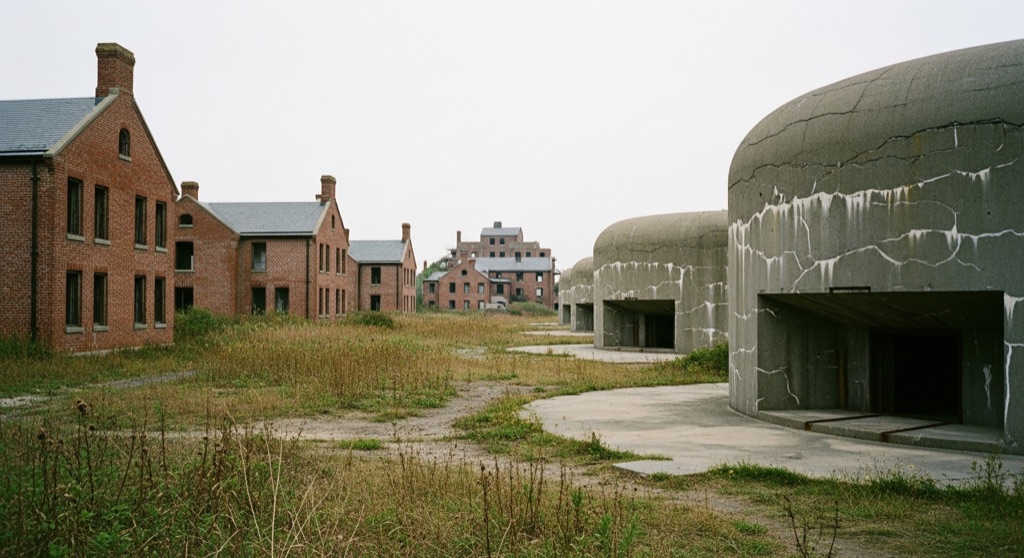 Ruined Military Structures of Fort HancockOpen to visit
Situated on the Sandy Hook peninsula, these coastal defense ruins represent a century of military history guarding the entrance to New York Harbor. The site features decaying brick barracks, crumbling Officers' Row mansions, and massive concrete gun batteries dating from the late 19th century through the Cold War. Today, these imposing structures are slowly being reclaimed by coastal vegetation, offering a haunting contrast to the surrounding beaches.
Ruined Military Structures of Fort HancockOpen to visit
Situated on the Sandy Hook peninsula, these coastal defense ruins represent a century of military history guarding the entrance to New York Harbor. The site features decaying brick barracks, crumbling Officers' Row mansions, and massive concrete gun batteries dating from the late 19th century through the Cold War. Today, these imposing structures are slowly being reclaimed by coastal vegetation, offering a haunting contrast to the surrounding beaches.
-
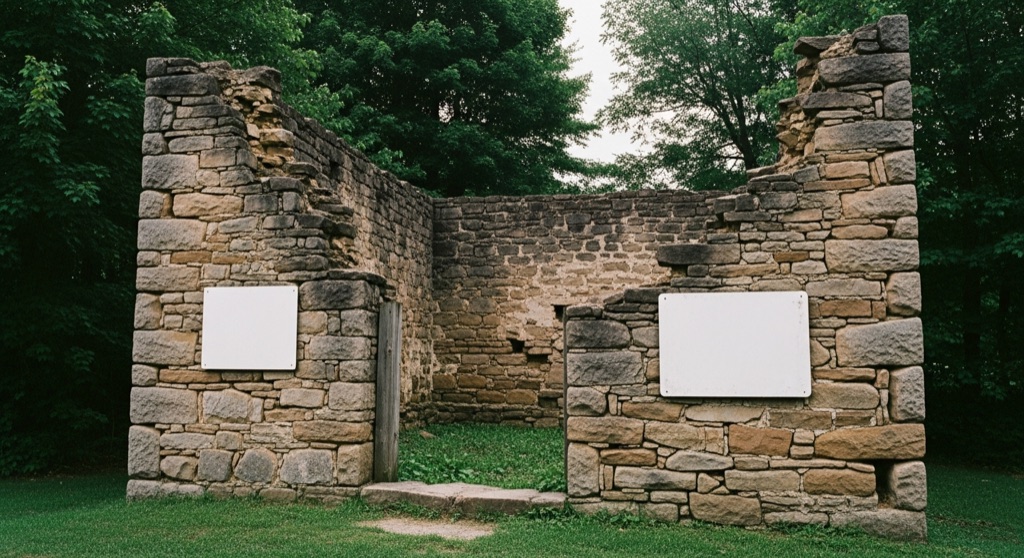 Ruins of Lincoln Blacksmith ShopView only
Dating back to the early 18th century, this roofless sandstone ruin was once an active blacksmith shop and iron forge. It was operated by Abraham Lincoln, the great-great-great-uncle of the 16th U.S. President. Today, only the crumbling, roofless stone walls of the structure remain standing near the roadside.
Ruins of Lincoln Blacksmith ShopView only
Dating back to the early 18th century, this roofless sandstone ruin was once an active blacksmith shop and iron forge. It was operated by Abraham Lincoln, the great-great-great-uncle of the 16th U.S. President. Today, only the crumbling, roofless stone walls of the structure remain standing near the roadside.
Abandoned places in New York City — FAQ
Is it legal to visit abandoned places around New York City?
It depends on the site, and each listing here says explicitly — with the reason. Of the 16 with a verified access status: 7 are legal to enter (like Opus 40 and Heyerdahl Ruins), 7 are view-only from public land or roadside, and 2 are private property or genuinely unsafe — those are marked "do not enter" rather than romanticised.
Which abandoned & forgotten places in New York City are the strangest?
Ranked by how strange they actually are: Andover Mine, Ringwood Iron Plant Mine and Old Ogden Mine. Andover Mine — Dating back to before 1763, the Andover Mine was once one of New Jersey's most prolific iron mines, famously confiscated during the Revolutionary War to supply steel for George Washington's army.
Where in New York City are they?
Across Roosevelt Island, Manhattan, Saugerties, Newton, Ringwood and Sparta and 11 more. Each listing gives the neighborhood and address so you can cluster a couple into one outing.
Are any of the abandoned & forgotten places in New York City free?
Yes — 16 are free to visit, including Renwick Smallpox Hospital Ruin, Opus 40 and Andover Mine. The rest are mostly low-cost.
Is this a good weird date in New York City?
That's what the list is built for. Every entry has a specific move rather than a vague recommendation — at Andover Mine, for instance: Take a scenic hike along the nearby Sussex Branch Trail to enjoy the local woods and view the historic markers detailing Sussex County's early industrial history from a safe distance.
How were these abandoned & forgotten places chosen?
An agentic research system digs for the genuinely obscure — the spots even locals miss — and every one is verified against real sources before it makes the list. We deliberately skip the landmarks already on every New York City guide.