Entry No. 49 — the Pensacola & Emerald Coast file — filed under: miscellanea
Emerald Coast Wildlife Refuge
A working native wildlife hospital and refuge where visitors can look through one-way observation windows into the ICU and exam rooms, and meet resident animal ambassadors.
→ Three at a time, never the same twice — explore weird Pensacola & Emerald Coast
The story
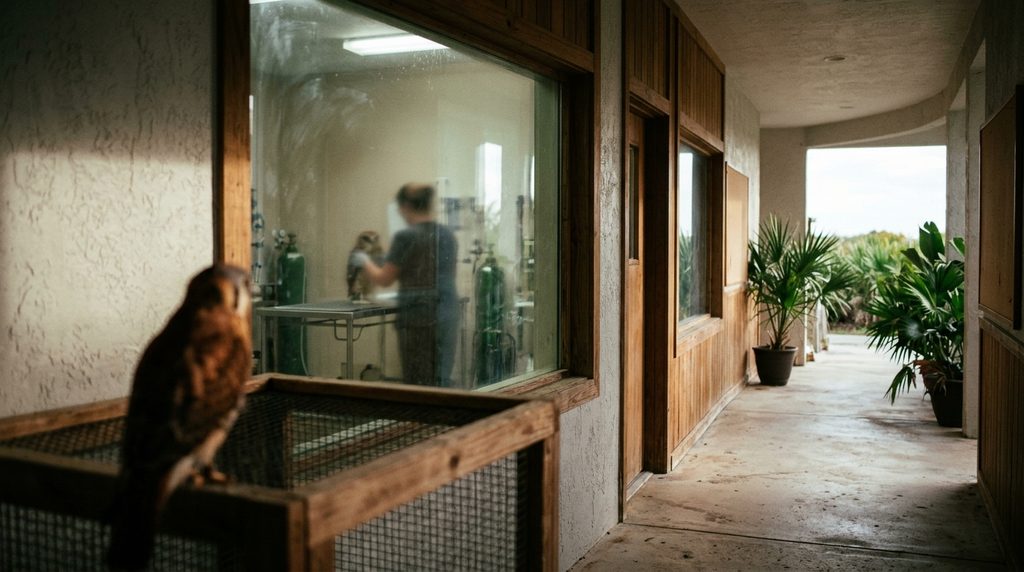
Most wildlife rehabilitation centers operate behind locked gates and heavy blackout curtains, and for good reason: wild animals terrified by human eyes can rapidly deteriorate from capture myopathy. For decades after its 1994 start, the Emerald Coast Wildlife Refuge patched together operations out of private living rooms, trailers, and temporary outposts in Destin and Okaloosa Island. When the team finally moved to custom-built acreage in Navarre in late 2019, they designed the facility around a rare architectural compromise: observation through one-way mirrored glass.
Step into the education center hallway and you find yourself peering straight into an active triage ward, surgical suite, ICU, and neonate nursery. Because the glass only lets light through from the clinical side, you can watch veterinarians debride a cracked turtle shell, dress a red-tailed hawk's injured wing, or tube-feed a litter of orphaned opossums without the animals ever detecting your presence. It turns the unglamorous, sterile reality of emergency wildlife medicine into a silent, real-time fishbowl.
The clinic admits around 2,000 injured, displaced, or sick native Florida animals every year, alongside running the regional stranding network that handles beached dolphins and marine mammals along the coast. The animals that cannot safely return to the wild become permanent resident ambassadors, living in outdoor enclosures that make clear this is a recovery hospital rather than an entertainment park.
What it's like
Tucked away on Cloptons Circle off State Road 87, the campus feels worlds away from Highway 98's beach strips. The atmosphere is quiet, low-key, and distinctly clinical rather than touristy. What you see through the hospital observation windows depends entirely on what came through the intake door that morning—you might catch an emergency procedure under surgical lights, or you might look into quiet incubators and clean stainless steel. Outside, unpaved paths wind around enclosures housing permanent raptor and mammal ambassadors. Keep your voice down near the observation glass, wear walking shoes, and verify visitor hours before making the trip, since the public education wing operates on a narrower window than the daily intake drop-off gate.
The move: Peer together through the one-way mirrored glass to see who’s in the wildlife ICU, then meet the resident animal ambassadors.
- 📍 Navarre
- 💸 $$
- ⚡ Up for anything
- 🌗 Indoors
Where: 3051 Cloptons Circle, Navarre, FL 32566, USA
Hours: Added 2026-11-17 — confirm current hours before you go.
Pair it with
- Gulf Coast Kiln Walk — Just two miles up the road, pair the clinical precision of the wildlife hospital with a secluded wood-fired clearing featuring a 32-foot Anagama pottery kiln.
- Glow Paddle — After seeing native coastal fauna undergoing rehab by day, head down to the Navarre sound to float above the water after dark in transparent, illuminated kayaks.
- Gulf Breeze Zoo & Tamarin Boardwalk — A short drive west down Highway 98 lets you contrast ECWR's intimate, native-focused trauma hospital with a traditional 50-acre commercial safari park.
More weird in Pensacola & Emerald Coast
Good to know
Can you touch or handle the animals?
No. This is a licensed wildlife hospital and permanent sanctuary. Patients in medical recovery are observed strictly through one-way glass to prevent stress, and permanent animal ambassadors remain secured in their habitats.
What kinds of animals does the refuge treat?
The staff treats native Florida wildlife ranging from songbirds, raptors, and pelicans to squirrels, opossums, and turtles, while also operating the authorized response team for regional marine mammal strandings.
What should you do if you find an injured wild animal?
The refuge accepts native wildlife drop-offs daily between 8 a.m. and 4 p.m. If arriving when the education center is closed to general visitors, follow the posted phone instructions at the front gate for staff assistance.
Is the facility a state-run park?
No. Emerald Coast Wildlife Refuge is an independent 501(c)(3) nonprofit that receives no standard government operating budget, relying instead on gate admissions, donations, and volunteer support.
Plan a visit & invite your people →
Further reading: Official site · visitflorida.com · wuwf.org · Wikipedia
last checked: 2026-11-17