Abandoned places in Salt Lake City
15 abandoned and forgotten places around Salt Lake City, Mule Hollow Mine, Silver King Mill and Maxfield Mine among them — and for each one, whether you can legally visit. Ruins, ghost towns and shuttered industry, with the ones that are trespassing or genuinely unsafe marked as such rather than romanticised. They spread across Salt Lake City, Park City, Spanish Fork, Eureka and 4 more areas, so two or three can make a whole afternoon. 15 of them cost nothing. Every entry is hand-vetted against real sources — not scraped off a top-ten list or averaged out of crowd ratings.
Every abandoned place we've verified, nationwide — with its legal-access status →
-
 Mule Hollow MineView only
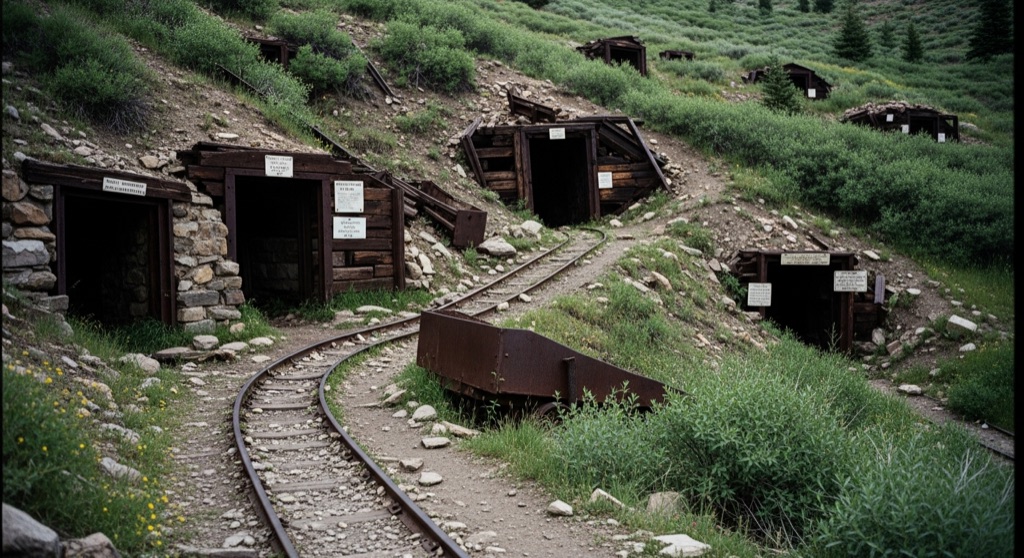
Tucked away in Big Cottonwood Canyon, the Mule Hollow Mine is a relic of the late 19th or early 20th-century mining boom in the Wasatch Mountains. While no structures remain standing, hikers can still find old cart tracks, rusted metal scrap, and overgrown tailings piles along the steep trail. Several collapsed mine portals are hidden in the brush near the main site.
Mule Hollow MineView only
Tucked away in Big Cottonwood Canyon, the Mule Hollow Mine is a relic of the late 19th or early 20th-century mining boom in the Wasatch Mountains. While no structures remain standing, hikers can still find old cart tracks, rusted metal scrap, and overgrown tailings piles along the steep trail. Several collapsed mine portals are hidden in the brush near the main site.
-
 Silver King MillView only
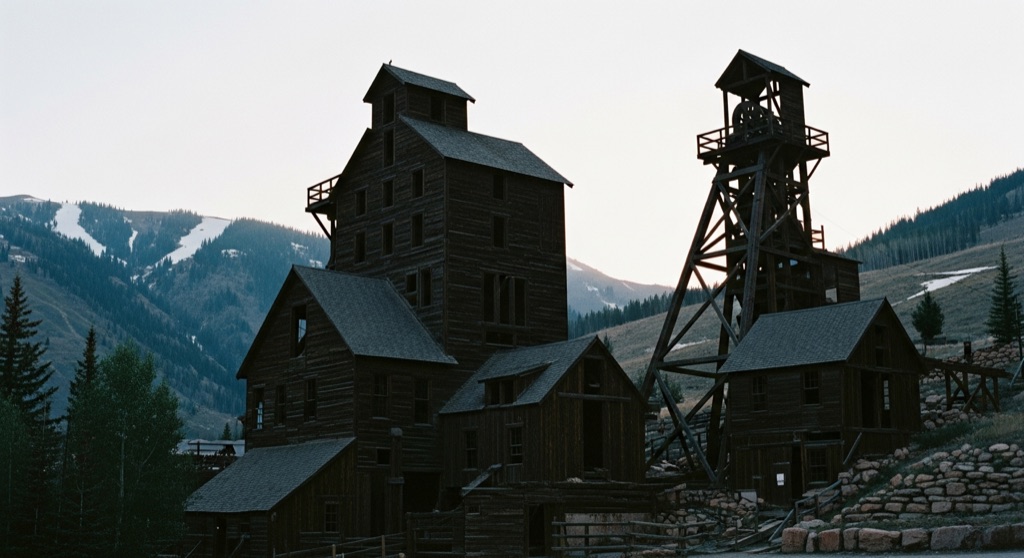
The Silver King Mill is a massive, multi-story historic ore-processing facility built in 1921 after a fire destroyed the original structure. Serving one of Park City's most lucrative silver mines, the mill utilized advanced froth flotation technology until operations ceased in 1953. Today, the towering wooden ruins and nearby headframe stand as iconic landmarks on the slopes of Park City Mountain Resort.
Silver King MillView only
The Silver King Mill is a massive, multi-story historic ore-processing facility built in 1921 after a fire destroyed the original structure. Serving one of Park City's most lucrative silver mines, the mill utilized advanced froth flotation technology until operations ceased in 1953. Today, the towering wooden ruins and nearby headframe stand as iconic landmarks on the slopes of Park City Mountain Resort.
-
 Maxfield MineView only
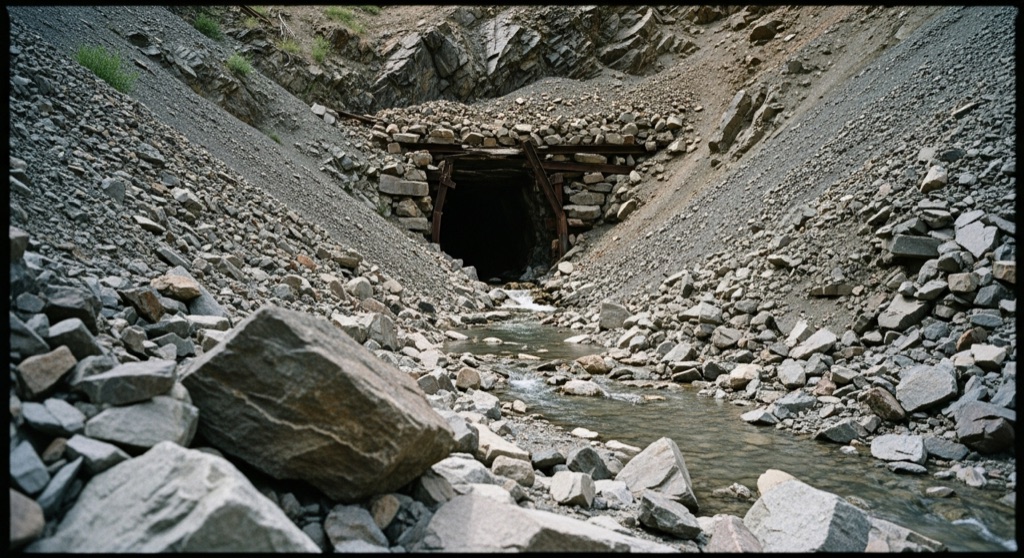
Discovered in 1872 in Big Cottonwood Canyon, the Maxfield Mine was a highly productive lead and silver operation that yielded over $1 million in ore by the early 20th century. Today, the mine's tunnels are completely caved in and blasted shut, leaving only a water-flowing portal and extensive tailings piles along Mill A Gulch. The site is now a popular destination for rockhounds searching for quartz and pyrite crystals among the historic debris.
Maxfield MineView only
Discovered in 1872 in Big Cottonwood Canyon, the Maxfield Mine was a highly productive lead and silver operation that yielded over $1 million in ore by the early 20th century. Today, the mine's tunnels are completely caved in and blasted shut, leaving only a water-flowing portal and extensive tailings piles along Mill A Gulch. The site is now a popular destination for rockhounds searching for quartz and pyrite crystals among the historic debris.
-
 Wasatch MineView only
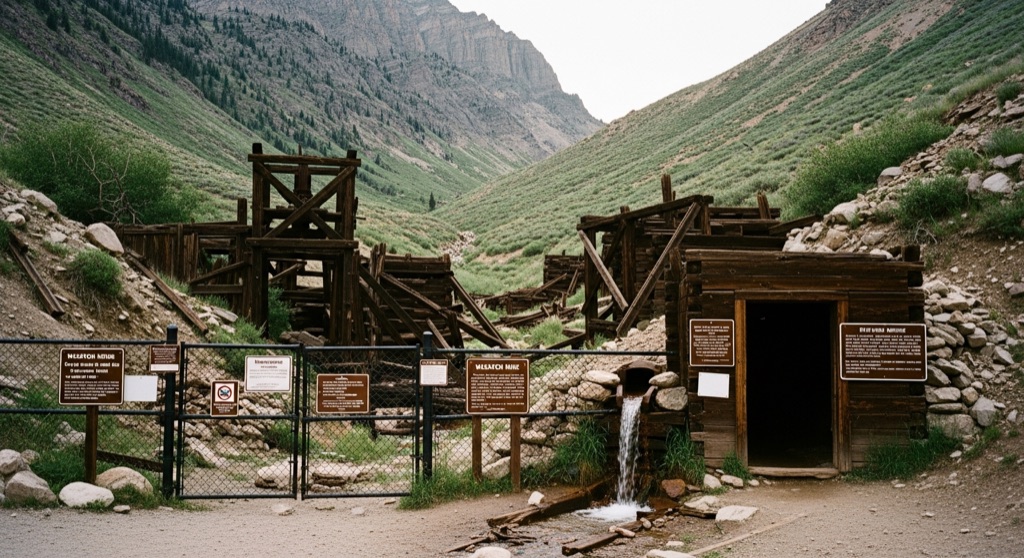
Located along the Mineral Fork Trail in Big Cottonwood Canyon, the Wasatch Mine is a historic late 19th-century gold and silver mine that operated until the 1940s. Today, hikers can find the gated mine adit, wooden structural ruins, and a rust-colored stream trickling from the entrance. The site offers a glimpse into the canyon's rich mining era, set against a dramatic mountain backdrop.
Wasatch MineView only
Located along the Mineral Fork Trail in Big Cottonwood Canyon, the Wasatch Mine is a historic late 19th-century gold and silver mine that operated until the 1940s. Today, hikers can find the gated mine adit, wooden structural ruins, and a rust-colored stream trickling from the entrance. The site offers a glimpse into the canyon's rich mining era, set against a dramatic mountain backdrop.
-
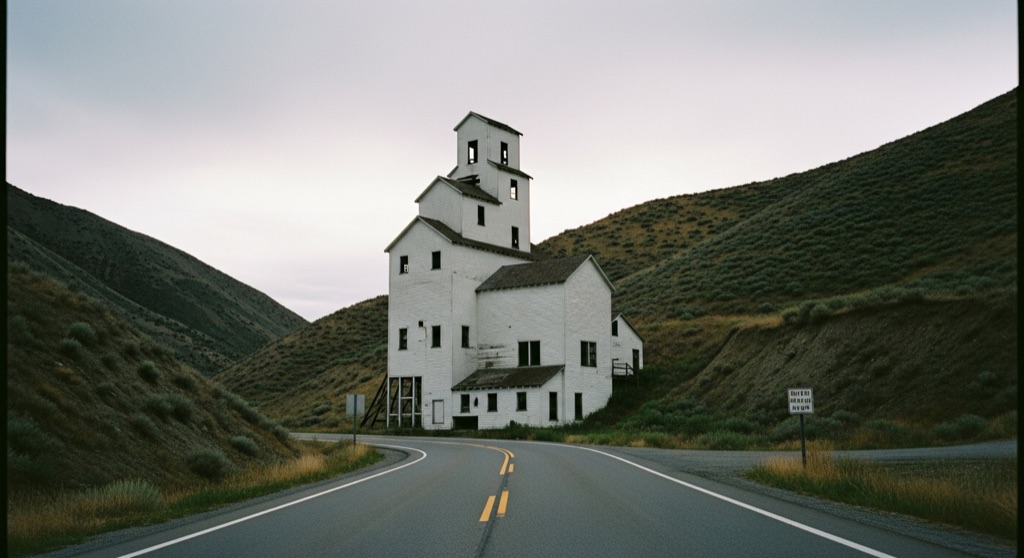 Dream MineView only
Founded in 1894 by John Hyrum Koyle after a series of prophetic dreams, this unproductive gold mine was intended to fund the LDS church during a future financial apocalypse. Despite decades of excavation and thousands of stockholders, no gold was ever found, and Koyle was eventually excommunicated. Today, the striking, multi-tiered white mill building stands abandoned on the hillside, though the Relief Mine Company still holds annual shareholder meetings.
Dream MineView only
Founded in 1894 by John Hyrum Koyle after a series of prophetic dreams, this unproductive gold mine was intended to fund the LDS church during a future financial apocalypse. Despite decades of excavation and thousands of stockholders, no gold was ever found, and Koyle was eventually excommunicated. Today, the striking, multi-tiered white mill building stands abandoned on the hillside, though the Relief Mine Company still holds annual shareholder meetings.
-
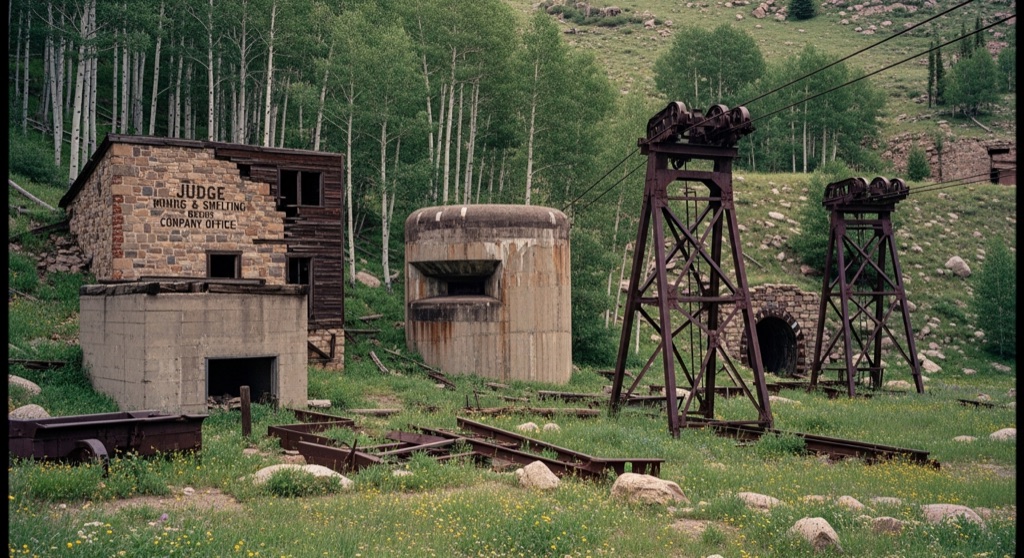 Judge Mine TunnelView only
Originally constructed in 1887 as the Anchor Tunnel, this historic drainage and transportation tunnel was built to relieve the notoriously wet Daly-Judge silver mine. While the tunnel itself still actively drains water for Park City's municipal supply, the surrounding site is home to fascinating abandoned ruins, including the Judge Mining and Smelting Company Office, a concrete explosives bunker, and rusted aerial tramway towers. These relics are scattered along the Daly Canyon Trail, offering a quiet, atmospheric glimpse into Park City's late 19th-century silver boom.
Judge Mine TunnelView only
Originally constructed in 1887 as the Anchor Tunnel, this historic drainage and transportation tunnel was built to relieve the notoriously wet Daly-Judge silver mine. While the tunnel itself still actively drains water for Park City's municipal supply, the surrounding site is home to fascinating abandoned ruins, including the Judge Mining and Smelting Company Office, a concrete explosives bunker, and rusted aerial tramway towers. These relics are scattered along the Daly Canyon Trail, offering a quiet, atmospheric glimpse into Park City's late 19th-century silver boom.
-
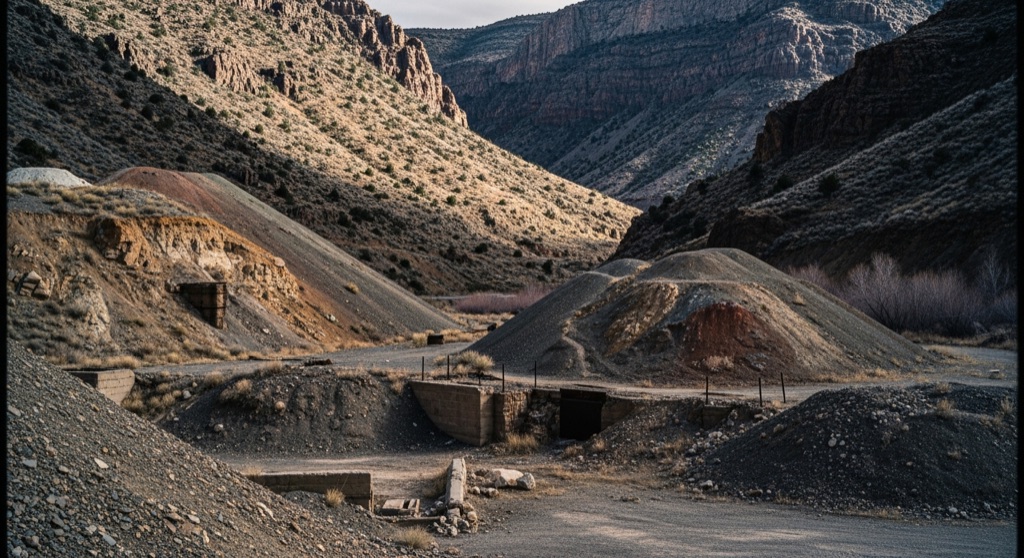 Central Standard MineView only
Sunk in the early 1920s within the East Tintic Mining District, the Central Standard Mine was a gold, silver, and lead prospect that reached a depth of 640 feet. The operation was plagued by unstable, water-logged rock and was abandoned in 1922 due to 'bad ground' without ever producing commercial ore. Today, the site features a collapsed and sealed shaft, concrete foundations, and weathered tailing piles near the ghost town of Homansville.
Central Standard MineView only
Sunk in the early 1920s within the East Tintic Mining District, the Central Standard Mine was a gold, silver, and lead prospect that reached a depth of 640 feet. The operation was plagued by unstable, water-logged rock and was abandoned in 1922 due to 'bad ground' without ever producing commercial ore. Today, the site features a collapsed and sealed shaft, concrete foundations, and weathered tailing piles near the ghost town of Homansville.
-
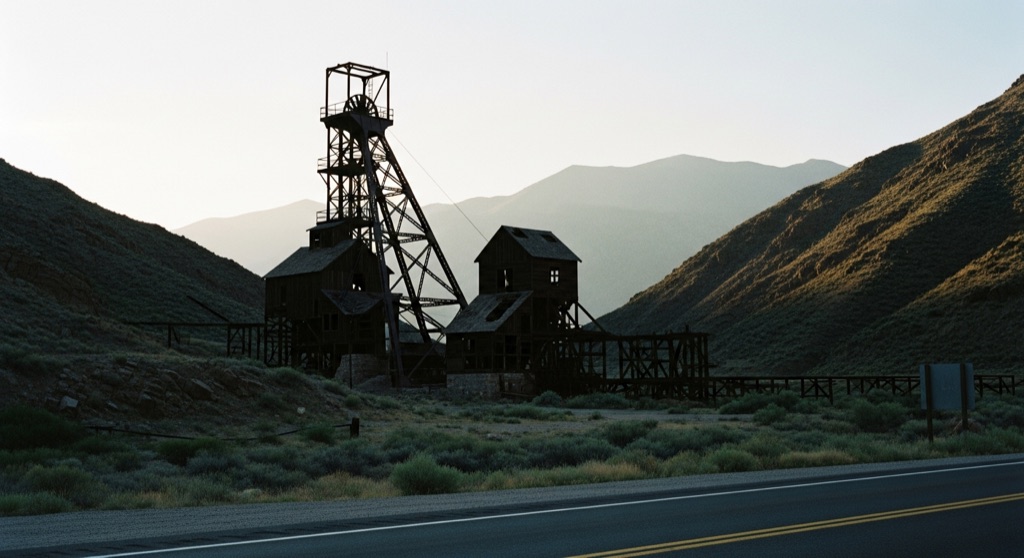 Grand Central MineView only
The Grand Central Mine is a historic gold and silver mine situated on the steep slopes of Eureka Peak in the Tintic Mining District. Operating from 1875 until 1960, it was famously the first mine west of the Mississippi River to install a steel headframe, funded by its rich gold yields. Today, the iconic 50-foot steel A-frame headframe and the dilapidated remains of its surface plant still stand against the mountain backdrop.
Grand Central MineView only
The Grand Central Mine is a historic gold and silver mine situated on the steep slopes of Eureka Peak in the Tintic Mining District. Operating from 1875 until 1960, it was famously the first mine west of the Mississippi River to install a steel headframe, funded by its rich gold yields. Today, the iconic 50-foot steel A-frame headframe and the dilapidated remains of its surface plant still stand against the mountain backdrop.
-
 Old Mayflower MineDo not enter
The Old Mayflower Mine is an abandoned lead and zinc mine located in the upper reaches of West Canyon in Utah County. Dating back to the late 19th or early 20th century, the underground workings were already reported as largely caved-in by 1927. Today, the site lies on gated, privately owned mountain land, leaving only historical traces and geological remnants of its brief mining era.
Old Mayflower MineDo not enter
The Old Mayflower Mine is an abandoned lead and zinc mine located in the upper reaches of West Canyon in Utah County. Dating back to the late 19th or early 20th century, the underground workings were already reported as largely caved-in by 1927. Today, the site lies on gated, privately owned mountain land, leaving only historical traces and geological remnants of its brief mining era.
-
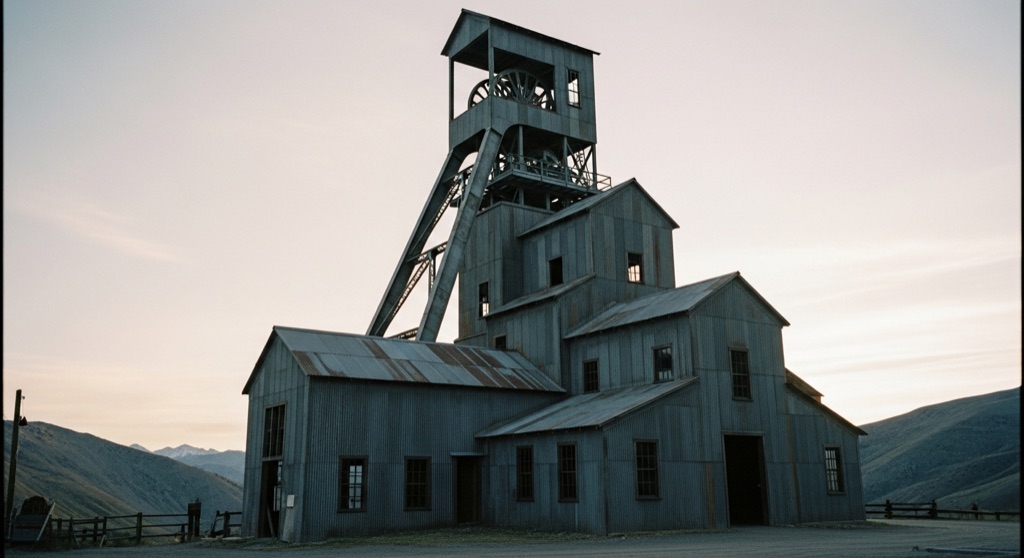 Silver King MineView only
Perched high on the slopes of Park City Mountain, the Silver King Coalition Mine was once the centerpiece of Utah's most profitable silver mining operation. Built in 1891 and closed in 1953, the site features a massive 12,400-square-foot headframe building that was recently stabilized and restored to prevent its deep mine shaft from collapsing. Today, the weathered corrugated-metal structure stands as a towering monument to the region's silver boom, easily visible from nearby hiking trails and ski lifts.
Silver King MineView only
Perched high on the slopes of Park City Mountain, the Silver King Coalition Mine was once the centerpiece of Utah's most profitable silver mining operation. Built in 1891 and closed in 1953, the site features a massive 12,400-square-foot headframe building that was recently stabilized and restored to prevent its deep mine shaft from collapsing. Today, the weathered corrugated-metal structure stands as a towering monument to the region's silver boom, easily visible from nearby hiking trails and ski lifts.
-
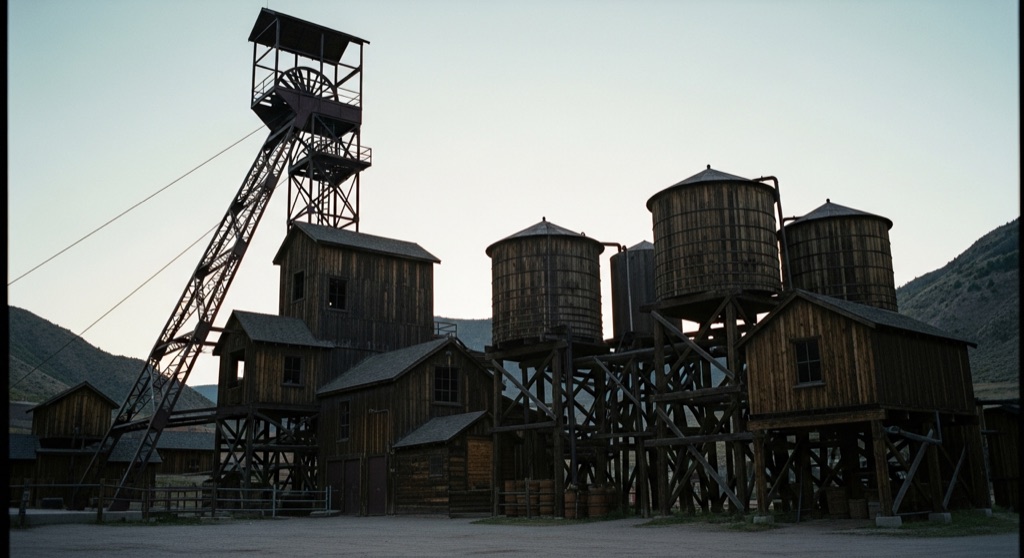 Ontario MineView only
Discovered in 1872 and later purchased by mining magnate George Hearst, the Ontario Mine was once one of the world's most productive silver mines, yielding over $50 million in wealth. Today, the defunct site features the preserved 80-foot-tall Ontario No. 3 steel headframe, a historic shaft house, and several wooden water tanks. While the underground workings and a former 1990s tourist mine ride are permanently sealed, these towering surface structures remain standing as silent monuments to Park City's boomtown era.
Ontario MineView only
Discovered in 1872 and later purchased by mining magnate George Hearst, the Ontario Mine was once one of the world's most productive silver mines, yielding over $50 million in wealth. Today, the defunct site features the preserved 80-foot-tall Ontario No. 3 steel headframe, a historic shaft house, and several wooden water tanks. While the underground workings and a former 1990s tourist mine ride are permanently sealed, these towering surface structures remain standing as silent monuments to Park City's boomtown era.
-
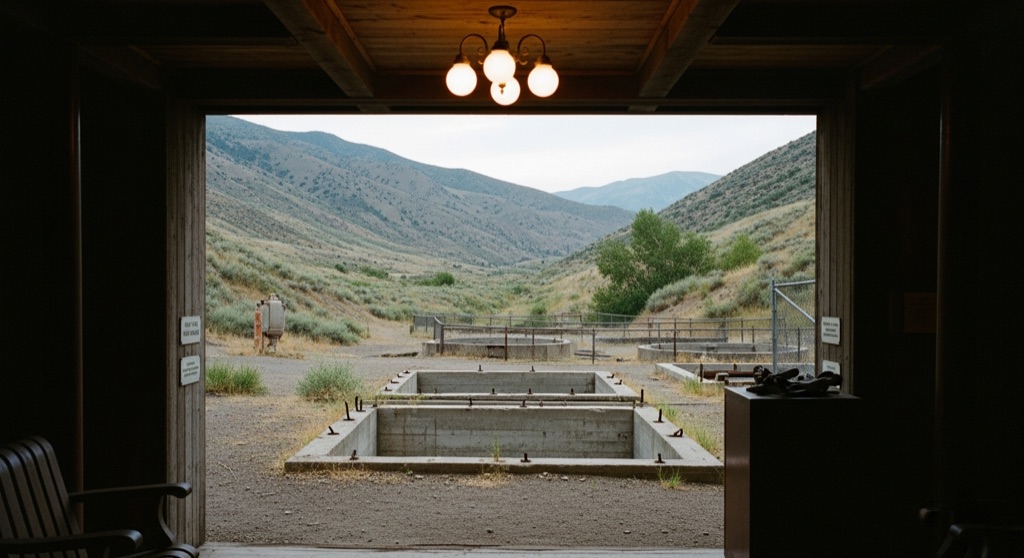 Ben Harrison Mine ShaftView only
The Ben Harrison Mine (also known as the New Stockton Mine) is a historic lead, silver, gold, and copper mine located in the Oquirrh Mountains east of Stockton, Utah. Discovered in the late 19th century and operated until its closure in 1972, the mine featured a vertical shaft reaching depths of up to 1,000 feet. Today, the site consists of overgrown tailings piles, concrete foundations, and sealed underground workings tucked away in Ben Harrison Gulch.
Ben Harrison Mine ShaftView only
The Ben Harrison Mine (also known as the New Stockton Mine) is a historic lead, silver, gold, and copper mine located in the Oquirrh Mountains east of Stockton, Utah. Discovered in the late 19th century and operated until its closure in 1972, the mine featured a vertical shaft reaching depths of up to 1,000 feet. Today, the site consists of overgrown tailings piles, concrete foundations, and sealed underground workings tucked away in Ben Harrison Gulch.
-
 Dry Lake Antimony MineView only
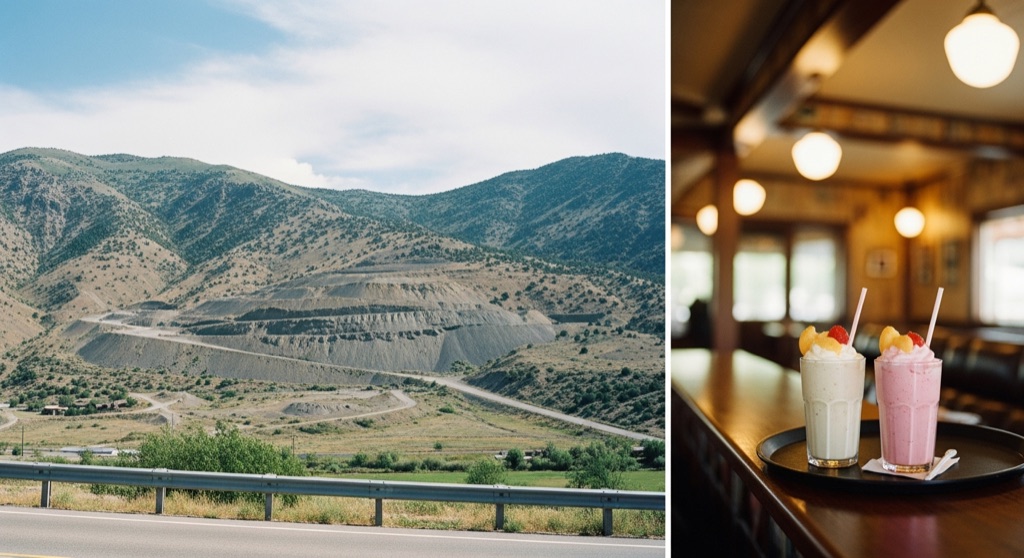
The Dry Lake Antimony Mine is an inactive late-19th-century mine located in Antimony Canyon on the steep western face of the Wellsville Mountains. It served as a primary producer of antimony and silver, with its most significant production occurring between 1908 and 1917, followed by a brief revival during World War II. Today, the mine is completely abandoned, leaving behind a prominent scar from its old access road carved into the foothills along with scattered tailings.
Dry Lake Antimony MineView only
The Dry Lake Antimony Mine is an inactive late-19th-century mine located in Antimony Canyon on the steep western face of the Wellsville Mountains. It served as a primary producer of antimony and silver, with its most significant production occurring between 1908 and 1917, followed by a brief revival during World War II. Today, the mine is completely abandoned, leaving behind a prominent scar from its old access road carved into the foothills along with scattered tailings.
-
 Cottonwood Paper MillView only
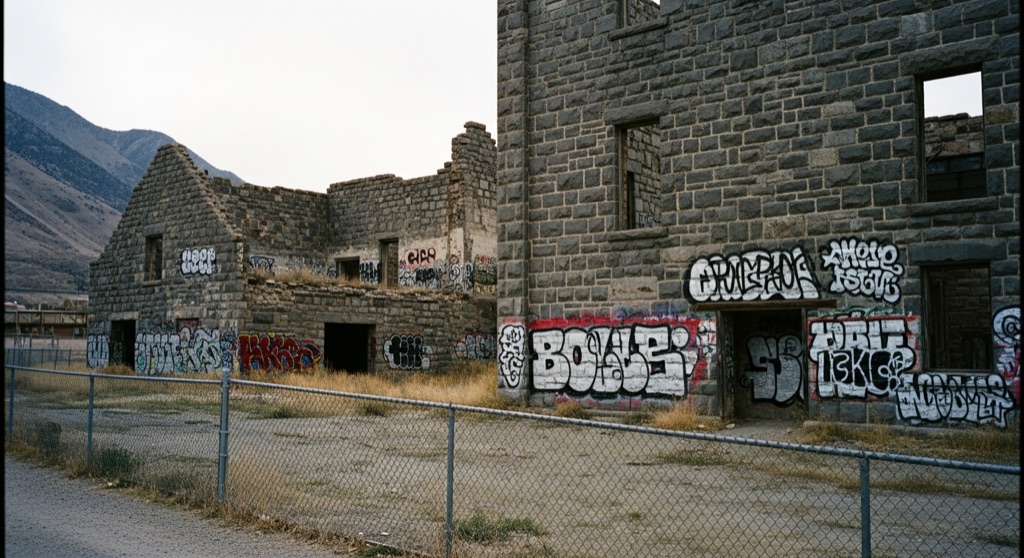
Built in 1883 by the Deseret News, this historic stone structure once produced paper for the region before a devastating fire gutted its interior in 1893. In the 20th century, it was repurposed as an open-air dance hall and later a haunted house attraction before being condemned in 2005. Today, its crumbling, graffiti-covered granite walls stand as a striking, fenced-off ruin at the mouth of Big Cottonwood Canyon.
Cottonwood Paper MillView only
Built in 1883 by the Deseret News, this historic stone structure once produced paper for the region before a devastating fire gutted its interior in 1893. In the 20th century, it was repurposed as an open-air dance hall and later a haunted house attraction before being condemned in 2005. Today, its crumbling, graffiti-covered granite walls stand as a striking, fenced-off ruin at the mouth of Big Cottonwood Canyon.
-
 Limekiln Gulch Pioneer KilnsView only
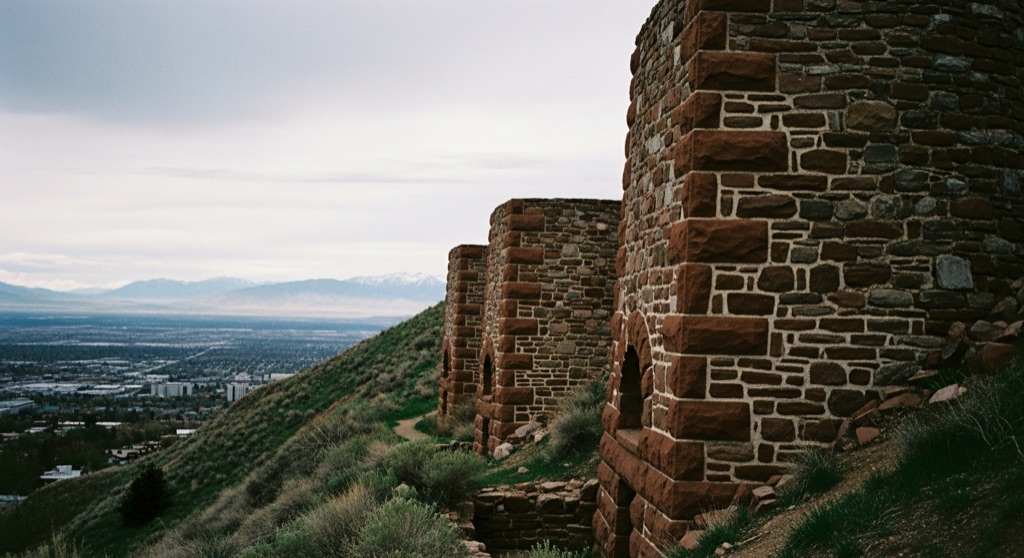
Tucked into the foothills of the Avenues neighborhood, these historic stone structures are the remains of mid-19th-century pioneer lime kilns. Early settlers used them to superheat limestone, producing quicklime for the mortar and plaster that built Salt Lake City. Today, the stabilized, red-sandstone-trimmed ruins stand as a quiet monument along a scenic public trail.
Limekiln Gulch Pioneer KilnsView only
Tucked into the foothills of the Avenues neighborhood, these historic stone structures are the remains of mid-19th-century pioneer lime kilns. Early settlers used them to superheat limestone, producing quicklime for the mortar and plaster that built Salt Lake City. Today, the stabilized, red-sandstone-trimmed ruins stand as a quiet monument along a scenic public trail.
Abandoned places in Salt Lake City — FAQ
Is it legal to visit abandoned places around Salt Lake City?
It depends on the site, and each listing here says explicitly — with the reason. Of the 15 with a verified access status: 0 are legal to enter, 14 are view-only from public land or roadside, and 1 are private property or genuinely unsafe — those are marked "do not enter" rather than romanticised.
Which abandoned & forgotten places in Salt Lake City are the strangest?
Ranked by how strange they actually are: Mule Hollow Mine, Silver King Mill and Maxfield Mine. Mule Hollow Mine — Tucked away in Big Cottonwood Canyon, the Mule Hollow Mine is a relic of the late 19th or early 20th-century mining boom in the Wasatch Mountains.
Where in Salt Lake City are they?
Across Salt Lake City, Park City, Spanish Fork, Eureka and Old Mayflower Mine and 3 more. Each listing gives the neighborhood and address so you can cluster a couple into one outing.
Are any of the abandoned & forgotten places in Salt Lake City free?
Yes — 15 are free to visit, including Mule Hollow Mine, Silver King Mill and Maxfield Mine. The rest are mostly low-cost.
Is this a good weird date in Salt Lake City?
That's what the list is built for. Every entry has a specific move rather than a vague recommendation — at Mule Hollow Mine, for instance: Hike the steep, scenic Mule Hollow Trail together to search for rusted mining relics and enjoy panoramic views of Storm Mountain.
How were these abandoned & forgotten places chosen?
An agentic research system digs for the genuinely obscure — the spots even locals miss — and every one is verified against real sources before it makes the list. We deliberately skip the landmarks already on every Salt Lake City guide.