After dark & night sky things to do in Santa Barbara
After-dark and night-sky things to do in Santa Barbara: 5 of them, from Palmer Observatory (Santa Barbara Museum of Natural History), Westmont College Observatory and Arlington Theatre — the indoor starry ceiling. Late-opening oddities, dark-sky spots and places that only make sense once the sun is down. They spread across Mission Canyon, Santa Barbara, Montecito, Downtown Santa Barbara, Goleta and 1 more area, so two or three can make a whole afternoon. Every entry is hand-vetted against real sources — not scraped off a top-ten list or averaged out of crowd ratings.
-
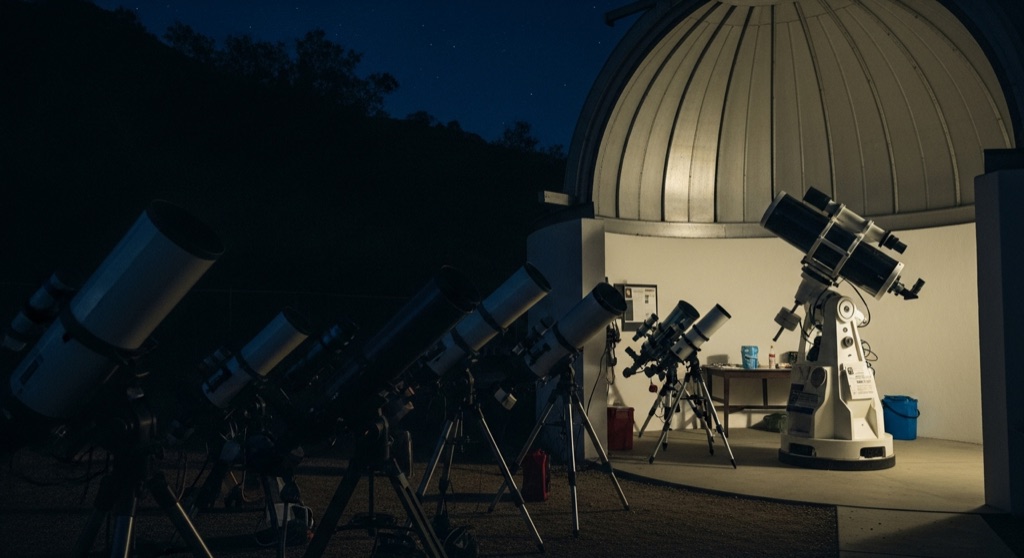 Palmer Observatory (Santa Barbara Museum of Natural History)
A 20-inch RCOS Ritchey-Chrétien telescope donated by Las Cumbres Observatory Global Telescope Network sits under a repurposed Ash-Dome (installed 2013), in the museum's Doris Faye Palmer Observatory, which opened August 1, 1968.
Palmer Observatory (Santa Barbara Museum of Natural History)
A 20-inch RCOS Ritchey-Chrétien telescope donated by Las Cumbres Observatory Global Telescope Network sits under a repurposed Ash-Dome (installed 2013), in the museum's Doris Faye Palmer Observatory, which opened August 1, 1968.
-
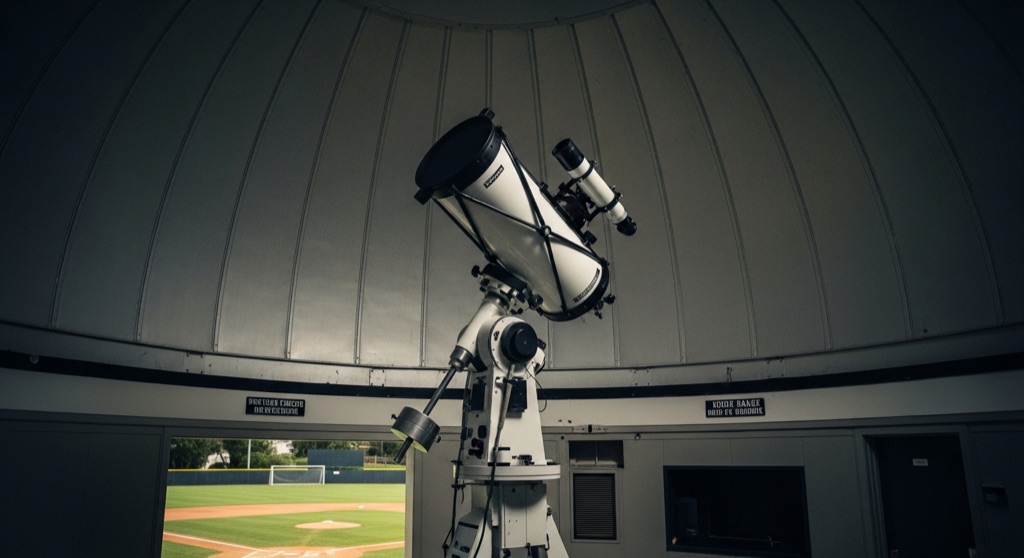 Westmont College Observatory
Wedged between the baseball field and the soccer complex on a small Christian liberal-arts campus sits a dome housing a 24-inch computer-controlled Cassegrain reflector with the same optical configuration as the Hubble Space Telescope — one of the most powerful scopes on the Central Coast, free for anyone to walk up and look through.
Westmont College Observatory
Wedged between the baseball field and the soccer complex on a small Christian liberal-arts campus sits a dome housing a 24-inch computer-controlled Cassegrain reflector with the same optical configuration as the Hubble Space Telescope — one of the most powerful scopes on the Central Coast, free for anyone to walk up and look through.
-
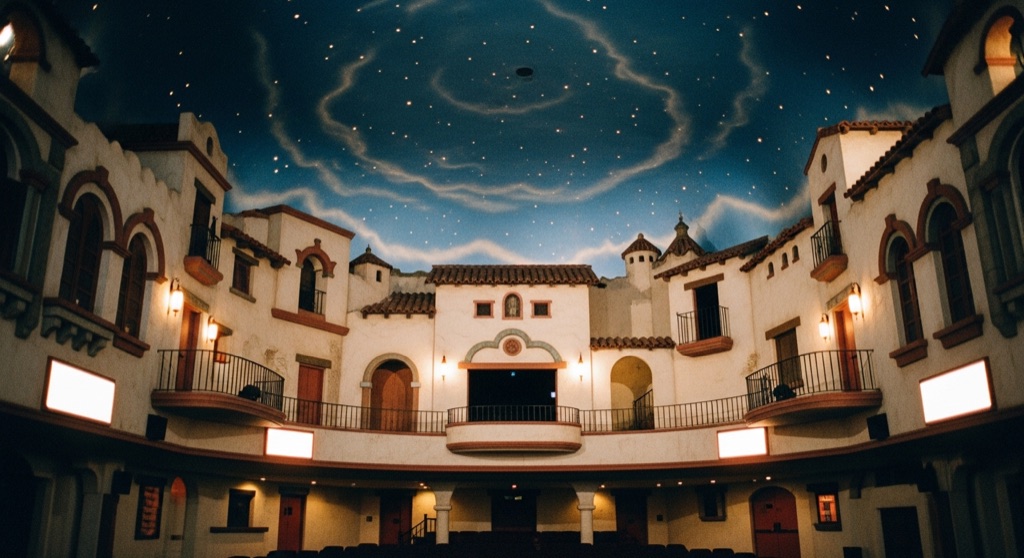 Arlington Theatre — the indoor starry ceiling
Inside this 1931 movie palace the walls are built out into a fake Spanish village of balconies and staircases that dissolves overhead into a painted twilight sky 'peppered with twinkling stars which blinked throughout each performance' — one observer likened it to 'a swashbuckling scene straight out of an old Zorro motion picture.'
Arlington Theatre — the indoor starry ceiling
Inside this 1931 movie palace the walls are built out into a fake Spanish village of balconies and staircases that dissolves overhead into a painted twilight sky 'peppered with twinkling stars which blinked throughout each performance' — one observer likened it to 'a swashbuckling scene straight out of an old Zorro motion picture.'
-
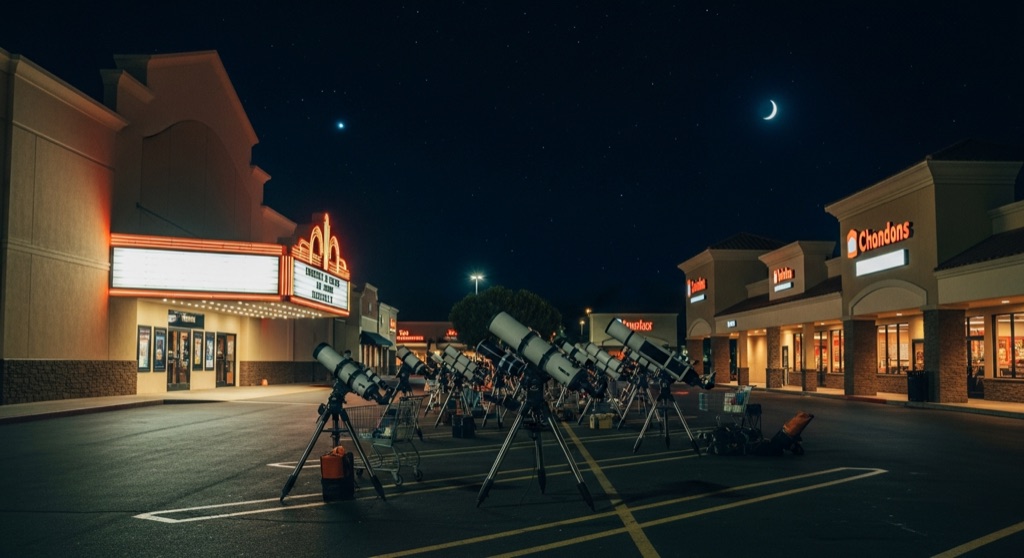 Camino Real Marketplace Telescope Nights
Once a month, Santa Barbara Astronomical Unit volunteers roll telescopes out into the parking lot of an ordinary strip mall — between the movie theater and the chain restaurants — and aim them at the sky for anyone walking by with a shopping bag.
Camino Real Marketplace Telescope Nights
Once a month, Santa Barbara Astronomical Unit volunteers roll telescopes out into the parking lot of an ordinary strip mall — between the movie theater and the chain restaurants — and aim them at the sky for anyone walking by with a shopping bag.
-
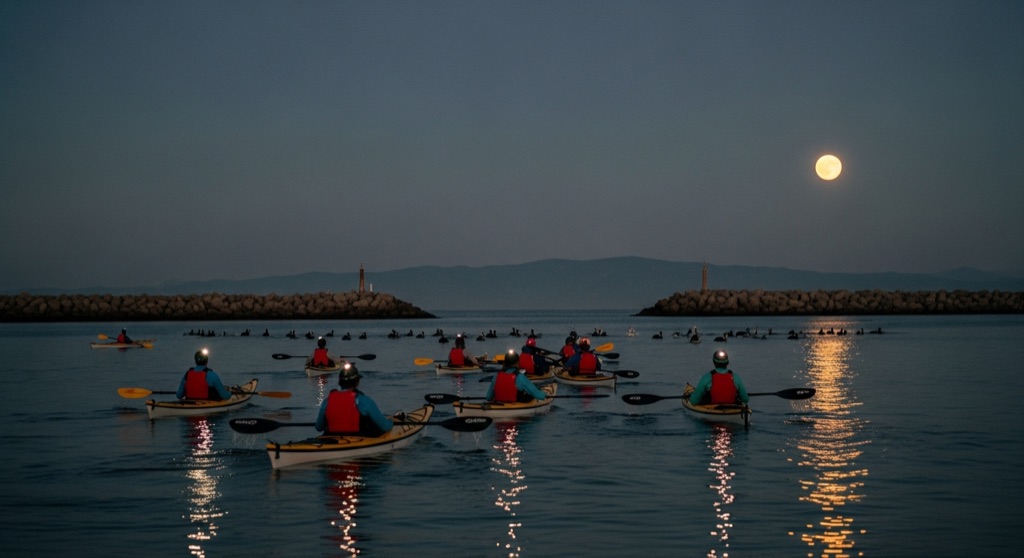 Full Moon Kayak Tour — Paddle Sports Center
A handful of nights a year, paddlers clip on headlamps and launch from the harbor timed so the sun sinks into the ocean to the west at the same moment the full moon rises over the mountains to the east — the outfitter, running tours since '91, calls it the only guided tour of its kind in California.
Full Moon Kayak Tour — Paddle Sports Center
A handful of nights a year, paddlers clip on headlamps and launch from the harbor timed so the sun sinks into the ocean to the west at the same moment the full moon rises over the mountains to the east — the outfitter, running tours since '91, calls it the only guided tour of its kind in California.
After dark & night sky things to do in Santa Barbara — FAQ
What is there to do late at night in Santa Barbara besides bars?
Palmer Observatory (Santa Barbara Museum of Natural History), Westmont College Observatory and Arlington Theatre — the indoor starry ceiling — 5 spots that only make sense after dark, 5 of them outdoors under the actual night sky. None of them are just a bar with the lights down.
Which after-dark & night-sky spots in Santa Barbara are the strangest?
Ranked by how strange they actually are: Palmer Observatory (Santa Barbara Museum of Natural History), Westmont College Observatory and Arlington Theatre — the indoor starry ceiling. Palmer Observatory (Santa Barbara Museum of Natural History) — A 20-inch RCOS Ritchey-Chrétien telescope donated by Las Cumbres Observatory Global Telescope Network sits under a repurposed Ash-Dome (installed 2013), in the museum's Doris Faye Palmer Observatory, which opened August 1, 1968.
Where in Santa Barbara are they?
Across Mission Canyon, Santa Barbara, Montecito, Downtown Santa Barbara, Goleta and Santa Barbara Harbor. Each listing gives the neighborhood and address so you can cluster a couple into one outing.
Is this a good weird date in Santa Barbara?
That's what the list is built for. Every entry has a specific move rather than a vague recommendation — at Palmer Observatory (Santa Barbara Museum of Natural History), for instance: Show up on the second Saturday of the month for the free Star Party (dusk to 10pm, co-run with the Santa Barbara Astronomical Unit), take turns at the museum's 20-inch scope and a row of volunteer-brought telescopes aimed at Saturn's rings or a globular cluster, then wander the dark, empty museum grounds afterward.
How were these after-dark & night-sky spots chosen?
An agentic research system digs for the genuinely obscure — the spots even locals miss — and every one is verified against real sources before it makes the list. We deliberately skip the landmarks already on every Santa Barbara guide.