Weird outdoor & roadside things to do in Grand Junction
Weird outdoor and roadside things to do in Grand Junction — 10 of them, from Elsewhere Studios, Hanging Flume Overlook and Little Book Cliffs Wild Horse Range. Folk-art environments, unexplained monuments and roadside oddities worth pulling over for, all outdoors and mostly free. They spread across Paonia, Gateway, De Beque, Fruita and 5 more areas, so two or three can make a whole afternoon. 8 of them cost nothing. Every entry is hand-vetted against real sources — not scraped off a top-ten list or averaged out of crowd ratings.
-
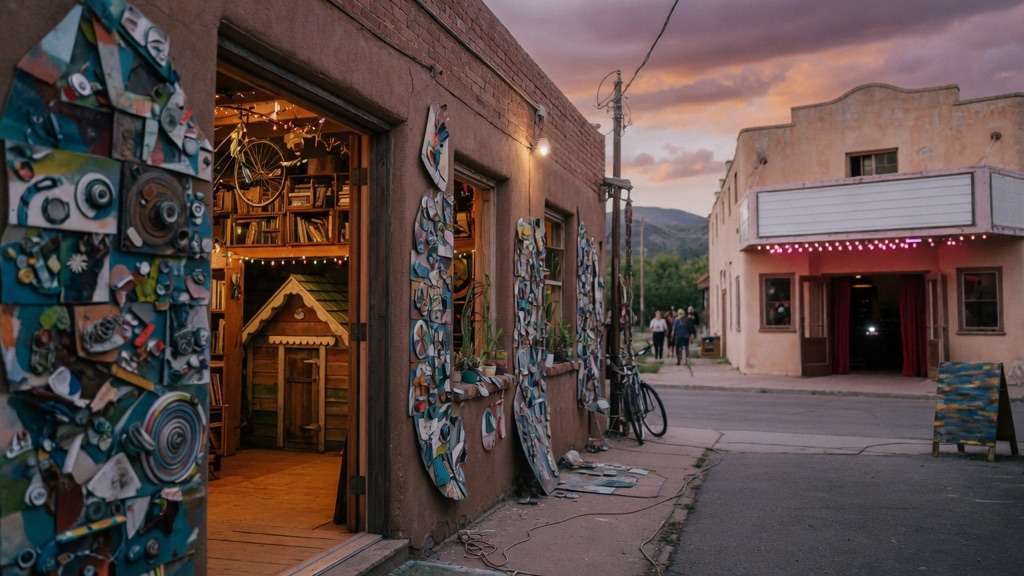 Elsewhere Studios
Paonia's hundred-year-old Elsewhere house — once a General Electric building, now the 'Temple of the Muse' — has been hand-built into a rural sci-fi warren by two decades of resident artists: earthen walls, a lofted library, a gingerbread cabin out back. You can't rent a room unless you're a resident, but the alley alongside is a public Alleyscape art wall raised by a hundred-plus locals, the studios open on Final Fridays, and each summer an artist-film series runs with the 1928 Paradise Theatre.
Elsewhere Studios
Paonia's hundred-year-old Elsewhere house — once a General Electric building, now the 'Temple of the Muse' — has been hand-built into a rural sci-fi warren by two decades of resident artists: earthen walls, a lofted library, a gingerbread cabin out back. You can't rent a room unless you're a resident, but the alley alongside is a public Alleyscape art wall raised by a hundred-plus locals, the studios open on Final Fridays, and each summer an artist-film series runs with the 1928 Paradise Theatre.
-
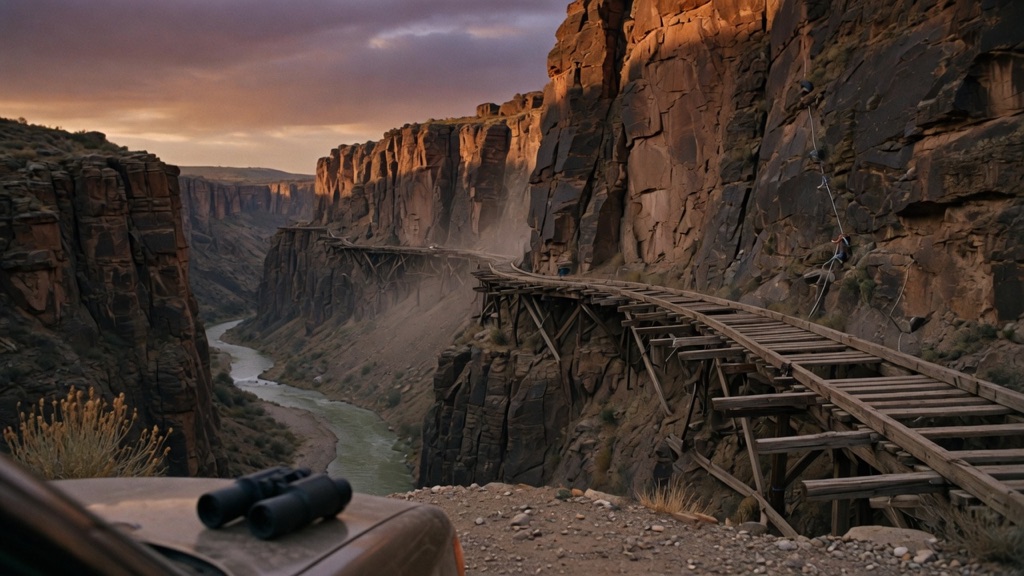 Hanging Flume Overlook
In the late 1880s, St. Louis investors paid crews to dangle from ropes off a sheer Dolores Canyon wall and bolt a wooden water chute to the rock — ten-plus miles of it, up to 75 feet above the river, moving 80 million gallons a day toward a hydraulic gold claim. The gold barely existed: three years and a million dollars in, roughly $80,000 came out, and everyone walked away. The flume is still up there 130-odd years later, visible from a signed pulloff on CO-141.
Hanging Flume Overlook
In the late 1880s, St. Louis investors paid crews to dangle from ropes off a sheer Dolores Canyon wall and bolt a wooden water chute to the rock — ten-plus miles of it, up to 75 feet above the river, moving 80 million gallons a day toward a hydraulic gold claim. The gold barely existed: three years and a million dollars in, roughly $80,000 came out, and everyone walked away. The flume is still up there 130-odd years later, visible from a signed pulloff on CO-141.
-
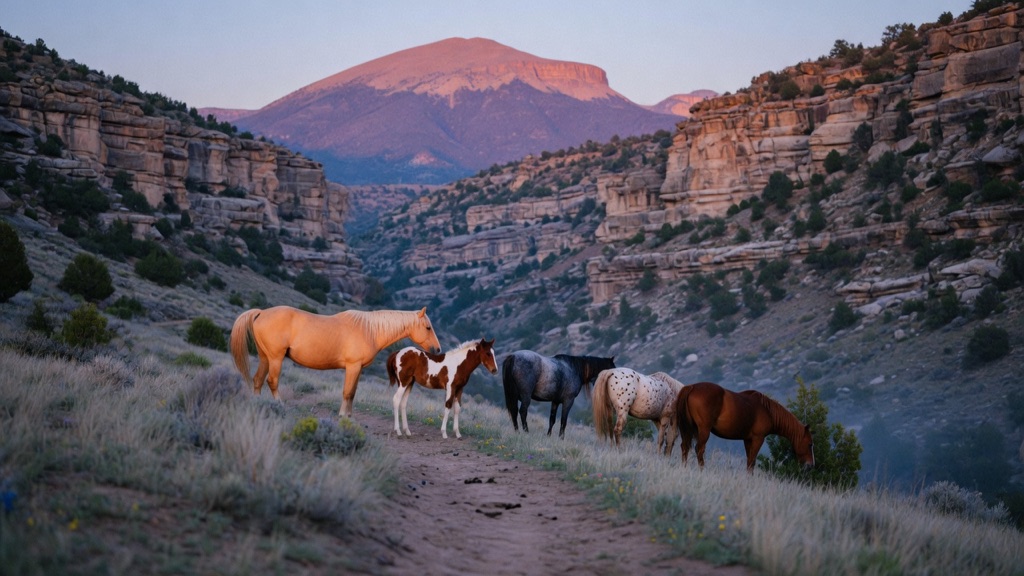 Little Book Cliffs Wild Horse Range
Congress set aside exactly three ranges in America specifically for wild horses, and this is the one hiding behind Mount Garfield. Roughly 36,000 acres of pinyon-juniper canyon country hold bands of palominos, paints, roans, and appaloosas — two to ten horses to a band, sometimes grazing within a mile of the Coal Canyon trailhead. Local volunteers know most of them by name. In spring, foals work the lower canyons; by July the bands climb, and you earn your sightings.
Little Book Cliffs Wild Horse Range
Congress set aside exactly three ranges in America specifically for wild horses, and this is the one hiding behind Mount Garfield. Roughly 36,000 acres of pinyon-juniper canyon country hold bands of palominos, paints, roans, and appaloosas — two to ten horses to a band, sometimes grazing within a mile of the Coal Canyon trailhead. Local volunteers know most of them by name. In spring, foals work the lower canyons; by July the bands climb, and you earn your sightings.
-
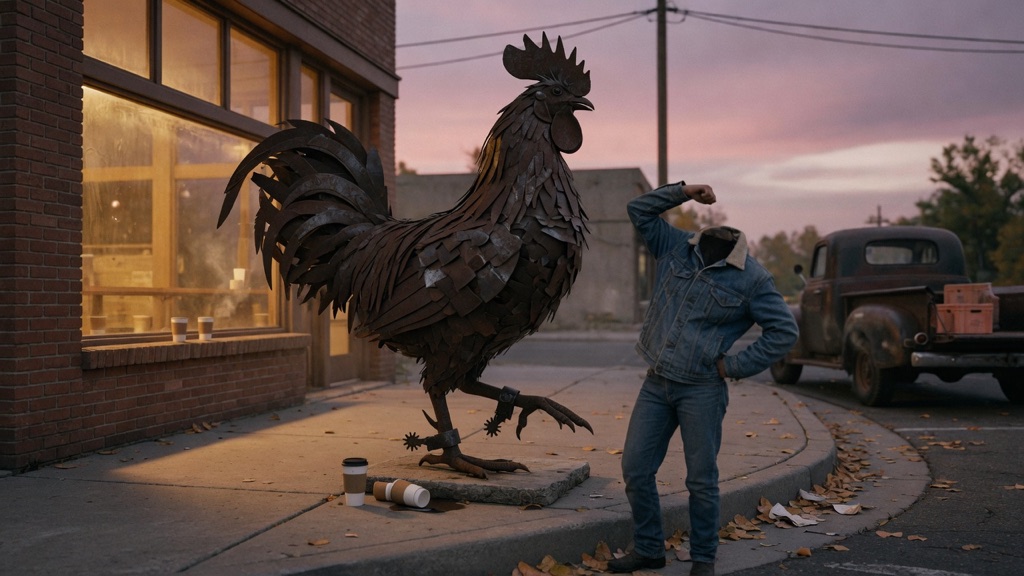 Mike the Headless Chicken Sculpture
In September 1945, Fruita farmer Lloyd Olsen swung an axe at a rooster named Mike and missed the brain stem. Mike lived 18 more months without a head, toured sideshows at a quarter a peek, and made Life magazine. The town monument gets the joke: local sculptor Lyle Nichols welded roughly 300 pounds of axe heads, sickle blades, and hay-rake teeth — the very implements of the deed — into a strutting rooster wearing cowboy spurs, posted on the corner outside the coffee shop.
Mike the Headless Chicken Sculpture
In September 1945, Fruita farmer Lloyd Olsen swung an axe at a rooster named Mike and missed the brain stem. Mike lived 18 more months without a head, toured sideshows at a quarter a peek, and made Life magazine. The town monument gets the joke: local sculptor Lyle Nichols welded roughly 300 pounds of axe heads, sickle blades, and hay-rake teeth — the very implements of the deed — into a strutting rooster wearing cowboy spurs, posted on the corner outside the coffee shop.
-
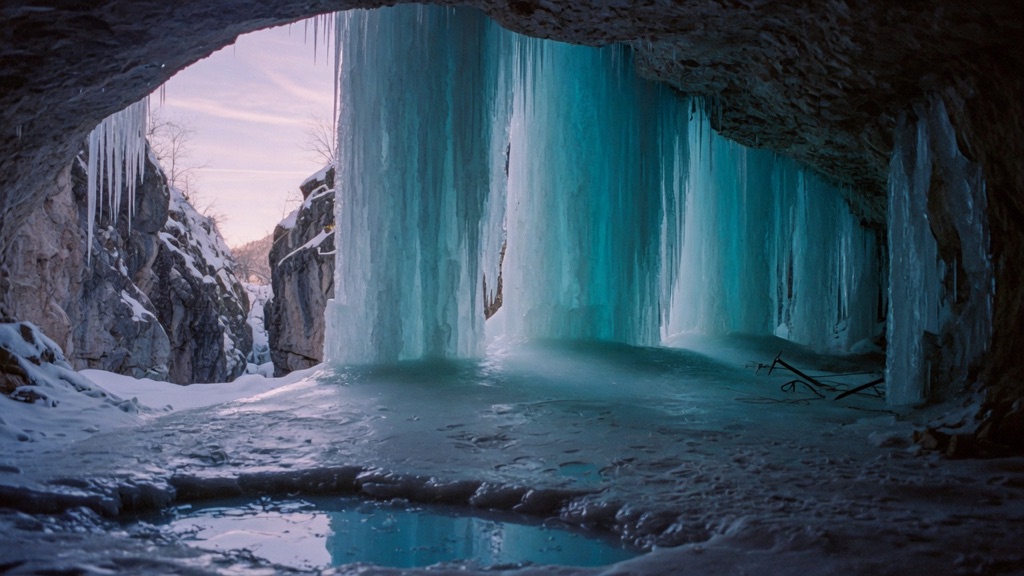 Rifle Mountain Park Ice Caves
Every December, spring water seeping through the limestone of Rifle Creek's canyon freezes into four caves of turquoise ice — the Ice Palace, Soul on Ice, Stone Tree, and the Final Curtain. Kopers Trail starts right at the park entrance; the first cave is maybe ten minutes in, and you walk straight into a room of blue icicles thick as telephone poles. Drop $5 in the self-pay kiosk, strap on microspikes, and watch ice climbers swing axes into the curtains until the melt comes in March.
Rifle Mountain Park Ice Caves
Every December, spring water seeping through the limestone of Rifle Creek's canyon freezes into four caves of turquoise ice — the Ice Palace, Soul on Ice, Stone Tree, and the Final Curtain. Kopers Trail starts right at the park entrance; the first cave is maybe ten minutes in, and you walk straight into a room of blue icicles thick as telephone poles. Drop $5 in the self-pay kiosk, strap on microspikes, and watch ice climbers swing axes into the curtains until the melt comes in March.
-
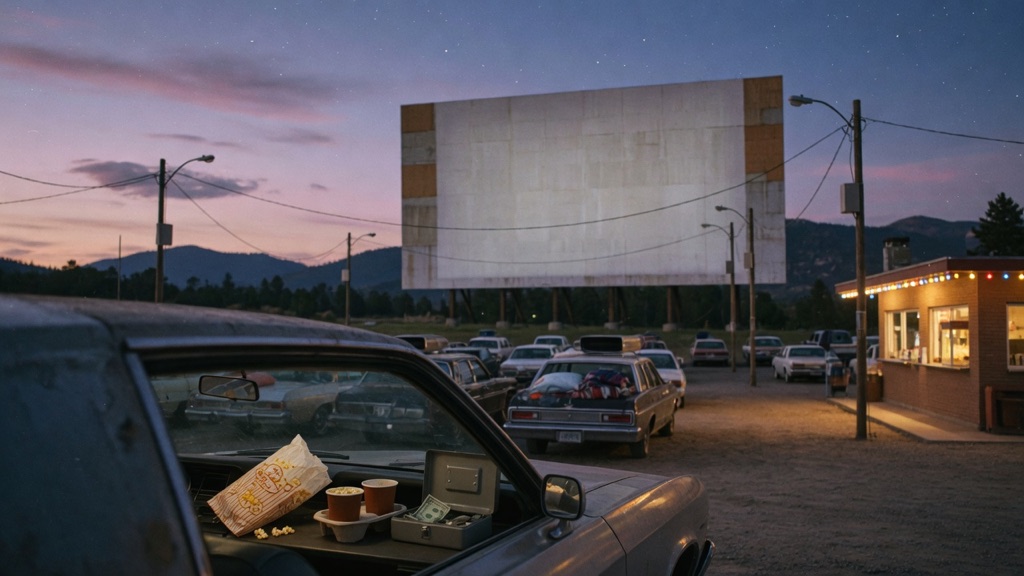 Star Drive-In Theatre
George and Elizabeth DeVries lit this screen on April 19, 1950 — The Younger Brothers on the bill — and their daughter Pam still runs the booth herself, seven nights a week all summer. That makes the Star the oldest drive-in in America still in its founding family's hands. A 102-mph tornado flattened the original screen in 1974; the 80-by-90-foot replacement went up in ten days. John Wayne signed autographs here after shooting True Grit nearby. Cash only, 360 cars, double features under actual stars.
Star Drive-In Theatre
George and Elizabeth DeVries lit this screen on April 19, 1950 — The Younger Brothers on the bill — and their daughter Pam still runs the booth herself, seven nights a week all summer. That makes the Star the oldest drive-in in America still in its founding family's hands. A 102-mph tornado flattened the original screen in 1974; the 80-by-90-foot replacement went up in ten days. John Wayne signed autographs here after shooting True Grit nearby. Cash only, 360 cars, double features under actual stars.
-
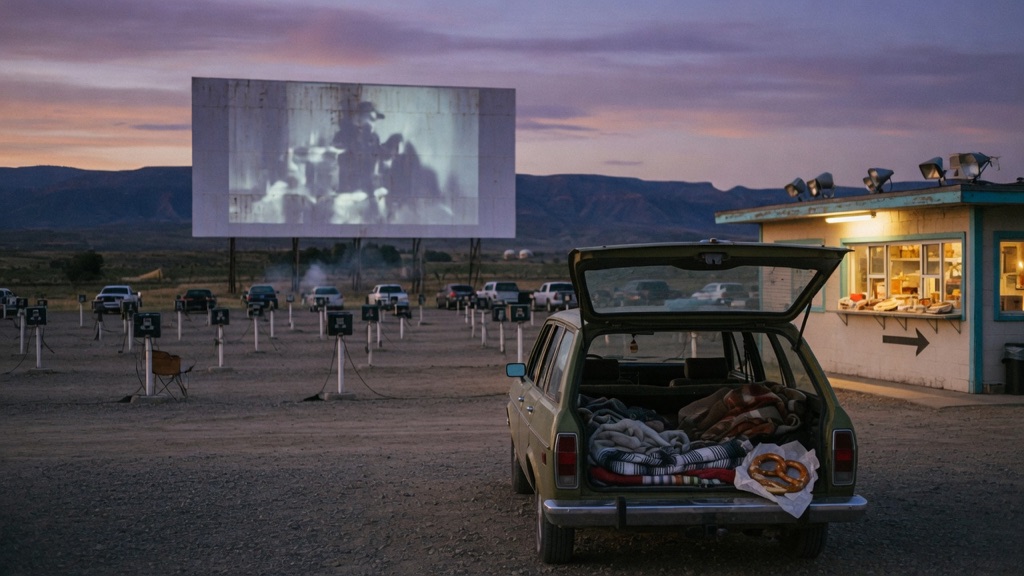 Tru Vu Drive-In
Delta's single screen has been throwing light at the high desert since March 1955, when the opening bill paired Randolph Scott with Abbott and Costello. It survived a 1960 fire locals still whisper was arson, and it never multiplexed: one screen, a 400-car field, sound piped through your FM dial. The cafe still hand-presses pizza and smashes burgers while the sky goes purple over the Grand Mesa. Double features every summer weekend, like the last seventy years didn't happen.
Tru Vu Drive-In
Delta's single screen has been throwing light at the high desert since March 1955, when the opening bill paired Randolph Scott with Abbott and Costello. It survived a 1960 fire locals still whisper was arson, and it never multiplexed: one screen, a 400-car field, sound piped through your FM dial. The cafe still hand-presses pizza and smashes burgers while the sky goes purple over the Grand Mesa. Double features every summer weekend, like the last seventy years didn't happen.
-
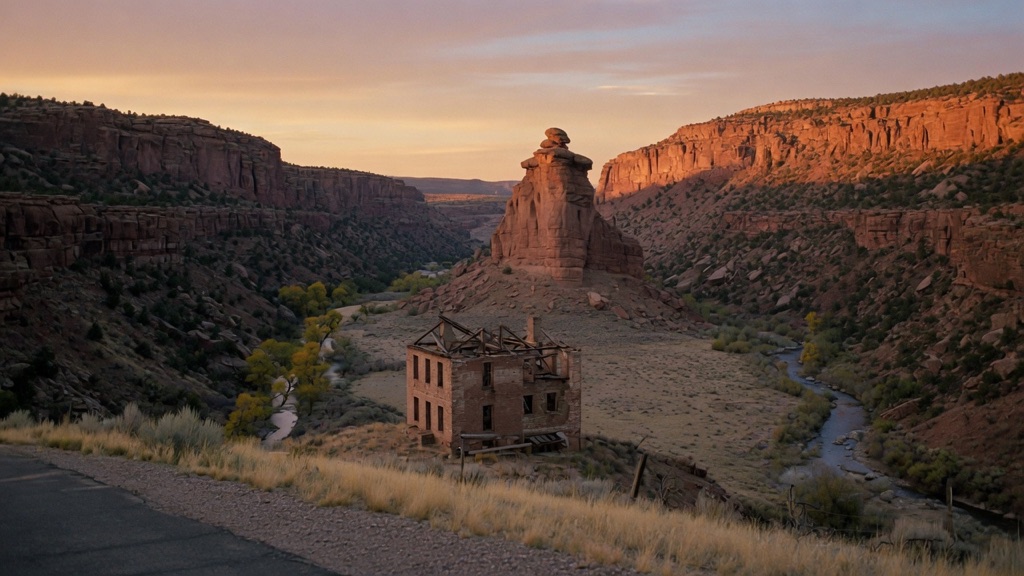 Unaweep Canyon
Every canyon on Earth drains one way — except this one. Unaweep flows out both ends: East Creek to the Gunnison, West Creek to the Dolores, parting at a divide so flat you will cross it without noticing. Both creeks are far too puny to have cut a gorge half a mile deep, and geologists still argue over which ancient river did the digging and why it left. At mile 129, the 1918 Driggs Mansion stands roofless under Thimble Rock; the owner's wife lasted months before fleeing the silence.
Unaweep Canyon
Every canyon on Earth drains one way — except this one. Unaweep flows out both ends: East Creek to the Gunnison, West Creek to the Dolores, parting at a divide so flat you will cross it without noticing. Both creeks are far too puny to have cut a gorge half a mile deep, and geologists still argue over which ancient river did the digging and why it left. At mile 129, the 1918 Driggs Mansion stands roofless under Thimble Rock; the owner's wife lasted months before fleeing the silence.
-
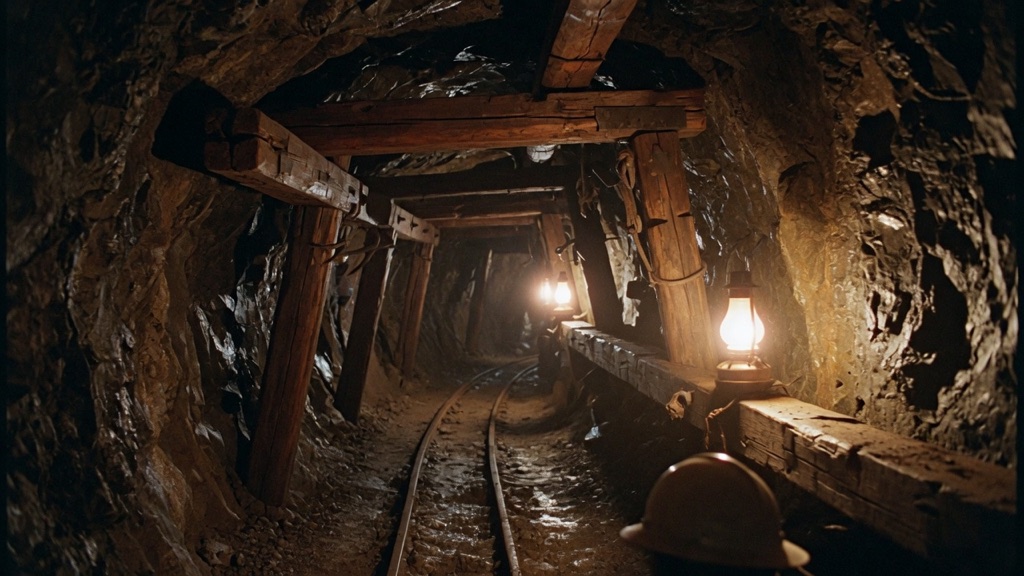 Smuggler Mine Tour
Aspen's wealth was dug out of this mountain. In June 1879, prospectors Edward Fuller and Con Allbright staked the Smuggler claim on the slope above what would become one of the world's most expensive resort towns — their bosses later subdivided the meadow below into Aspen's first town lots at ten dollars each. At its peak the mine produced one-fifth of the world's silver, and in 1894 workers pulled out the largest silver nugget ever recorded: 2,340 pounds, so massive it had to be broken into three pieces before it could be hauled out. Guided tours now take you 1,200 feet into the original horizontal shaft, through timber-supported tunnels with ore-cart rails still in place, past hand-drill marks and rigging points, while a guide walks you through extraction techniques and the boom-and-bust arc that built and nearly erased this town.
Smuggler Mine Tour
Aspen's wealth was dug out of this mountain. In June 1879, prospectors Edward Fuller and Con Allbright staked the Smuggler claim on the slope above what would become one of the world's most expensive resort towns — their bosses later subdivided the meadow below into Aspen's first town lots at ten dollars each. At its peak the mine produced one-fifth of the world's silver, and in 1894 workers pulled out the largest silver nugget ever recorded: 2,340 pounds, so massive it had to be broken into three pieces before it could be hauled out. Guided tours now take you 1,200 feet into the original horizontal shaft, through timber-supported tunnels with ore-cart rails still in place, past hand-drill marks and rigging points, while a guide walks you through extraction techniques and the boom-and-bust arc that built and nearly erased this town.
-
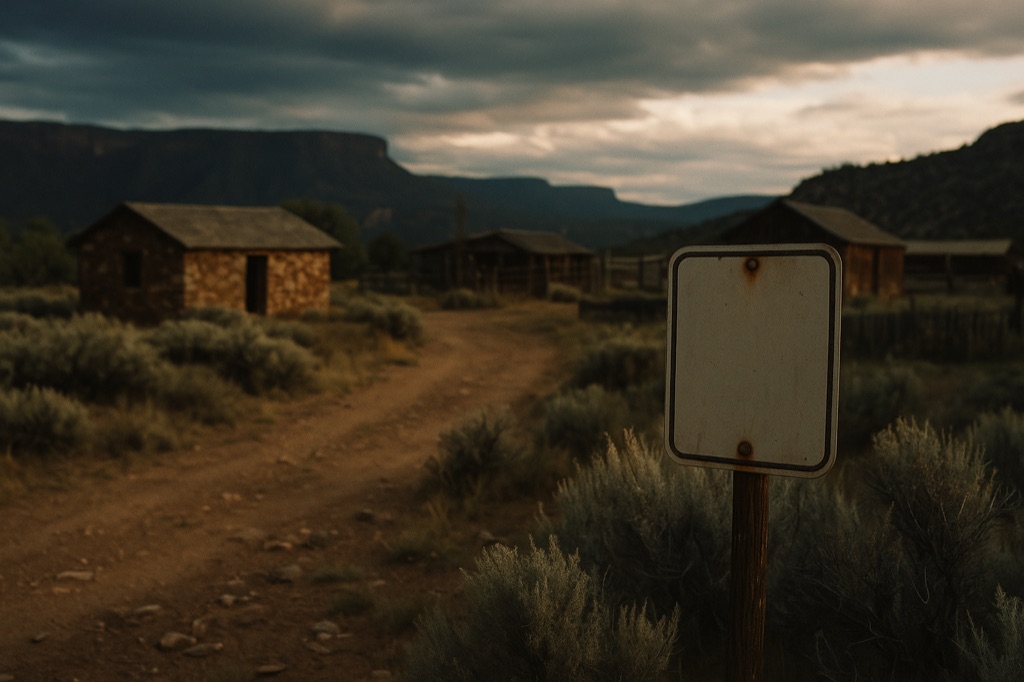 Calamity Camp Mining Site
The BLM sign actually warns you about residual radiation before you get out of the truck — this mesa-top camp operated from 1916 to 1980, pulling uranium, vanadium, and radium out of the Uncompahgre Plateau, and it supplied material that fed the Manhattan Project. Five rock cabins, a bunkhouse, horse corrals, and a cedar-post barn are still standing out here, more or less as they were left. Colorado's last uranium mine closed in 2005; this camp got put on the National Register in 2011 and has been slowly decomposing into the sagebrush ever since.
Calamity Camp Mining Site
The BLM sign actually warns you about residual radiation before you get out of the truck — this mesa-top camp operated from 1916 to 1980, pulling uranium, vanadium, and radium out of the Uncompahgre Plateau, and it supplied material that fed the Manhattan Project. Five rock cabins, a bunkhouse, horse corrals, and a cedar-post barn are still standing out here, more or less as they were left. Colorado's last uranium mine closed in 2005; this camp got put on the National Register in 2011 and has been slowly decomposing into the sagebrush ever since.
Weird outdoor & roadside things to do in Grand Junction — FAQ
Which weird outdoor & roadside oddities in Grand Junction are the strangest?
Ranked by how strange they actually are: Little Book Cliffs Wild Horse Range, Mike the Headless Chicken Sculpture and Rifle Mountain Park Ice Caves. Little Book Cliffs Wild Horse Range — Congress set aside exactly three ranges in America specifically for wild horses, and this is the one hiding behind Mount Garfield.
Where in Grand Junction are they?
Across Paonia, Gateway, De Beque, Fruita and Rifle and 4 more. Each listing gives the neighborhood and address so you can cluster a couple into one outing.
Are any of the weird outdoor & roadside oddities in Grand Junction free?
Yes — 8 are free to visit, including Hanging Flume Overlook, Little Book Cliffs Wild Horse Range and Mike the Headless Chicken Sculpture. The rest are mostly low-cost.
Is this a good weird date in Grand Junction?
That's what the list is built for. Every entry has a specific move rather than a vague recommendation — at Little Book Cliffs Wild Horse Range, for instance: Pack coffee and binoculars, hit the Coal Canyon Trailhead at first light, and hike the Main Canyon Trail until you spot a band — spring mornings they are often inside the first mile.
How were these weird outdoor & roadside oddities chosen?
An agentic research system digs for the genuinely obscure — the spots even locals miss — and every one is verified against real sources before it makes the list. We deliberately skip the landmarks already on every Grand Junction guide.