Entry No. 36 — the London, UK file — filed under: miscellanea
Farting Lane
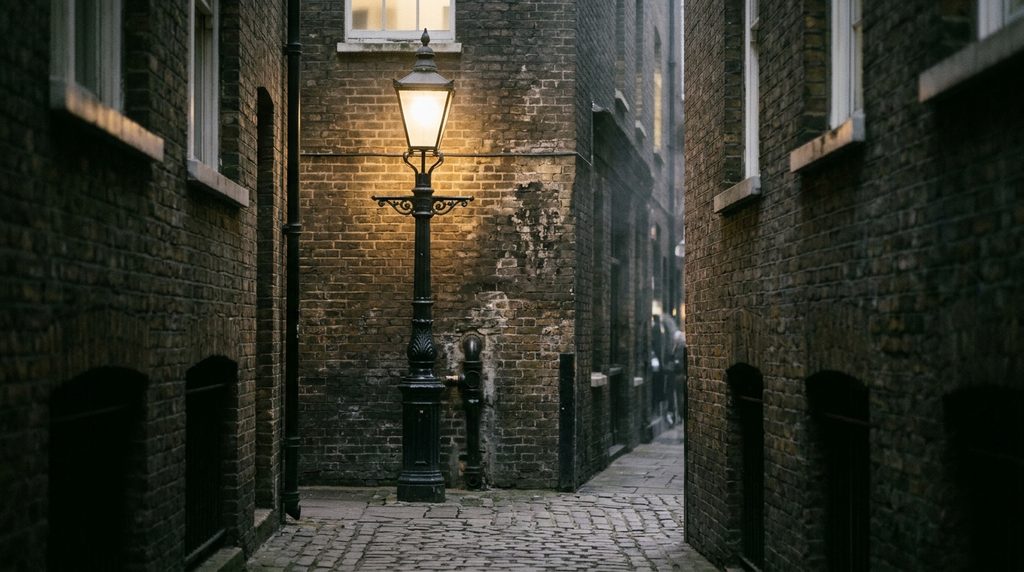
The lane hides what Historic UK calls London’s last remaining sewage lamp, a piece of Victorian engineering.
→ Three more haunted places & dark-history spots in London, UK — never the same twice
The story
Slip off the Strand down Carting Lane—a steep, unglamorous service alley running behind the Savoy Hotel—and look for a tall green cast-iron lamp standard quietly humming to itself. Installed around the turn of the twentieth century, this is London's last surviving Webb Patent Sewer Gas Destructor Lamp. In the decades after Sir Joseph Bazalgette rebuilt London's drainage network, sewer gas had a habit of rising and collecting dangerously at high points on sloping streets. Birmingham engineer Joseph Edmund Webb solved the problem by patenting a streetlamp with a hollow fluted shaft that tapped directly into a collection dome inside the brick sewer below.
London folklore loves the punchline that the lamp ran entirely on the digestion of Savoy diners, giving Carting Lane its enduring street-urchin nickname of 'Farting Lane.' The truth is slightly more technical: sewer methane alone was never concentrated enough to maintain an uninterrupted flame. Instead, the burner was plumbed into the municipal town gas mains. The town gas kept a pilot flame burning at roughly 700 degrees Fahrenheit, creating a permanent thermal updraft that sucked methane, foul air, and sewer bacteria straight up the pipe and incinerated them before they could pool at street level.
Hundreds of destructor lamps once ventilated London's underground, but modern plumbing vents eventually rendered them obsolete. The Carting Lane lamp survived the purge, though not without trauma: a reversing delivery lorry flattened it, requiring engineers to rebuild the top lantern using historic castings. Listed at Grade II by Historic England, it remains lit day and night, quietly cremating subterranean vapours in full view of the Savoy’s backstage loading docks.
What it's like
Carting Lane is essentially a working access slope cluttered with trade vans, hotel laundry bins, and the stage doors of the Savoy Theatre. The lamp sits about halfway down on the left, looking deceptively like any ordinary West End gas standard until you notice the thicker, hollow iron casing and the commemorative plaque mounted nearby. Because it burns continuously, you can see the warm, flickering yellow mantle even in broad daylight, though dusk is the best time to watch it cast soft light against the greasy alley paving. There is no smell whatsoever, so you can safely leave your handkerchief in your pocket.
The move: Duck behind the Savoy and halfway down Carting Lane, watch the warm flicker of the green sewer lamp while you take turns guessing which bit of the ironwork connects to the sewer.
- 📍 Behind the Savoy, central London
- 💸 $$
- ⚡ Up for anything
- 🌗 Indoors
Where: Carting Lane, London WC2R 0DW (or WC2)
Hours: Added 2026-11-18 — confirm current hours before you go.
Pair it with
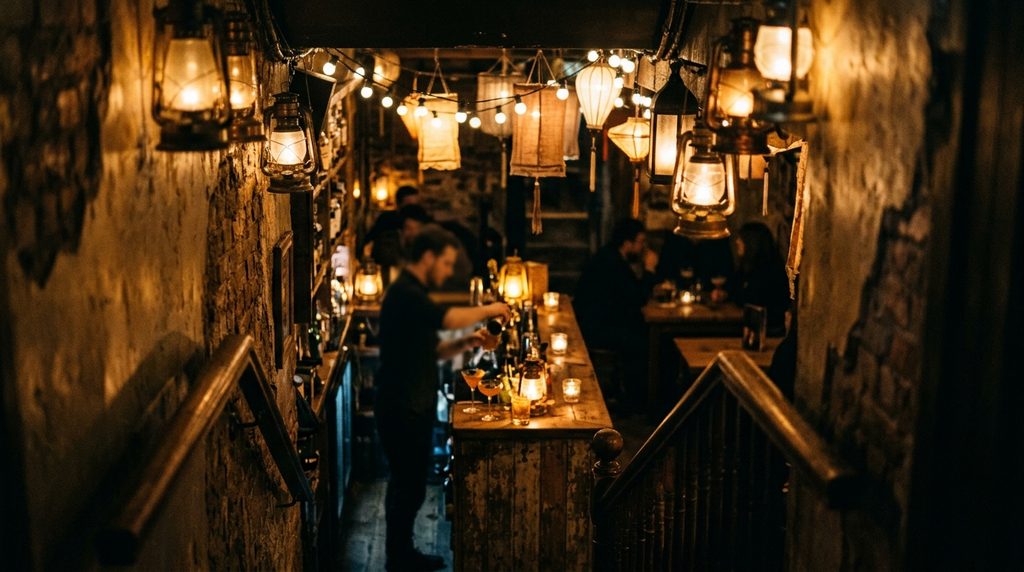
- CellarDoor — Keep the subterranean sanitation theme rolling by walking two minutes around the corner to drink gin inside an intimate cabaret bar converted from a Victorian underground public toilet.
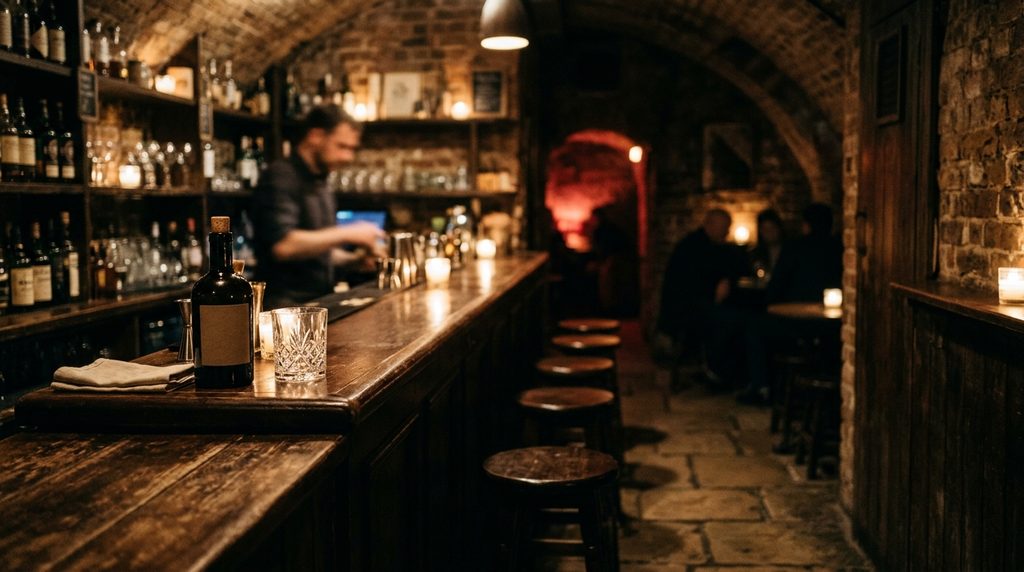
- Gordon's Wine Bar — Walk three minutes down toward Embankment to swap the outdoor gaslight for the dripping candle stubs of London's oldest wine bar, tucked into an 1890 vaulted brick cellar.
- Giro, the Nazi Dog’s Grave — Head ten minutes west past Trafalgar Square to seek out another bizarre street-level curiosity hidden in plain sight: the lone gravestone of a 1930s German ambassador's pet terrier.
More weird in London, UK
Good to know
Does the lamp really smell of sewage?
No. The burner was specifically designed to incinerate volatile organic compounds and bacteria at over 650°F (340°C), so any odor is destroyed long before exhaust leaves the top vent.
Is it running entirely on sewer gas today?
No, and it never did. It relies on standard mains gas to fuel the continuous flame, which generates the vacuum that draws up and destroys residual sewer gases.
Is the lamp original?
The base and column are original Victorian infrastructure, but the lantern head is a faithful working restoration after an errant lorry backed into the column and snapped the top off.
When is the best time to see it?
Visit after dark when the gas mantle's amber glow cuts through the alley shadows, or combine it with a walk through nearby Victoria Embankment Gardens.
Plan a visit & invite your people →
Further reading: historic-uk.com · historicengland.org.uk · Atlas Obscura · Wikipedia
last checked: 2026-11-18