Entry No. 66 — the Pensacola & Emerald Coast file — filed under: miscellanea
University of West Florida Archaeology Institute
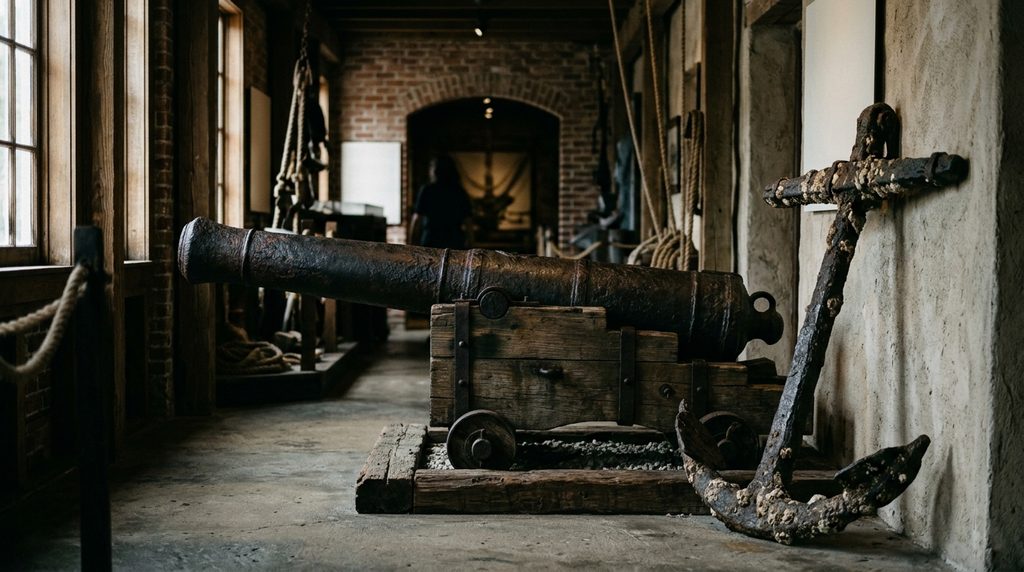
A niche institutional collection highlighting regional relics, including a 300-year-old Spanish presidio cannon and a 450-year-old anchor salvaged from the historic Emanuel Point shipwreck.
→ Three more unusual museums & collections in Pensacola & Emerald Coast — never the same twice
The story
Tucked into Building 89 near the entrance of the University of West Florida’s pine-studded campus, this isn't a glossy municipal museum with velvet ropes and souvenir stalls. It is an active university research facility where faculty and field students haul centuries of regional wreckage straight out of the muck. In the summer of 1559, Don Tristán de Luna y Arellano sailed eleven Spanish ships into Pensacola Bay to establish the first multi-year European colonial settlement in what is now the United States. Weeks later, an uninvited hurricane slammed into the bay and sank most of his fleet. For centuries the ships were assumed lost to maritime silt, until UWF archaeologists and dive students began locating the submerged Emanuel Point hulls in the 1990s.
Step through the front door and you are immediately eyeball-to-metal with the payoff: a massive 450-year-old iron anchor salvaged from the Emanuel Point shipwreck, alongside a 300-year-old iron cannon pulled from the 1698 Spanish settlement site at Presidio Santa María de Galve. The exhibits showcase genuine material culture from pre-Columbian Native American Woodland-period pottery to Spanish colonial ballast stone, olive jars, and trade beads. It functions half as an exhibit gallery and half as an open evidence locker, with working bioarchaeology and conservation labs located right down the hall where students routinely wash potsherds and catalog field recovery boxes.
What it's like
Expect a quiet, uncrowded academic building where you may well be the only non-student roaming the cases. The public exhibit hall occupies the lobby and ground-floor gallery spaces of Building 89, and admission is free. To park legally, stop at the UWF Visitor Center booth near the campus main entrance on University Parkway to grab a temporary visitor permit before pulling into the institute's adjacent lot. Forty-five minutes is plenty of time to take in the anchors, weapons, and pre-contact tools before you head back into town.
The move: Head into Building 89 for a face-to-fluke look at the 450-year-old iron anchor hauled up from the Emanuel Point wreck, then find the Spanish presidio cannon.
- 📍 Pensacola
- 💸 $
- ⚡ Up for anything
- 🌗 Indoors
Where: 11000 University Parkway, Building 89, Pensacola, FL 32514
Hours: Added 2026-11-17 — confirm current hours before you go.
Pair it with
- Trader Jon's — Swap deep Spanish colonial archaeology for mid-century eccentric bar culture by visiting Trader Jon's memorabilia collection preserved inside the Pensacola Museum of History.
- Fort Pickens & Battery Cooper (Geronimo’s Cell) — Follow Pensacola's defensive coastal history from UWF's 1698 presidio cannon out to the colossal 1834 brick bastions and battery bunkers of Fort Pickens.
- National Naval Aviation Museum — Trade underwater colonial salvage for acres of vintage naval warplanes on NAS Pensacola—the very military base where UWF excavated the Presidio Santa María de Galve.
More weird in Pensacola & Emerald Coast
Good to know
What is the admission fee?
Admission is free. The institute maintains its exhibits as a public educational service.
What are the institute's open hours?
The exhibit hall is generally open Monday through Friday from 9:00 a.m. to 4:00 p.m. It is closed on weekends and university holidays.
How do you handle campus parking?
Visitors must stop at the university's main entrance information booth off University Parkway to pick up a free visitor parking dashboard permit before parking in designated campus spaces near Building 89.
Can you see archaeologists actively at work?
Yes. The institute functions as an active field and conservation lab, meaning you'll often see researchers, faculty, and graduate students processing specimens and artifacts in adjoining lab spaces during regular weekday hours.
Plan a visit & invite your people →
Further reading: Official site · visitpensacola.com · wuwf.org · govinfo.gov · uwf.edu · historicpensacola.org
last checked: 2026-11-17