Abandoned places in Phoenix
15 abandoned and forgotten places around Phoenix, Sunflower Mine, Dragon Mine and Ajax Mine among them — and for each one, whether you can legally visit. Ruins, ghost towns and shuttered industry, with the ones that are trespassing or genuinely unsafe marked as such rather than romanticised. They spread across Sunflower Mine, Wickenburg, Ajax Mine, Dacite Cliffs Mine and 10 more areas, so two or three can make a whole afternoon. 15 of them cost nothing. Every entry is hand-vetted against real sources — not scraped off a top-ten list or averaged out of crowd ratings.
Every abandoned place we've verified, nationwide — with its legal-access status →
-
 Sunflower MineView only
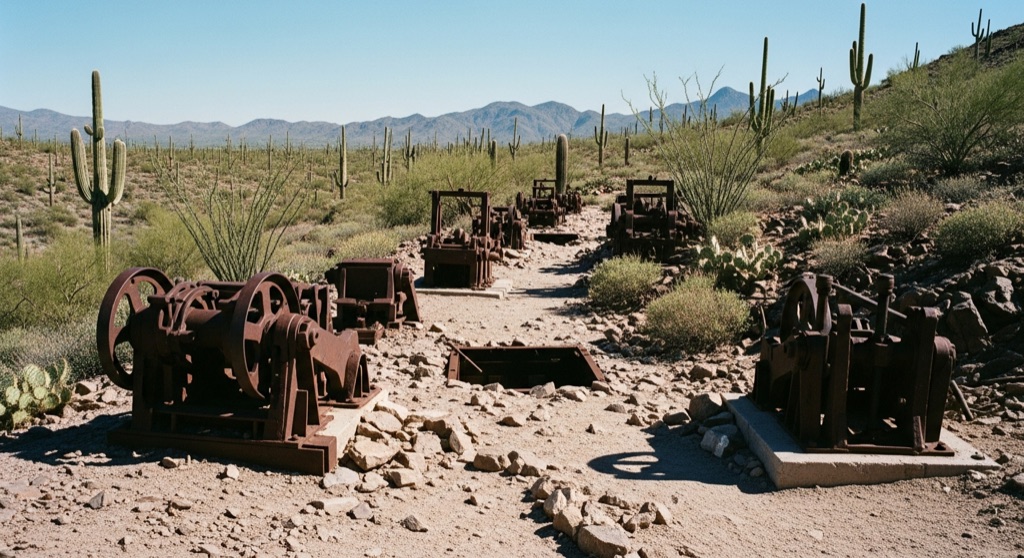
Discovered in 1911 by E.H. Bowman while searching for gold, the Sunflower Mine became a major mercury producer in the Mazatzal Mountains, operating until 1982. The site once featured a large processing facility that roasted cinnabar ore in rotary kilns to extract liquid mercury. Today, while a 2012 wildfire and subsequent Forest Service cleanups destroyed or removed most wooden structures, visitors can still see remnants of heavy metal machinery and sealed mine shafts along the rugged trail.
Sunflower MineView only
Discovered in 1911 by E.H. Bowman while searching for gold, the Sunflower Mine became a major mercury producer in the Mazatzal Mountains, operating until 1982. The site once featured a large processing facility that roasted cinnabar ore in rotary kilns to extract liquid mercury. Today, while a 2012 wildfire and subsequent Forest Service cleanups destroyed or removed most wooden structures, visitors can still see remnants of heavy metal machinery and sealed mine shafts along the rugged trail.
-
 Dragon MineView only
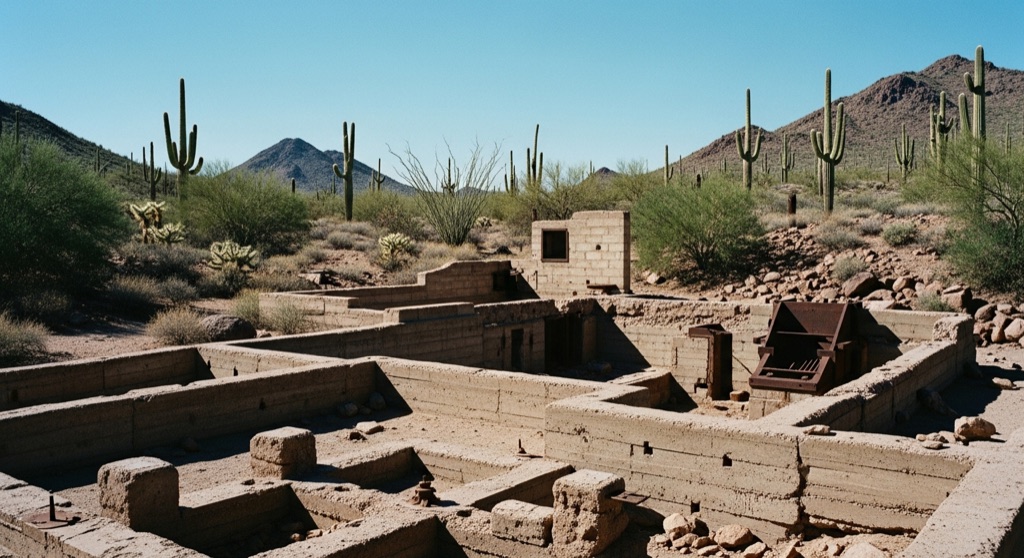
Located in the San Domingo Mining District southeast of Wickenburg, the Dragon Mine is a former gold and vanadium operation that dates back to the turn of the 20th century. Originally developed as the Julia Mine, it was renamed in 1917 and produced vanadium for the World War I effort before being abandoned multiple times. Today, visitors can find concrete foundations, the ruins of a stamp mill, and scattered mining debris nestled in the desert landscape.
Dragon MineView only
Located in the San Domingo Mining District southeast of Wickenburg, the Dragon Mine is a former gold and vanadium operation that dates back to the turn of the 20th century. Originally developed as the Julia Mine, it was renamed in 1917 and produced vanadium for the World War I effort before being abandoned multiple times. Today, visitors can find concrete foundations, the ruins of a stamp mill, and scattered mining debris nestled in the desert landscape.
-
 Ajax MineView only
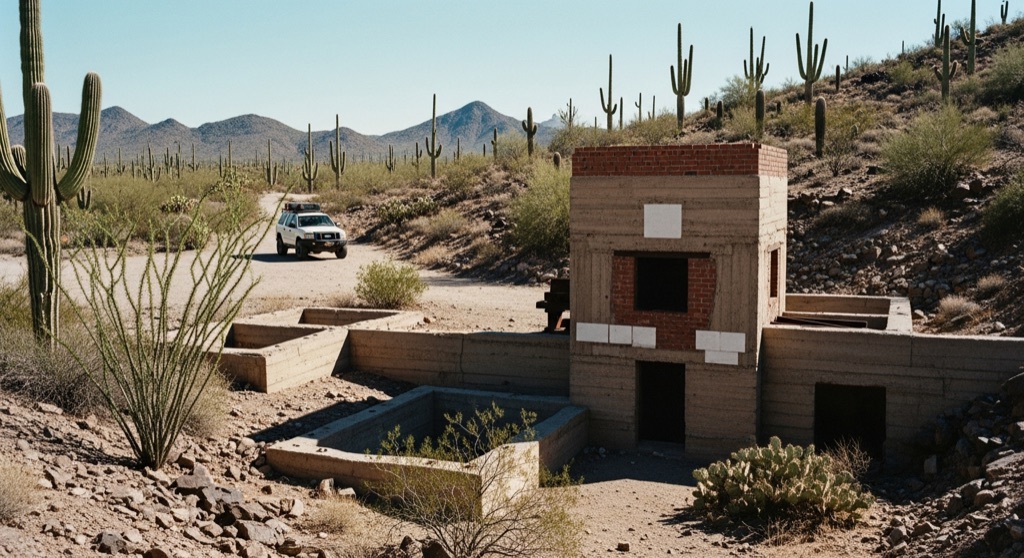
Established in 1915 in the Mineral Mountain Mining District, the Ajax Mine was a short-lived operation that produced lead, copper, silver, and gold. Today, a remarkably well-preserved concrete and brick milling structure still stands across the wash, alongside concrete foundations and a nearby 30-foot-deep vertical shaft. The remote site is now a popular destination for off-roaders exploring the rugged Sonoran Desert.
Ajax MineView only
Established in 1915 in the Mineral Mountain Mining District, the Ajax Mine was a short-lived operation that produced lead, copper, silver, and gold. Today, a remarkably well-preserved concrete and brick milling structure still stands across the wash, alongside concrete foundations and a nearby 30-foot-deep vertical shaft. The remote site is now a popular destination for off-roaders exploring the rugged Sonoran Desert.
-
 Dacite Cliffs MineView only
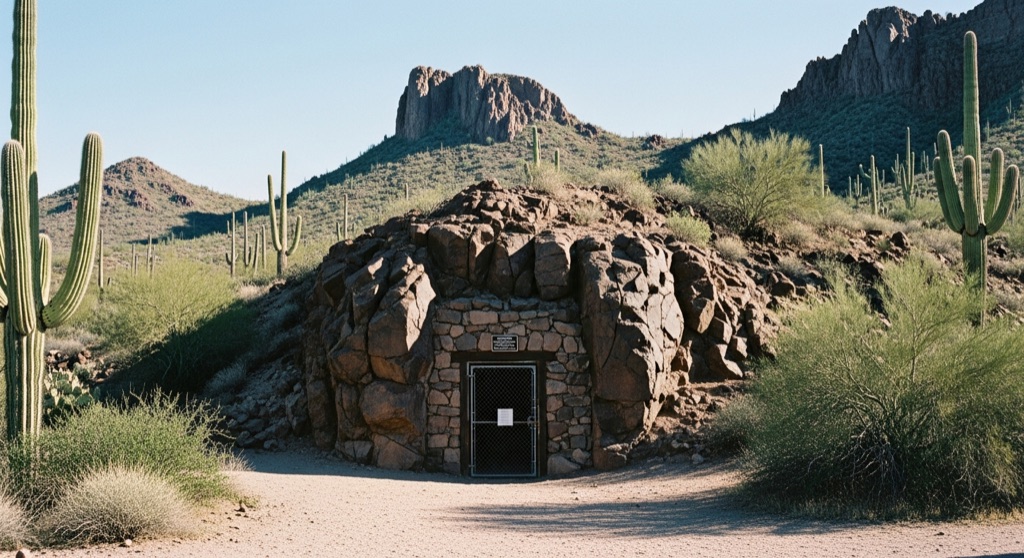
Tucked away at the base of the towering Dacite Cliffs in the Superstition Wilderness, this historic abandoned mine adit was once prospected for gold and copper. Today, the horizontal shaft is sealed with a bat gate to protect the local wildlife and prevent dangerous underground exploration. Hikers can still follow the Lost Goldmine Trail to view the gated entrance and admire the dramatic volcanic rock formations above.
Dacite Cliffs MineView only
Tucked away at the base of the towering Dacite Cliffs in the Superstition Wilderness, this historic abandoned mine adit was once prospected for gold and copper. Today, the horizontal shaft is sealed with a bat gate to protect the local wildlife and prevent dangerous underground exploration. Hikers can still follow the Lost Goldmine Trail to view the gated entrance and admire the dramatic volcanic rock formations above.
-
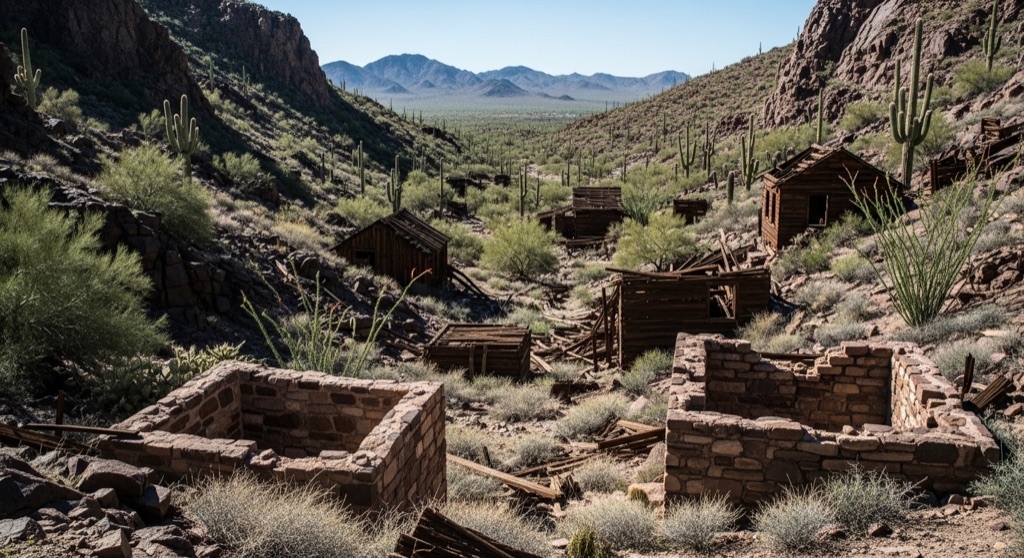 Oro Grande MineAccess unclear
Founded in 1901 following a rich gold strike, the Oro Grande Mine in the Black Rock district became a short-lived mining sensation that saw massive investments but minimal returns. The site once featured a ten-stamp mill, a pumping plant at the nearby Hassayampa River, and several wood and stone structures. Today, only scattered ruins, collapsed wooden buildings, and dangerous open shafts remain hidden in a rugged box canyon.
Oro Grande MineAccess unclear
Founded in 1901 following a rich gold strike, the Oro Grande Mine in the Black Rock district became a short-lived mining sensation that saw massive investments but minimal returns. The site once featured a ten-stamp mill, a pumping plant at the nearby Hassayampa River, and several wood and stone structures. Today, only scattered ruins, collapsed wooden buildings, and dangerous open shafts remain hidden in a rugged box canyon.
-
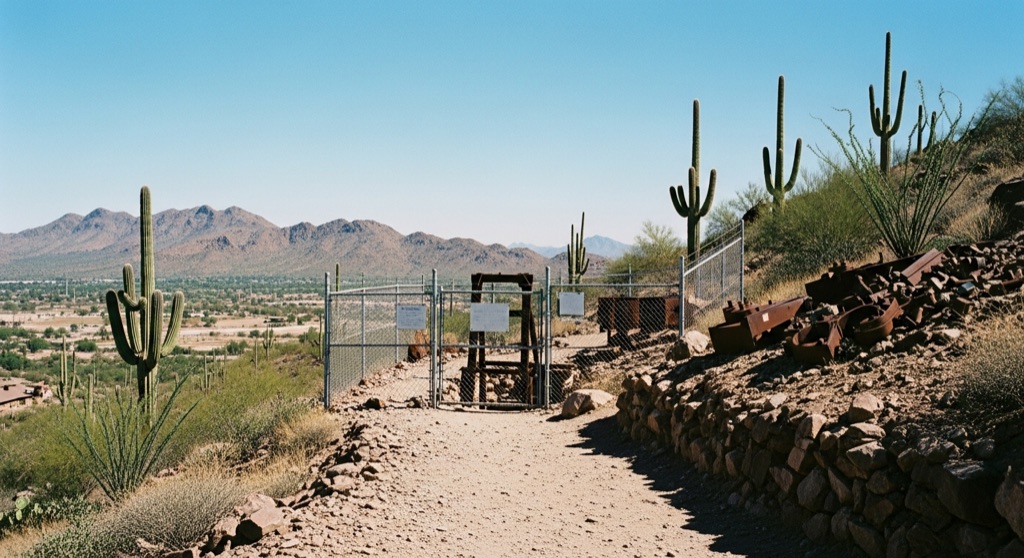 Union MineView only
The Union Mine is a historic gold mine located in North Phoenix, dating back to its initial workings in 1881. The site features a 75-foot-deep vertical shaft that once tapped into a rich vein of gold ore. Today, the fenced-off shaft remains alongside scattered mining debris, rusted bolts, and old cans hidden against the hillside.
Union MineView only
The Union Mine is a historic gold mine located in North Phoenix, dating back to its initial workings in 1881. The site features a 75-foot-deep vertical shaft that once tapped into a rich vein of gold ore. Today, the fenced-off shaft remains alongside scattered mining debris, rusted bolts, and old cans hidden against the hillside.
-
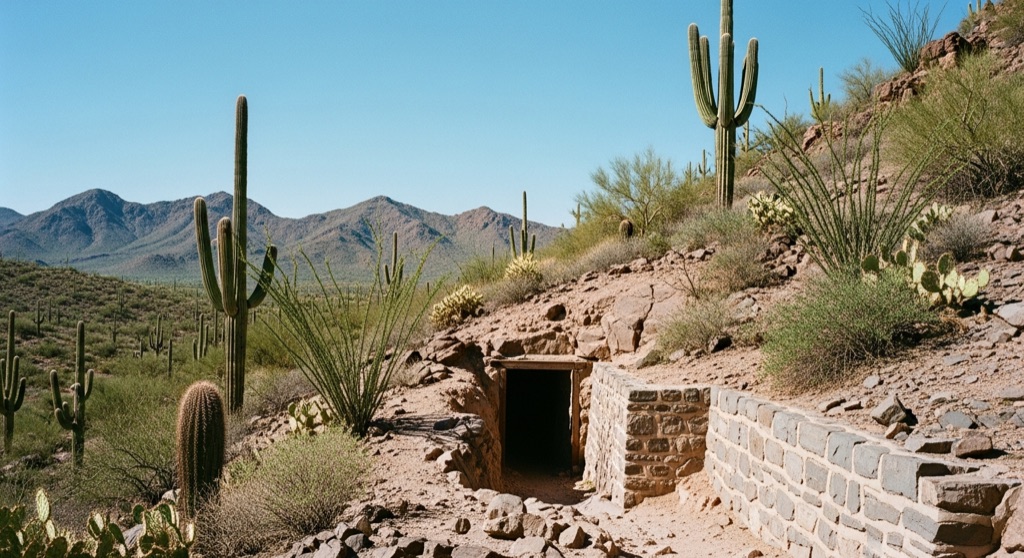 Maricopa MineView only
The Maricopa Mine is a historic late-19th-century gold mine located just south of the Jewel of the Creek Preserve in Cave Creek. Active primarily from 1890 to 1910, the site once supported the nearby pioneer townsite of Liscum before its operations ceased. Today, all that remains of the mine is a shallow, ungated adit (tunnel opening) carved into a bluff side along the hiking trails.
Maricopa MineView only
The Maricopa Mine is a historic late-19th-century gold mine located just south of the Jewel of the Creek Preserve in Cave Creek. Active primarily from 1890 to 1910, the site once supported the nearby pioneer townsite of Liscum before its operations ceased. Today, all that remains of the mine is a shallow, ungated adit (tunnel opening) carved into a bluff side along the hiking trails.
-
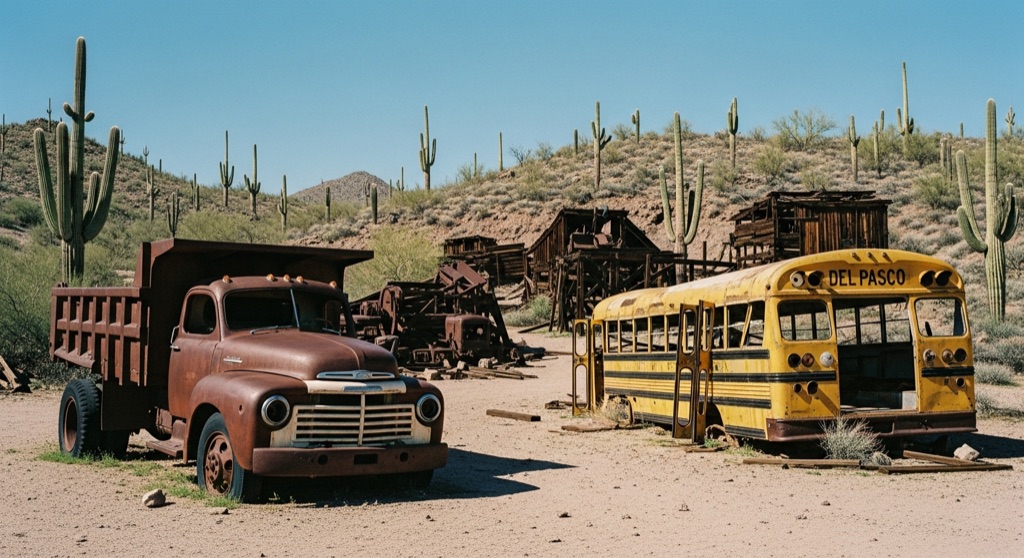 Del Pasco MineView only
Discovered on July 4, 1870, the Del Pasco Mine was one of the earliest and richest gold strikes in the Bradshaw Mountains. Active sporadically into the mid-20th century, the site now features a collection of fascinating relics including a rusted 1950s dump truck, a derelict school bus, and collapsed wooden structures. The surrounding 15-acre area is currently managed by the Prescott National Forest, which has initiated environmental cleanup efforts to address heavy metal tailings.
Del Pasco MineView only
Discovered on July 4, 1870, the Del Pasco Mine was one of the earliest and richest gold strikes in the Bradshaw Mountains. Active sporadically into the mid-20th century, the site now features a collection of fascinating relics including a rusted 1950s dump truck, a derelict school bus, and collapsed wooden structures. The surrounding 15-acre area is currently managed by the Prescott National Forest, which has initiated environmental cleanup efforts to address heavy metal tailings.
-
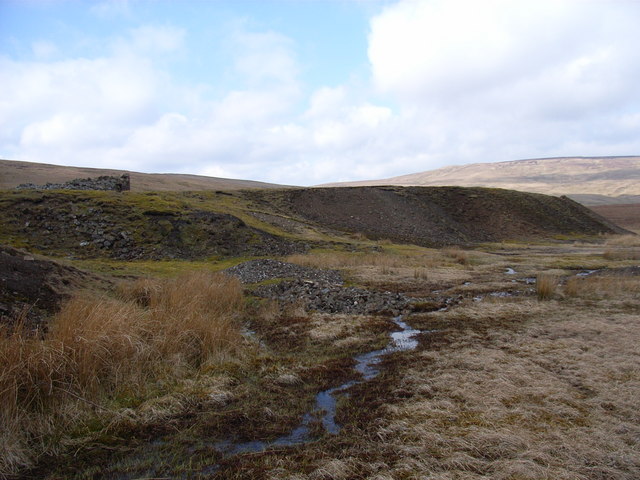 Old Smith MineDo not enter
Established in 1872 by P.W. 'Bill' Smith, this historic gold mining and milling site processed ore from the nearby Vulture Mine extension. A short-lived boomtown named Seymour was platted here in 1879, but it was quickly abandoned and later devastated by a massive flood in 1890 when the Walnut Grove Dam failed. Today, the site is a quiet ghost town with only a dilapidated one-room stone house and a historic ore-grinding millstone remaining on a private ranch.
Old Smith MineDo not enter
Established in 1872 by P.W. 'Bill' Smith, this historic gold mining and milling site processed ore from the nearby Vulture Mine extension. A short-lived boomtown named Seymour was platted here in 1879, but it was quickly abandoned and later devastated by a massive flood in 1890 when the Walnut Grove Dam failed. Today, the site is a quiet ghost town with only a dilapidated one-room stone house and a historic ore-grinding millstone remaining on a private ranch.
-
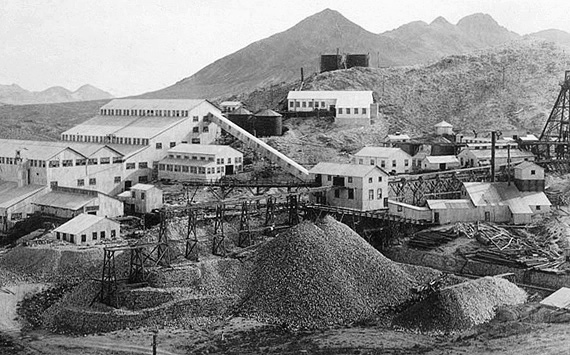 Belmont MineDo not enter
Discovered in 1899 and developed by the Arizona Belmont Mining Company, the Belmont Mine was a copper and silver producer that operated primarily during the 1920s. Today, the site lies abandoned in a rugged canyon south of Apache Leap, featuring concrete foundations, tailings piles, and a dangerous, open vertical shaft plunging hundreds of feet. The historic Belmont Hotel on Superior's Main Street was originally built to house the mine's visiting executives.
Belmont MineDo not enter
Discovered in 1899 and developed by the Arizona Belmont Mining Company, the Belmont Mine was a copper and silver producer that operated primarily during the 1920s. Today, the site lies abandoned in a rugged canyon south of Apache Leap, featuring concrete foundations, tailings piles, and a dangerous, open vertical shaft plunging hundreds of feet. The historic Belmont Hotel on Superior's Main Street was originally built to house the mine's visiting executives.
-
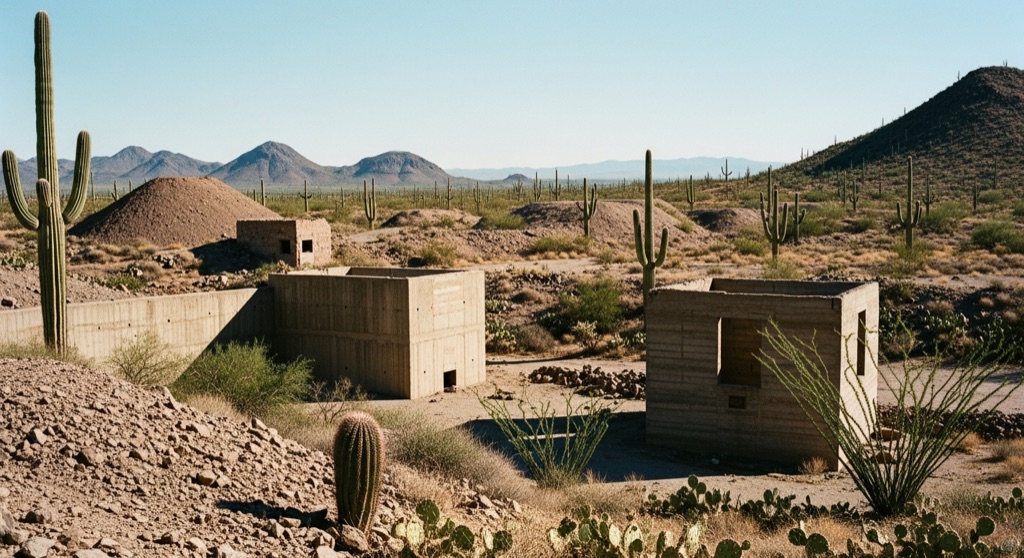 Tonopah-Belmont MineView only
Tucked into the rugged Belmont Mountains, the Tonopah-Belmont Mine was once the largest producer in the Osborn Mining District, booming between 1926 and 1930 to yield millions of pounds of lead and copper. Today, the desert site is scattered with massive concrete mill foundations, tailings, and the ruins of a small rock office. While the surface ruins are accessible via a scenic off-road trail, the underground workings are highly unstable and strictly off-limits.
Tonopah-Belmont MineView only
Tucked into the rugged Belmont Mountains, the Tonopah-Belmont Mine was once the largest producer in the Osborn Mining District, booming between 1926 and 1930 to yield millions of pounds of lead and copper. Today, the desert site is scattered with massive concrete mill foundations, tailings, and the ruins of a small rock office. While the surface ruins are accessible via a scenic off-road trail, the underground workings are highly unstable and strictly off-limits.
-
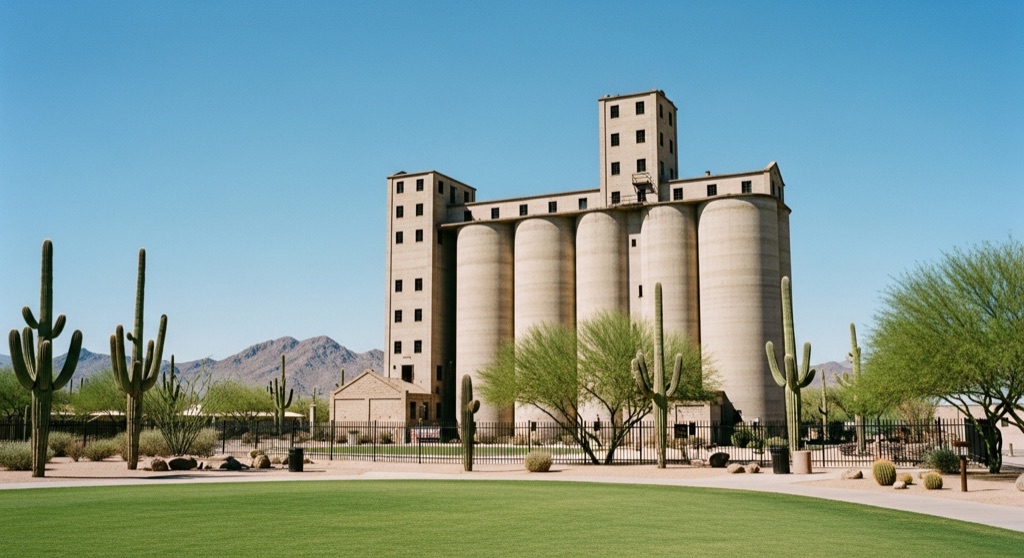 Hayden Flour MillView only
Constructed in 1918 to replace earlier structures lost to fire, this reinforced concrete mill and its 1951 grain silos stand as iconic landmarks of Tempe's agricultural past. The facility operated continuously for over a century before closing its doors in 1998, leaving behind a striking, vacant industrial shell. Today, the fenced-off ruins are surrounded by a public event lawn while awaiting a major planned redevelopment.
Hayden Flour MillView only
Constructed in 1918 to replace earlier structures lost to fire, this reinforced concrete mill and its 1951 grain silos stand as iconic landmarks of Tempe's agricultural past. The facility operated continuously for over a century before closing its doors in 1998, leaving behind a striking, vacant industrial shell. Today, the fenced-off ruins are surrounded by a public event lawn while awaiting a major planned redevelopment.
-
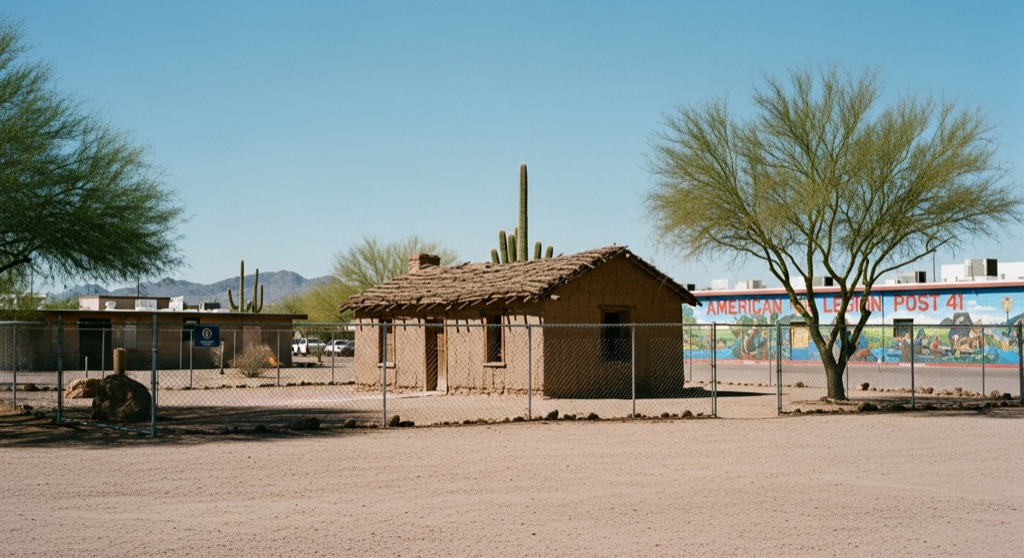 Duppa HomesteadView only
Dating back to 1895, this fragile mud-adobe structure is one of the oldest surviving buildings in Phoenix. Associated with pioneer 'Lord' Darrell Duppa—the Englishman credited with naming the city—the historic home features a traditional roof of cottonwood branches and mud. Today, it sits dilapidated and fenced off in a parking lot south of downtown, awaiting preservation efforts.
Duppa HomesteadView only
Dating back to 1895, this fragile mud-adobe structure is one of the oldest surviving buildings in Phoenix. Associated with pioneer 'Lord' Darrell Duppa—the Englishman credited with naming the city—the historic home features a traditional roof of cottonwood branches and mud. Today, it sits dilapidated and fenced off in a parking lot south of downtown, awaiting preservation efforts.
-
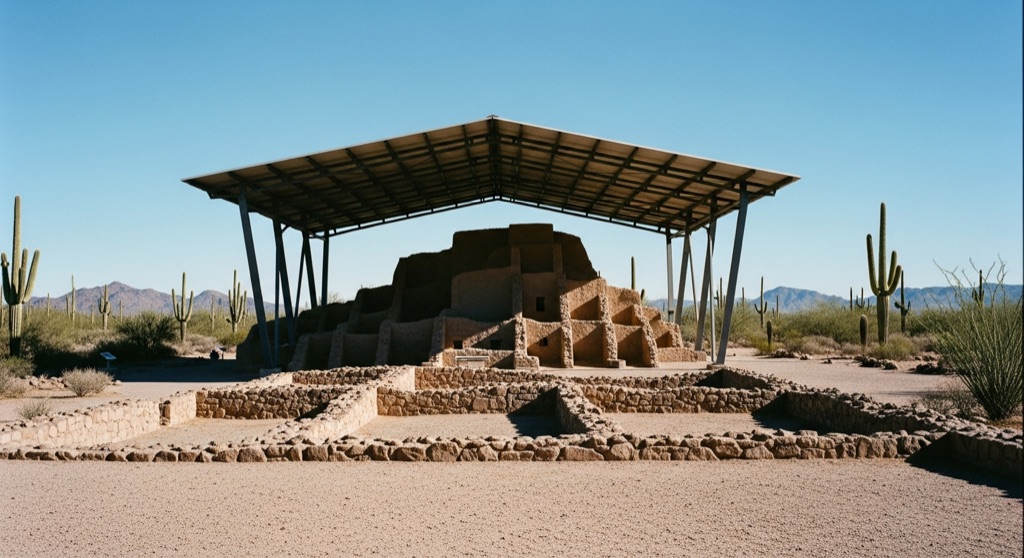 Casa Grande Ruins National MonumentOpen to visit
Built in the 14th century by the Ancestral Sonoran Desert (Hohokam) people, this prehistoric farming community was abandoned around 1450 CE. The centerpiece of the site is the 'Great House,' a massive four-story structure constructed of caliche mud that is now protected under a landmark steel canopy. Visitors can also see the remnants of surrounding compound walls and ancient irrigation canals that once sustained the village.
Casa Grande Ruins National MonumentOpen to visit
Built in the 14th century by the Ancestral Sonoran Desert (Hohokam) people, this prehistoric farming community was abandoned around 1450 CE. The centerpiece of the site is the 'Great House,' a massive four-story structure constructed of caliche mud that is now protected under a landmark steel canopy. Visitors can also see the remnants of surrounding compound walls and ancient irrigation canals that once sustained the village.
-
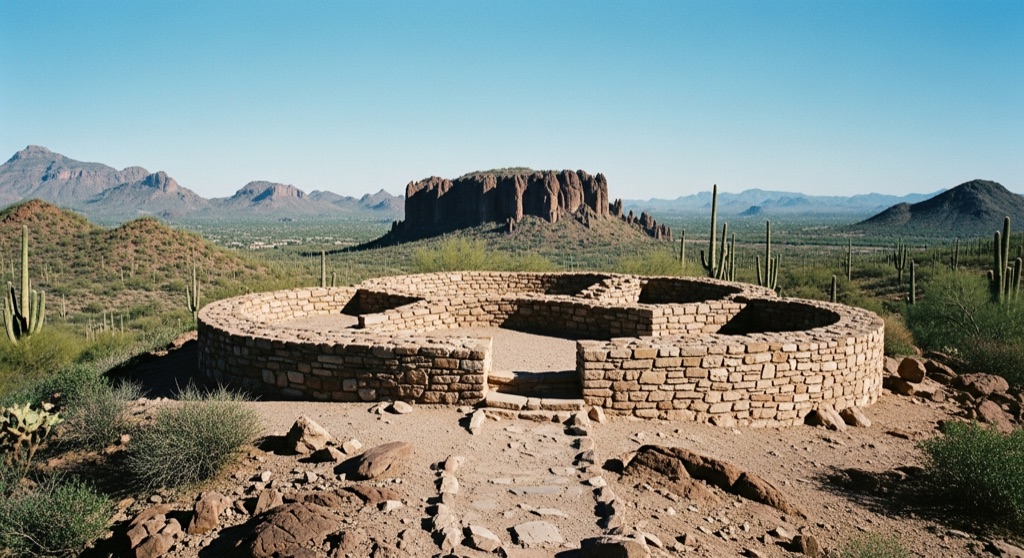 Queen Valley Overlook RuinsOpen to visit
Perched on a flat bench of Quebec Rock overlooking Queen Creek, these ancient stone ruins are believed to have served as a prehistoric hilltop fort or observation post. Constructed by early Native American inhabitants over 700 years ago, the site features low, remarkably intact stone walls about four feet high. The ruins consist of a circular main enclosure with several smaller subrooms, offering panoramic views of the surrounding desert and the Superstition Mountains.
Queen Valley Overlook RuinsOpen to visit
Perched on a flat bench of Quebec Rock overlooking Queen Creek, these ancient stone ruins are believed to have served as a prehistoric hilltop fort or observation post. Constructed by early Native American inhabitants over 700 years ago, the site features low, remarkably intact stone walls about four feet high. The ruins consist of a circular main enclosure with several smaller subrooms, offering panoramic views of the surrounding desert and the Superstition Mountains.
Abandoned places in Phoenix — FAQ
Is it legal to visit abandoned places around Phoenix?
It depends on the site, and each listing here says explicitly — with the reason. Of the 15 with a verified access status: 2 are legal to enter (like Casa Grande Ruins National Monument and Queen Valley Overlook Ruins), 10 are view-only from public land or roadside, and 3 are private property or genuinely unsafe — those are marked "do not enter" rather than romanticised.
Which abandoned & forgotten places in Phoenix are the strangest?
Ranked by how strange they actually are: Sunflower Mine, Dragon Mine and Ajax Mine. Sunflower Mine — Discovered in 1911 by E.H.
Where in Phoenix are they?
Across Sunflower Mine, Wickenburg, Ajax Mine, Dacite Cliffs Mine and Oro Grande Mine and 9 more. Each listing gives the neighborhood and address so you can cluster a couple into one outing.
Are any of the abandoned & forgotten places in Phoenix free?
Yes — 15 are free to visit, including Sunflower Mine, Dragon Mine and Ajax Mine. The rest are mostly low-cost.
Is this a good weird date in Phoenix?
That's what the list is built for. Every entry has a specific move rather than a vague recommendation — at Sunflower Mine, for instance: Take a rugged 4x4 off-road drive or hike along Forest Road 25A to reach the canyon, where you can safely photograph the remaining heavy metal mining equipment and enjoy the scenic mountain views.
How were these abandoned & forgotten places chosen?
An agentic research system digs for the genuinely obscure — the spots even locals miss — and every one is verified against real sources before it makes the list. We deliberately skip the landmarks already on every Phoenix guide.