Hands-on workshops & classes in Washington, D.C.
5 places in Washington, D.C. where you make something with your hands, including National Capital Trolley Museum, W.F. Moran Bladesmith & Artisan Academy and Glen Echo Glassworks. Blow glass, throw pots, forge a blade or build a terrarium — an evening you leave holding the thing you made. They spread across Colesville, MD, Middletown, MD, Glen Echo, MD, Downtown Frederick, MD and 1 more area, so two or three can make a whole afternoon. Every entry is hand-vetted against real sources — not scraped off a top-ten list or averaged out of crowd ratings.
-
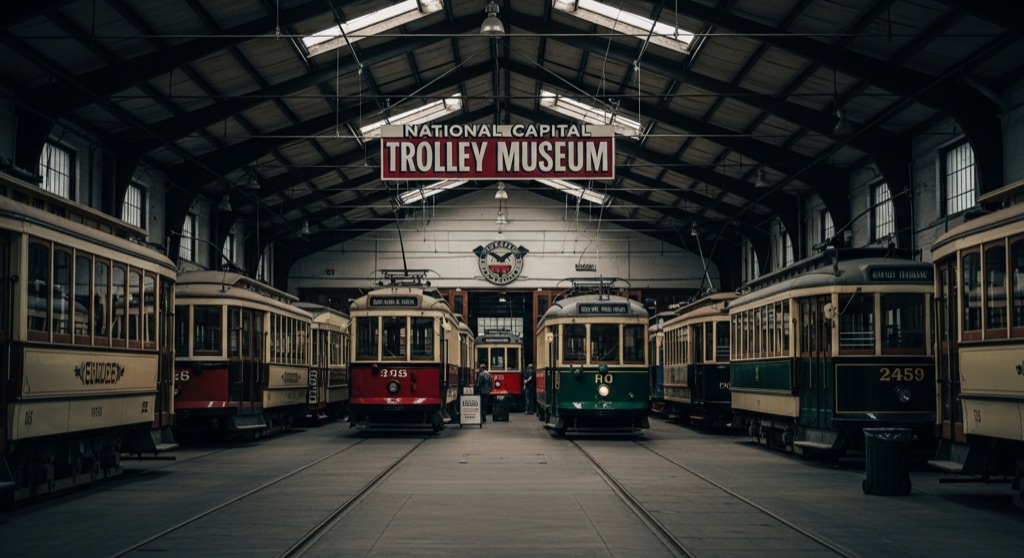 National Capital Trolley Museum
The largest surviving collection of Washington DC streetcars anywhere is parked here alongside trams shipped in from Berlin, Vienna, and Toronto — and instead of sitting behind glass, several are kept running, carrying visitors down the museum's own mile-long demonstration line through the woods.
National Capital Trolley Museum
The largest surviving collection of Washington DC streetcars anywhere is parked here alongside trams shipped in from Berlin, Vienna, and Toronto — and instead of sitting behind glass, several are kept running, carrying visitors down the museum's own mile-long demonstration line through the woods.
-
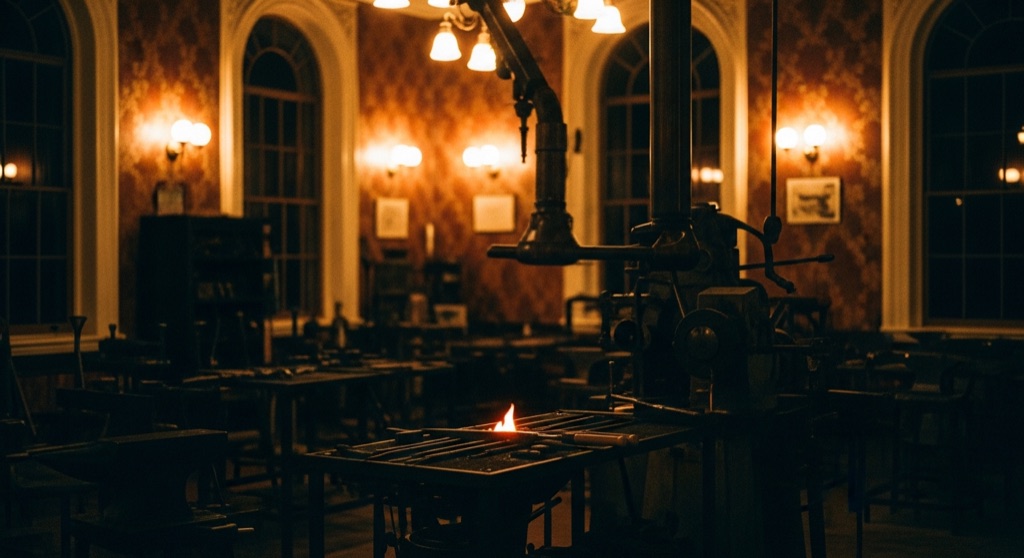 W.F. Moran Bladesmith & Artisan Academy
A modern forging hall built "yards from Bill Moran's forge" — the actual farm shop where self-taught knifemaker William F. Moran single-handedly revived pattern-welded Damascus steel in the late 1960s and went on to forge blades for Sylvester Stallone, Queen Elizabeth II, and King Abdullah. His foundation opened the academy on the same Middletown property in October 2022 as an American Bladesmith Society-approved school.
W.F. Moran Bladesmith & Artisan Academy
A modern forging hall built "yards from Bill Moran's forge" — the actual farm shop where self-taught knifemaker William F. Moran single-handedly revived pattern-welded Damascus steel in the late 1960s and went on to forge blades for Sylvester Stallone, Queen Elizabeth II, and King Abdullah. His foundation opened the academy on the same Middletown property in October 2022 as an American Bladesmith Society-approved school.
-
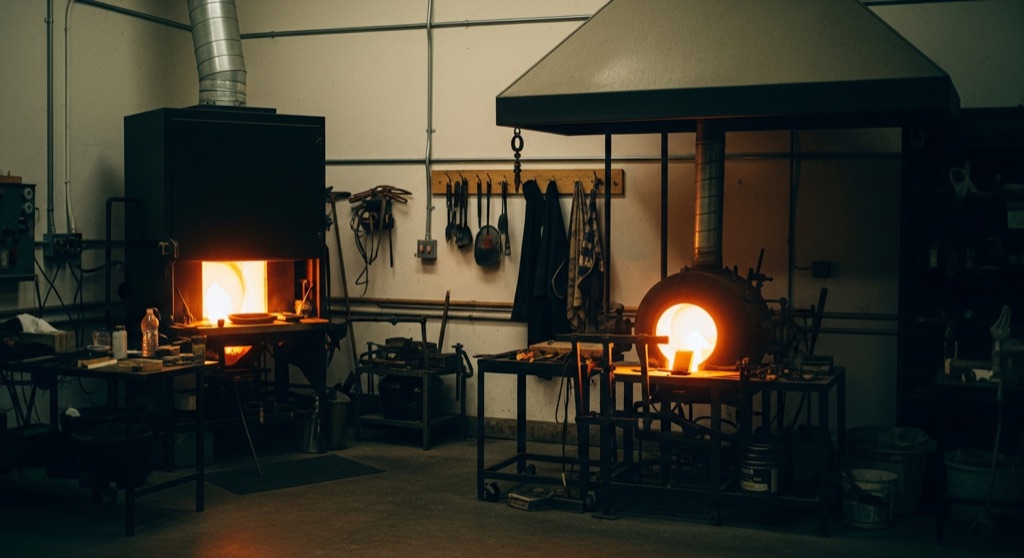 Glen Echo Glassworks
A hot-glass studio glowing at 2,000°F inside Glen Echo Park, a former trolley-era amusement park (built out around 1911, shuttered in 1968), a few hundred feet from the historic 1921 Dentzel carousel and the Spanish Ballroom where big bands once played to dancers instead of glassblowers. It's one of more than a dozen resident-artist studios the National Park Service now leases out across the old midway.
Glen Echo Glassworks
A hot-glass studio glowing at 2,000°F inside Glen Echo Park, a former trolley-era amusement park (built out around 1911, shuttered in 1968), a few hundred feet from the historic 1921 Dentzel carousel and the Spanish Ballroom where big bands once played to dancers instead of glassblowers. It's one of more than a dozen resident-artist studios the National Park Service now leases out across the old midway.
-
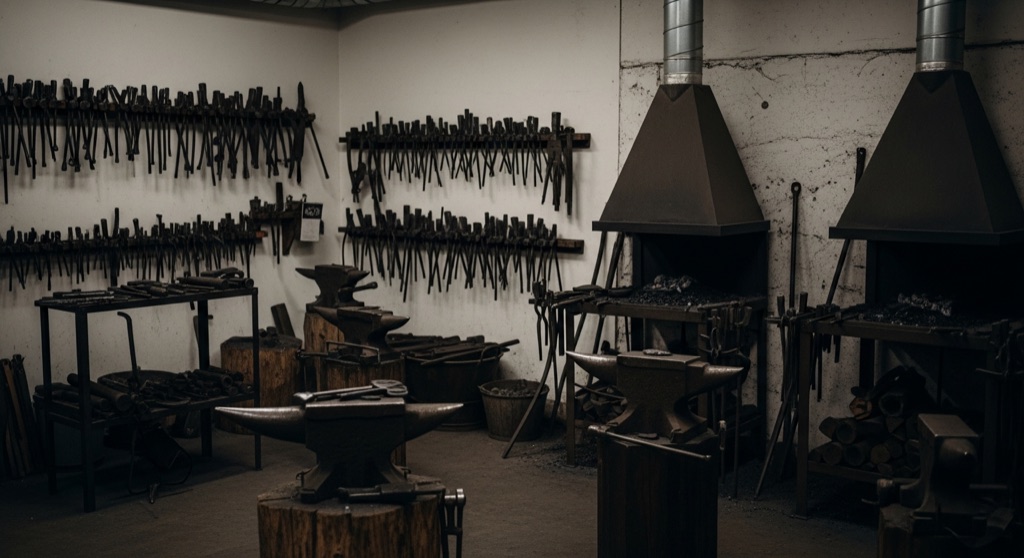 Ms Caitlin's School of Blacksmithing
A one-woman blacksmithing school in a downtown Frederick storefront, run by a smith who is 5'5" and spent four frustrating years training under taller instructors before reverse-engineering a "biomechanical" method of moving steel with body mechanics instead of brute strength — a technique she now claims gets total beginners forging a leaf out of raw steel in a single session.
Ms Caitlin's School of Blacksmithing
A one-woman blacksmithing school in a downtown Frederick storefront, run by a smith who is 5'5" and spent four frustrating years training under taller instructors before reverse-engineering a "biomechanical" method of moving steel with body mechanics instead of brute strength — a technique she now claims gets total beginners forging a leaf out of raw steel in a single session.
-
 National Cryptologic Museum
Run by the NSA two blocks from its own headquarters, the museum lets visitors put their hands on two working WWII Enigma machines and stand next to the Navy Bombe built to crack them, alongside a decommissioned Cray Y-MP supercomputer and Cold War reconnaissance aircraft parked outside in National Vigilance Park.
National Cryptologic Museum
Run by the NSA two blocks from its own headquarters, the museum lets visitors put their hands on two working WWII Enigma machines and stand next to the Navy Bombe built to crack them, alongside a decommissioned Cray Y-MP supercomputer and Cold War reconnaissance aircraft parked outside in National Vigilance Park.
Hands-on workshops & classes in Washington, D.C. — FAQ
What can you actually make at a workshop in Washington, D.C.?
Across the 5 listed: forge, streetcars, transit history, rides and bladesmithing. Start with National Capital Trolley Museum and W.F. Moran Bladesmith & Artisan Academy — every listing says what you leave holding and roughly what it costs.
Which hands-on workshops & classes in Washington, D.C. are the strangest?
Ranked by how strange they actually are: National Capital Trolley Museum, W.F. Moran Bladesmith & Artisan Academy and Glen Echo Glassworks. National Capital Trolley Museum — The largest surviving collection of Washington DC streetcars anywhere is parked here alongside trams shipped in from Berlin, Vienna, and Toronto — and instead of sitting behind glass, several are kept running, carrying visitors down the museum's own mile-long demonstration line through the woods.
Where in Washington, D.C. are they?
Across Colesville, MD, Middletown, MD, Glen Echo, MD, Downtown Frederick, MD and Annapolis Junction, MD (Fort Meade). Each listing gives the neighborhood and address so you can cluster a couple into one outing.
Is this a good weird date in Washington, D.C.?
That's what the list is built for. Every entry has a specific move rather than a vague recommendation — at National Capital Trolley Museum, for instance: Buy tickets for a ride on a pre-1900 wooden streetcar or a PCC streamliner down the demonstration line, then wander the car barn comparing DC's old fleet to the imported European and Canadian trams before checking the O-scale model of 1930s DC streets in the Visitor Center.
How were these hands-on workshops & classes chosen?
An agentic research system digs for the genuinely obscure — the spots even locals miss — and every one is verified against real sources before it makes the list. We deliberately skip the landmarks already on every Washington, D.C. guide.