Abandoned places in Washington, D.C.
12 abandoned and forgotten places around Washington, D.C., Mallows Bay Ghost Fleet, Maryland Gold Mine National Historic Landmark and Bank Historic Barn Ruins among them — and for each one, whether you can legally visit. Ruins, ghost towns and shuttered industry, with the ones that are trespassing or genuinely unsafe marked as such rather than romanticised. They spread across Nanjemoy, MD (Charles County), Potomac, Joppatowne, Germantown and 6 more areas, so two or three can make a whole afternoon. 11 of them cost nothing. Every entry is hand-vetted against real sources — not scraped off a top-ten list or averaged out of crowd ratings.
Every abandoned place we've verified, nationwide — with its legal-access status →
-
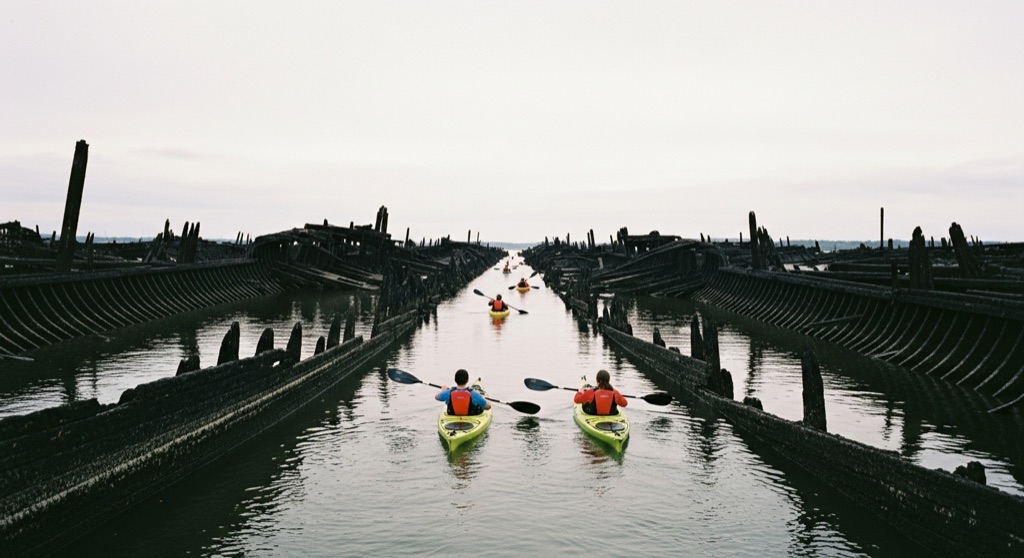 Mallows Bay Ghost FleetOpen to visit
Around 100 wooden WWI 'Ghost Fleet' steamships — part of a roughly 200-vessel wreck field, the largest in the Western Hemisphere — were built too slowly to ever see the war, then towed here, burned for scrap, and left to rot; their charred ribs now poke out of the Potomac shallows as a sunken armada you can paddle straight through.
Mallows Bay Ghost FleetOpen to visit
Around 100 wooden WWI 'Ghost Fleet' steamships — part of a roughly 200-vessel wreck field, the largest in the Western Hemisphere — were built too slowly to ever see the war, then towed here, burned for scrap, and left to rot; their charred ribs now poke out of the Potomac shallows as a sunken armada you can paddle straight through.
-
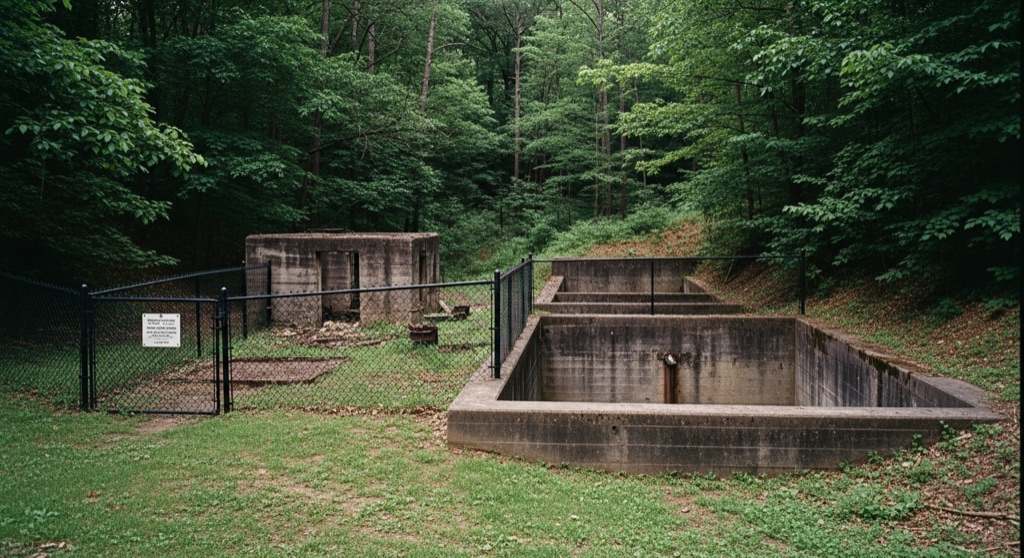 Maryland Gold Mine National Historic LandmarkView only
Discovered during the Civil War by a Union soldier, the Maryland Mine was the largest of several gold mining operations in the area, active from 1867 until 1939. Today, the site contains the fenced-off ruins of a blacksmith shop, the concrete foundation of a 25,000-gallon water tank, and sealed mine shafts. These historic remnants are slowly being reclaimed by the surrounding Piedmont forest within the C&O Canal National Historical Park.
Maryland Gold Mine National Historic LandmarkView only
Discovered during the Civil War by a Union soldier, the Maryland Mine was the largest of several gold mining operations in the area, active from 1867 until 1939. Today, the site contains the fenced-off ruins of a blacksmith shop, the concrete foundation of a 25,000-gallon water tank, and sealed mine shafts. These historic remnants are slowly being reclaimed by the surrounding Piedmont forest within the C&O Canal National Historical Park.
-
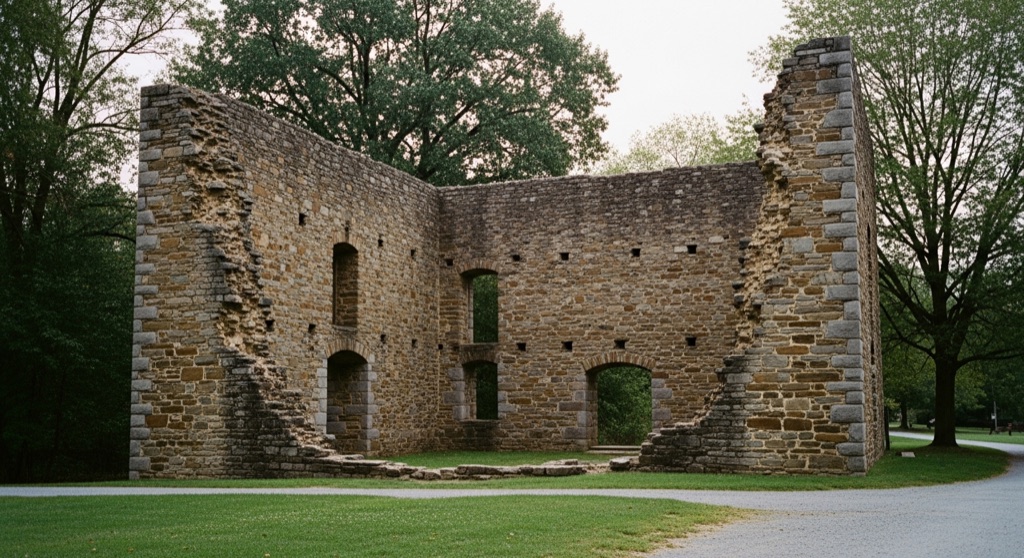 Bank Historic Barn RuinsOpen to visit
The Bank Historic Barn Ruins, also known as the Jerusalem Stone Barn, are the preserved remains of a massive rubblestone bank barn built in 1803. After being gutted by a devastating fire in 1961, the structure was left as a hollow shell of towering stone walls. Today, the stabilized masonry stands as a striking architectural skeleton within the historic Jerusalem Mill Village.
Bank Historic Barn RuinsOpen to visit
The Bank Historic Barn Ruins, also known as the Jerusalem Stone Barn, are the preserved remains of a massive rubblestone bank barn built in 1803. After being gutted by a devastating fire in 1961, the structure was left as a hollow shell of towering stone walls. Today, the stabilized masonry stands as a striking architectural skeleton within the historic Jerusalem Mill Village.
-
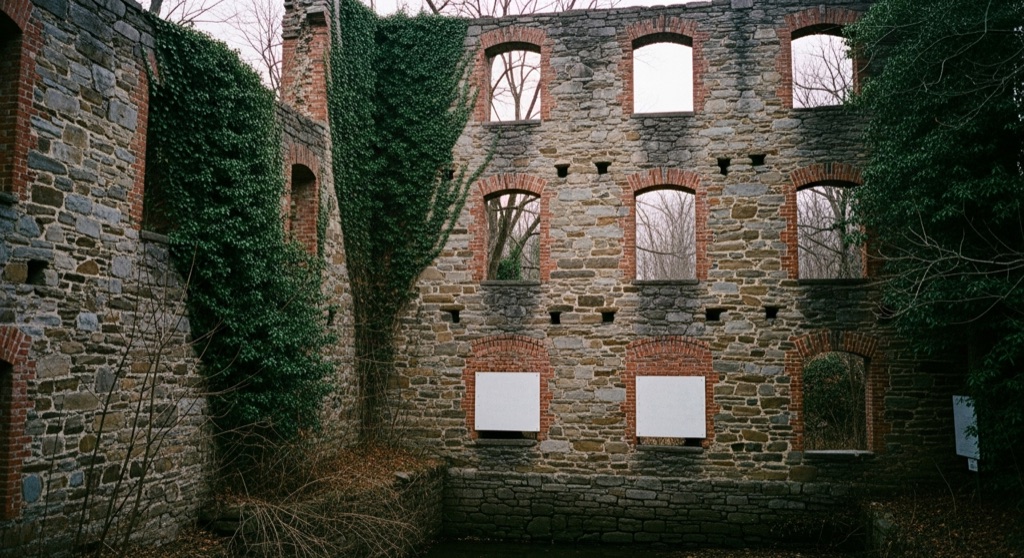 Ruins of Clopper MillView only
Located within Seneca Creek State Park, these three-story stone and brick ruins are all that remain of a water-powered gristmill dating back to the late 18th century. Expanded in 1834 by local businessman Francis Cassatt Clopper, the mill was destroyed by a devastating fire in 1947. Notably, Lincoln assassination co-conspirator George Atzerodt hid here for a night while fleeing Washington, D.C. in 1865.
Ruins of Clopper MillView only
Located within Seneca Creek State Park, these three-story stone and brick ruins are all that remain of a water-powered gristmill dating back to the late 18th century. Expanded in 1834 by local businessman Francis Cassatt Clopper, the mill was destroyed by a devastating fire in 1947. Notably, Lincoln assassination co-conspirator George Atzerodt hid here for a night while fleeing Washington, D.C. in 1865.
-
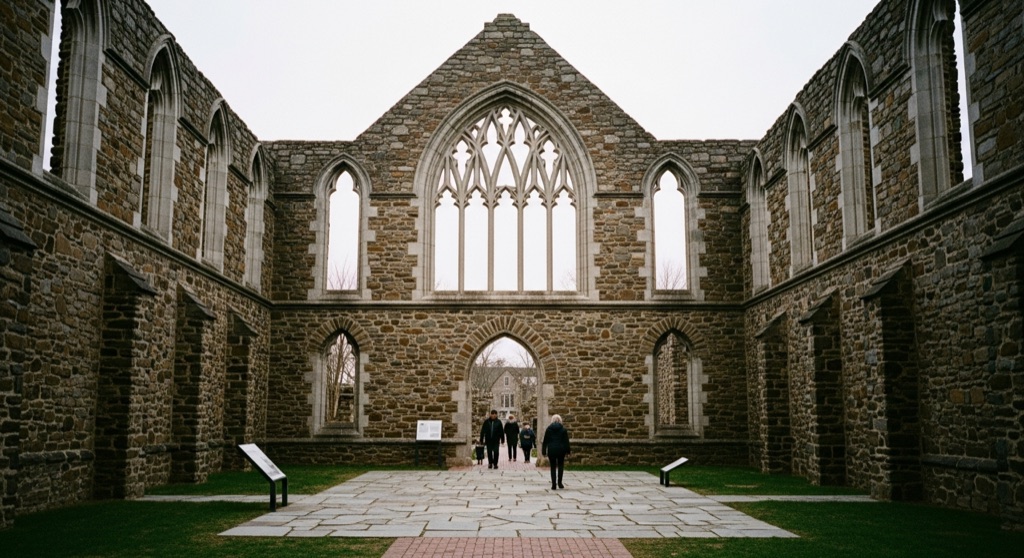 Terra Maria RuinsOpen to visit
These stabilized stone ruins in Ellicott City are the remains of the 1906 assembly hall of St. Charles College, a Catholic seminary destroyed by a devastating fire in 1911. Today, the two-story rubble stone structure with its soaring arched windows stands as a preserved centerpiece in the middle of a quiet suburban housing development. Visitors can walk through the open doorways to see the flagstone and brick paving maintained by the local homeowners association.
Terra Maria RuinsOpen to visit
These stabilized stone ruins in Ellicott City are the remains of the 1906 assembly hall of St. Charles College, a Catholic seminary destroyed by a devastating fire in 1911. Today, the two-story rubble stone structure with its soaring arched windows stands as a preserved centerpiece in the middle of a quiet suburban housing development. Visitors can walk through the open doorways to see the flagstone and brick paving maintained by the local homeowners association.
-
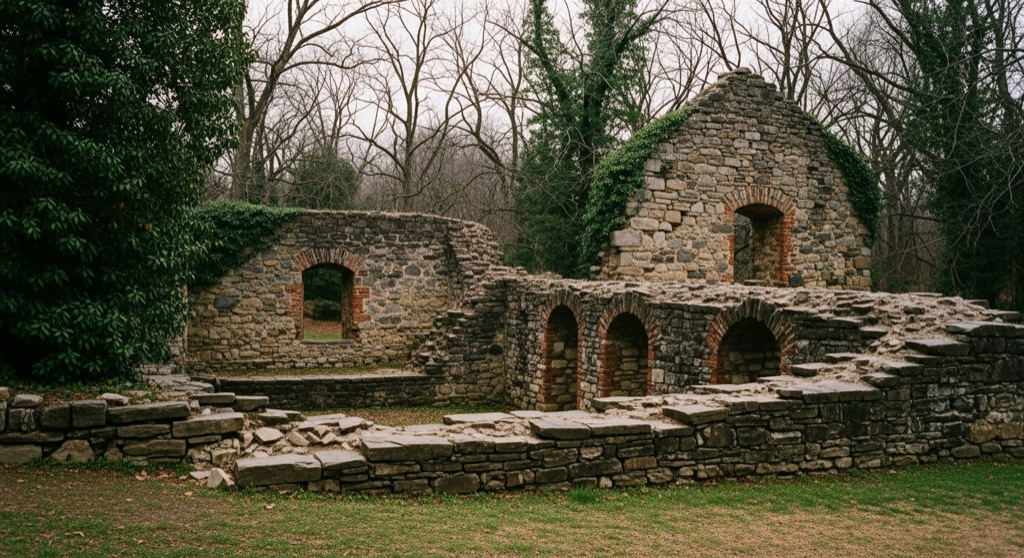 Simpsonville Mill RuinsView only
Dating back to the mid-1700s, this historic stone mill complex once served as a bustling woolen factory and gristmill along the Middle Patuxent River. Today, the crumbling stone walls and headgate of the mill stand as a quiet, vine-covered ruin tucked beneath the Cedar Lane bridge. The site is a preserved archaeological district that offers a glimpse into Maryland's early industrial history.
Simpsonville Mill RuinsView only
Dating back to the mid-1700s, this historic stone mill complex once served as a bustling woolen factory and gristmill along the Middle Patuxent River. Today, the crumbling stone walls and headgate of the mill stand as a quiet, vine-covered ruin tucked beneath the Cedar Lane bridge. The site is a preserved archaeological district that offers a glimpse into Maryland's early industrial history.
-
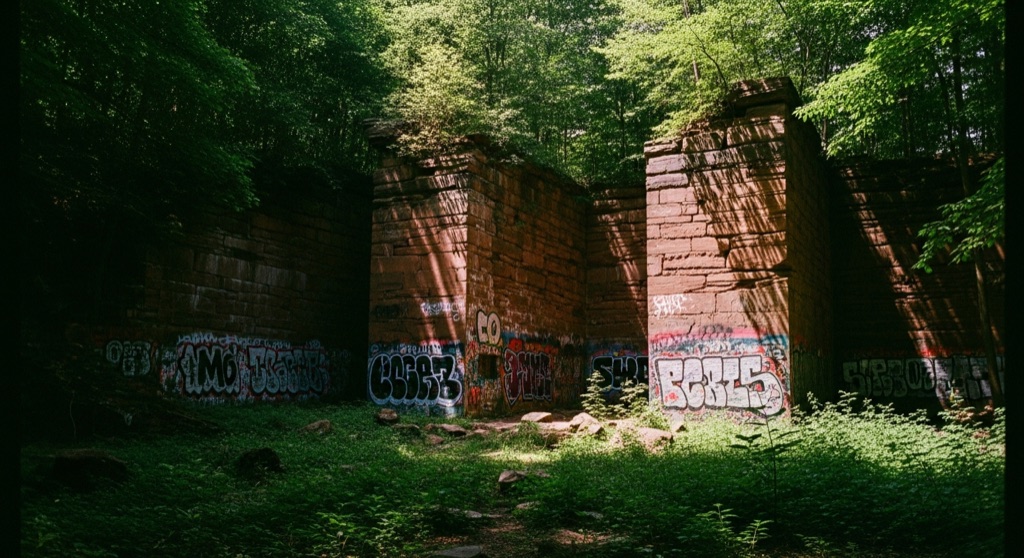 Seneca Mill and Quarry RuinsOpen to visit
Hidden in the woods near the C&O Canal, these red sandstone ruins are all that remain of a once-bustling 19th-century stone cutting mill and quarry that operated from 1781 to 1901. The quarry provided the iconic rust-red Seneca sandstone used to construct the Smithsonian Castle and numerous other historic Washington, D.C. landmarks. Today, the roofless stone walls of the mill stand overgrown with forest vegetation, covered in graffiti, and accessible via a short trail from the Seneca Aqueduct.
Seneca Mill and Quarry RuinsOpen to visit
Hidden in the woods near the C&O Canal, these red sandstone ruins are all that remain of a once-bustling 19th-century stone cutting mill and quarry that operated from 1781 to 1901. The quarry provided the iconic rust-red Seneca sandstone used to construct the Smithsonian Castle and numerous other historic Washington, D.C. landmarks. Today, the roofless stone walls of the mill stand overgrown with forest vegetation, covered in graffiti, and accessible via a short trail from the Seneca Aqueduct.
-
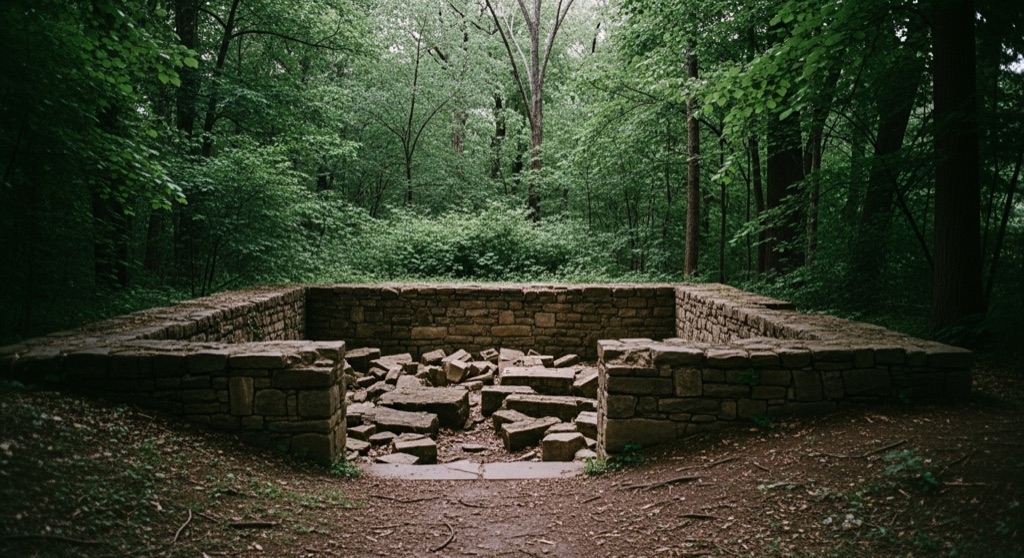 Glen Ellen Castle RuinsOpen to visit
Built in 1833 for Robert Gilmor III, Glen Ellen was a grand Gothic Revival mansion designed by architect Alexander Jackson Davis to resemble Sir Walter Scott's Scottish estate, Abbotsford. The estate was abandoned in the late 19th century due to the construction of the Loch Raven Reservoir, which flooded the surrounding valley. In 1929, the decaying structure was dynamited for safety, leaving behind only stone foundations, cellar walls, and scattered masonry hidden in the woods.
Glen Ellen Castle RuinsOpen to visit
Built in 1833 for Robert Gilmor III, Glen Ellen was a grand Gothic Revival mansion designed by architect Alexander Jackson Davis to resemble Sir Walter Scott's Scottish estate, Abbotsford. The estate was abandoned in the late 19th century due to the construction of the Loch Raven Reservoir, which flooded the surrounding valley. In 1929, the decaying structure was dynamited for safety, leaving behind only stone foundations, cellar walls, and scattered masonry hidden in the woods.
-
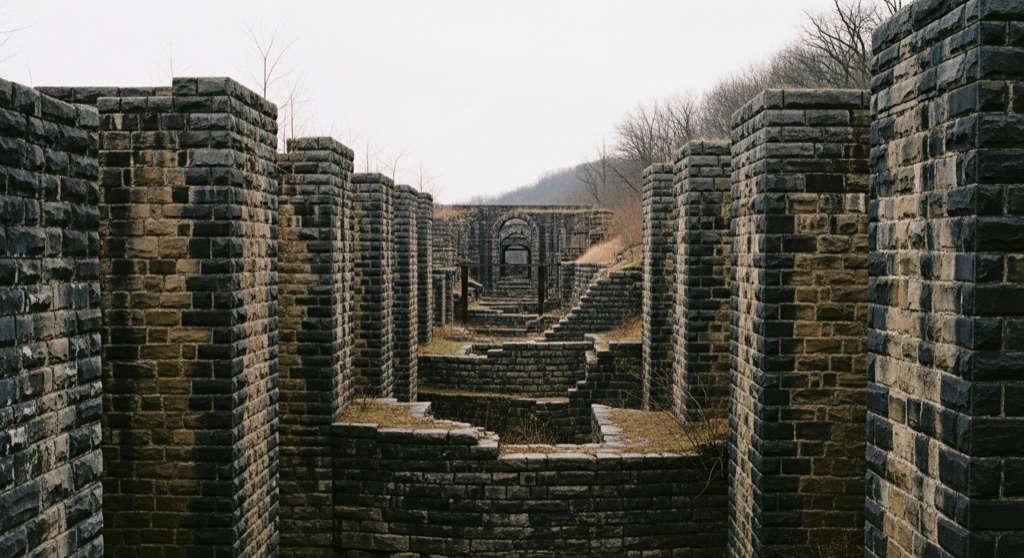 Ruins of Shenandoah Pulp FactoryOpen to visit
Constructed in 1887–1888 by Thomas Savery on the former site of the Shenandoah Canal's lower locks, this large mill once produced up to 15 tons of wood pulp daily. After closing in 1935 due to unprofitability, the factory was destroyed just a year later by the historic Potomac-Shenandoah flood of 1936. Today, its massive stone foundations, retaining walls, and water flumes remain as a haunting monument to the area's water-powered industrial era.
Ruins of Shenandoah Pulp FactoryOpen to visit
Constructed in 1887–1888 by Thomas Savery on the former site of the Shenandoah Canal's lower locks, this large mill once produced up to 15 tons of wood pulp daily. After closing in 1935 due to unprofitability, the factory was destroyed just a year later by the historic Potomac-Shenandoah flood of 1936. Today, its massive stone foundations, retaining walls, and water flumes remain as a haunting monument to the area's water-powered industrial era.
-
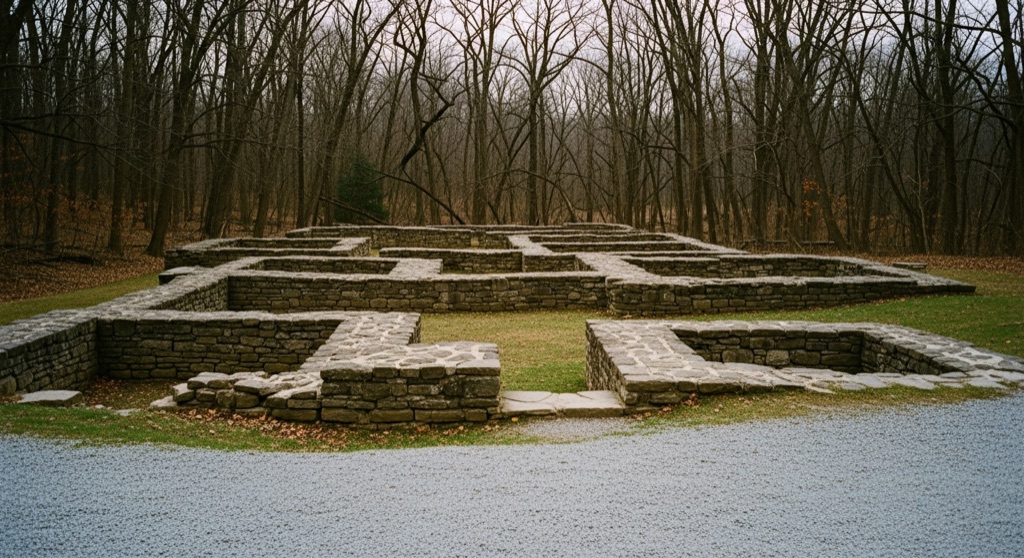 Davis Mill ruinsOpen to visit
Dating back to 1783, this historic water-powered grist mill was once a vital hub of Montgomery County's agricultural economy. The three-story clapboard structure operated until the early 20th century before being destroyed by a fire in the 1940s. Today, only the cleared stone foundations and an interpretive historic marker remain along the scenic creek.
Davis Mill ruinsOpen to visit
Dating back to 1783, this historic water-powered grist mill was once a vital hub of Montgomery County's agricultural economy. The three-story clapboard structure operated until the early 20th century before being destroyed by a fire in the 1940s. Today, only the cleared stone foundations and an interpretive historic marker remain along the scenic creek.
-
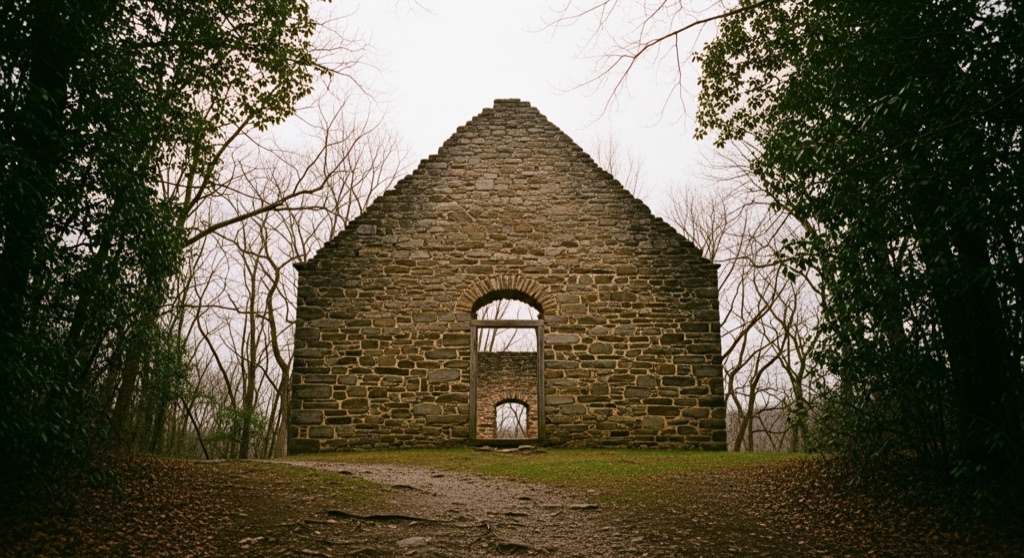 Ruins of St. John's Episcopal ChurchOpen to visit
Built in 1852, this historic stone church served as a hospital and barracks during the Civil War, sustaining heavy damage. Though rebuilt after the war, it was abandoned in 1895 when the congregation relocated to a new building in the upper town. Today, only the stabilized fieldstone walls remain, standing as a haunting skeleton along the trail to Jefferson Rock.
Ruins of St. John's Episcopal ChurchOpen to visit
Built in 1852, this historic stone church served as a hospital and barracks during the Civil War, sustaining heavy damage. Though rebuilt after the war, it was abandoned in 1895 when the congregation relocated to a new building in the upper town. Today, only the stabilized fieldstone walls remain, standing as a haunting skeleton along the trail to Jefferson Rock.
-
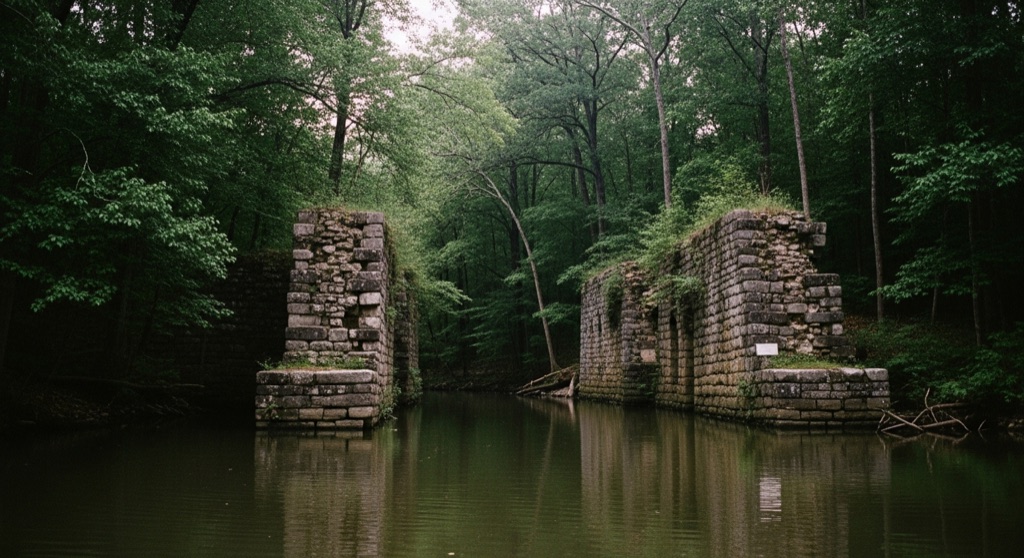 Cooke's Mill (ruins)View only
Cooke's Mill, also known as Marvin's Mill or Houghs Mill, is a historic gristmill and canal lock site along Goose Creek dating back to the late 18th century. The mill and its lock system were sacked and burned by Union forces during the Civil War. Today, stone foundations and masonry remnants of the mill and canal lock remain nestled in a heavily wooded area along the creek.
Cooke's Mill (ruins)View only
Cooke's Mill, also known as Marvin's Mill or Houghs Mill, is a historic gristmill and canal lock site along Goose Creek dating back to the late 18th century. The mill and its lock system were sacked and burned by Union forces during the Civil War. Today, stone foundations and masonry remnants of the mill and canal lock remain nestled in a heavily wooded area along the creek.
Abandoned places in Washington, D.C. — FAQ
Is it legal to visit abandoned places around Washington, D.C.?
It depends on the site, and each listing here says explicitly — with the reason. Of the 12 with a verified access status: 8 are legal to enter (like Mallows Bay Ghost Fleet and Bank Historic Barn Ruins), 4 are view-only from public land or roadside, and 0 are private property or genuinely unsafe — those are marked "do not enter" rather than romanticised.
Which abandoned & forgotten places in Washington, D.C. are the strangest?
Ranked by how strange they actually are: Maryland Gold Mine National Historic Landmark, Bank Historic Barn Ruins and Ruins of Clopper Mill. Maryland Gold Mine National Historic Landmark — Discovered during the Civil War by a Union soldier, the Maryland Mine was the largest of several gold mining operations in the area, active from 1867 until 1939.
Where in Washington, D.C. are they?
Across Nanjemoy, MD (Charles County), Potomac, Joppatowne, Germantown and Ellicott City and 5 more. Each listing gives the neighborhood and address so you can cluster a couple into one outing.
Are any of the abandoned & forgotten places in Washington, D.C. free?
Yes — 11 are free to visit, including Maryland Gold Mine National Historic Landmark, Bank Historic Barn Ruins and Ruins of Clopper Mill. The rest are mostly low-cost.
Is this a good weird date in Washington, D.C.?
That's what the list is built for. Every entry has a specific move rather than a vague recommendation — at Maryland Gold Mine National Historic Landmark, for instance: Hike the scenic three-mile Gold Mine Loop trail starting from the Great Falls Tavern Visitor Center, stopping to read the historical wayside exhibits and photograph the fenced-off ruins of the old blacksmith shop.
How were these abandoned & forgotten places chosen?
An agentic research system digs for the genuinely obscure — the spots even locals miss — and every one is verified against real sources before it makes the list. We deliberately skip the landmarks already on every Washington, D.C. guide.