Abandoned places in Durango
26 abandoned and forgotten places around Durango, Yankee Girl Mine Headframe, Alta Ghost Town and Fort Peabody Ruins (Imogene Pass) among them — and for each one, whether you can legally visit. Ruins, ghost towns and shuttered industry, with the ones that are trespassing or genuinely unsafe marked as such rather than romanticised. They spread across Ouray, Durango, Ophir, South Fork / Creede and 18 more areas, so two or three can make a whole afternoon. 23 of them cost nothing. Every entry is hand-vetted against real sources — not scraped off a top-ten list or averaged out of crowd ratings.
Every abandoned place we've verified, nationwide — with its legal-access status →
-
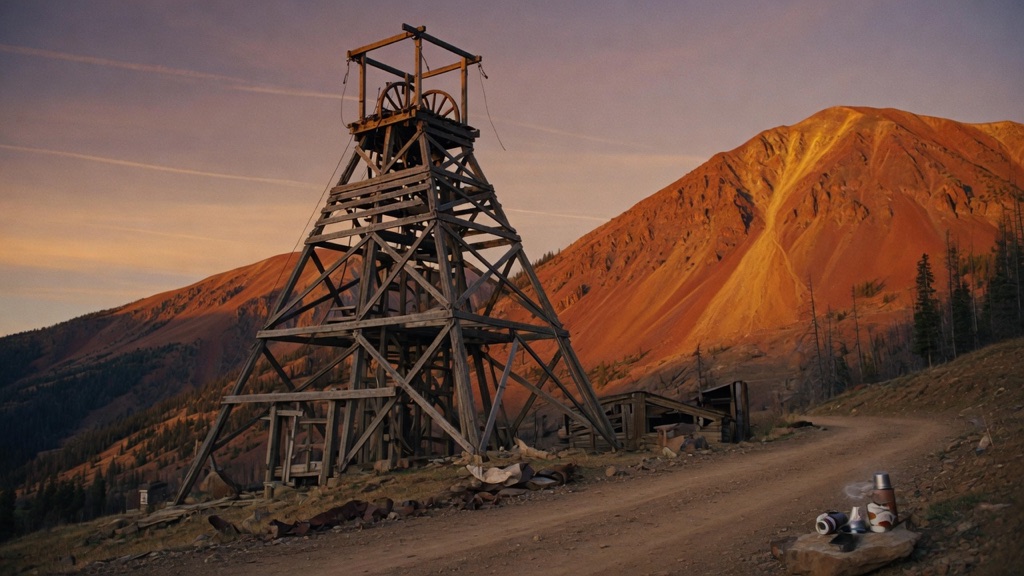 Yankee Girl Mine HeadframeView only
John Robinson sank twenty feet of shaft here in 1882 and sold out a month later for $125,000—too early, because the Yankee Girl’s near-vertical pipe of silver ran 1,200 feet down through twelve levels and assayed up to $10,000 a ton. An 1897 forest fire ate the original works; today’s gaunt timber headframe is the replacement. In 2005 a for-sale sign and bulldozers nearly finished the job, until a Montrose helicopter pilot bought the mine and locked it under a conservation easement.
Yankee Girl Mine HeadframeView only
John Robinson sank twenty feet of shaft here in 1882 and sold out a month later for $125,000—too early, because the Yankee Girl’s near-vertical pipe of silver ran 1,200 feet down through twelve levels and assayed up to $10,000 a ton. An 1897 forest fire ate the original works; today’s gaunt timber headframe is the replacement. In 2005 a for-sale sign and bulldozers nearly finished the job, until a Montrose helicopter pilot bought the mine and locked it under a conservation easement.
-
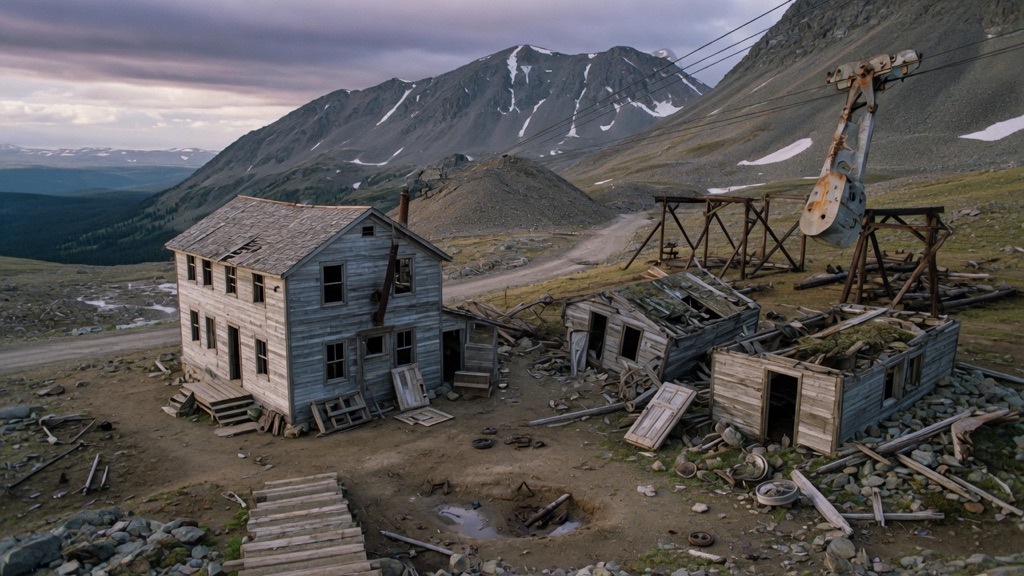 Alta Ghost TownView only
Perched at 11,800 feet above sea level in a tight alpine basin south of Telluride, Alta operated from 1877 until a mill fire ended it in 1948. The Gold King Mine here became the world's first industrial site to run on commercial alternating current — Lucien Nunn contracted with Westinghouse to build the Ames hydroelectric plant three miles away in 1891, cutting monthly power costs from $2,500 to $500. About 20 original structures survive: a two-story 1939 boardinghouse assembled from salvaged St. Louis mine timbers, collapsed cabin rows, ore-bin frames, and aerial tramway anchor points. The site sits on the National Register of Historic Places and charges no admission. Come for the ruins, stay for the cold wind and the view.
Alta Ghost TownView only
Perched at 11,800 feet above sea level in a tight alpine basin south of Telluride, Alta operated from 1877 until a mill fire ended it in 1948. The Gold King Mine here became the world's first industrial site to run on commercial alternating current — Lucien Nunn contracted with Westinghouse to build the Ames hydroelectric plant three miles away in 1891, cutting monthly power costs from $2,500 to $500. About 20 original structures survive: a two-story 1939 boardinghouse assembled from salvaged St. Louis mine timbers, collapsed cabin rows, ore-bin frames, and aerial tramway anchor points. The site sits on the National Register of Historic Places and charges no admission. Come for the ruins, stay for the cold wind and the view.
-
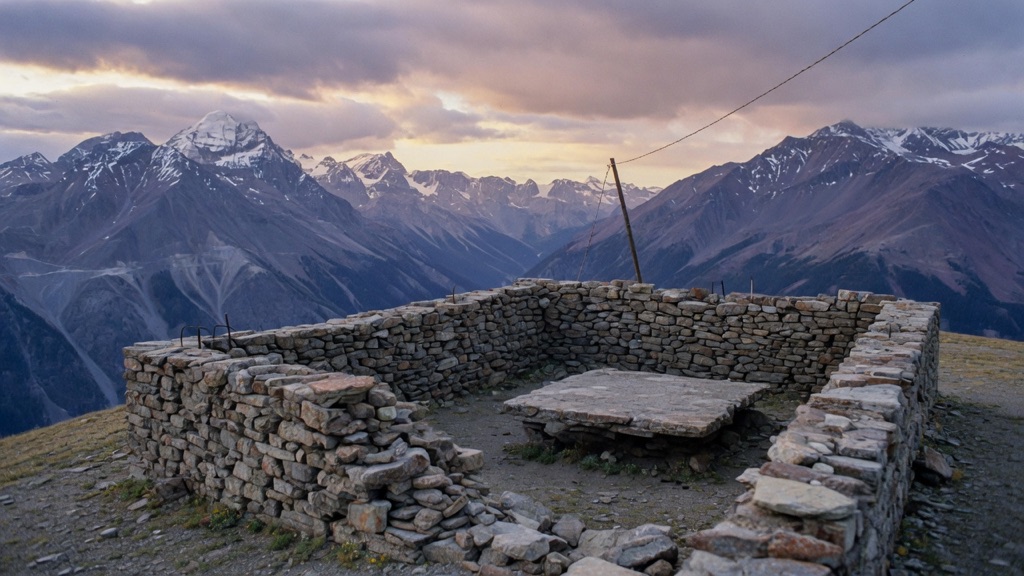 Fort Peabody Ruins (Imogene Pass)Open to visit
At 13,365 feet on the Ouray–San Miguel county line, a cluster of low stone walls is all that remains of Fort Peabody — a Colorado National Guard sentry post erected in early 1904 to keep union miners from crossing into Telluride during one of the bloodiest labor conflicts in American history. Governor James Peabody had declared martial law, and two or three guardsmen manned this windswept outpost from February through June 1904, connected to town only by a telephone wire. A stone flag mount once cradled a rapid-fire Colt machine gun. The National Register of Historic Places calls it "probably the only remaining structure exclusively representative of Colorado's labor troubles in 1903–04." Partially stabilized in 2010, the ruins sit just southeast of the pass summit with sweeping views of the San Juan peaks in every direction.
Fort Peabody Ruins (Imogene Pass)Open to visit
At 13,365 feet on the Ouray–San Miguel county line, a cluster of low stone walls is all that remains of Fort Peabody — a Colorado National Guard sentry post erected in early 1904 to keep union miners from crossing into Telluride during one of the bloodiest labor conflicts in American history. Governor James Peabody had declared martial law, and two or three guardsmen manned this windswept outpost from February through June 1904, connected to town only by a telephone wire. A stone flag mount once cradled a rapid-fire Colt machine gun. The National Register of Historic Places calls it "probably the only remaining structure exclusively representative of Colorado's labor troubles in 1903–04." Partially stabilized in 2010, the ruins sit just southeast of the pass summit with sweeping views of the San Juan peaks in every direction.
-
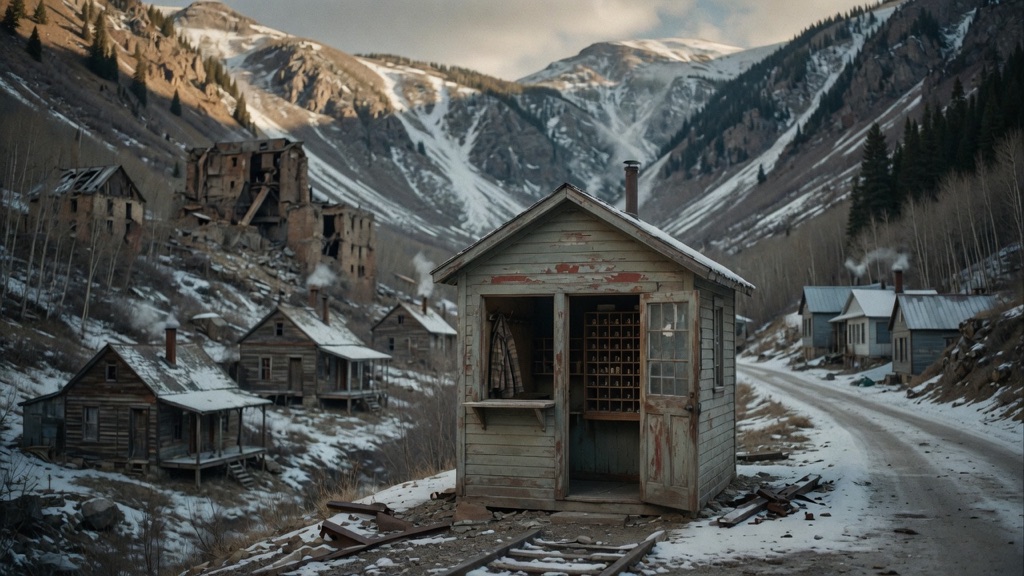 Ophir Town & Post OfficeOpen to visit
Named after the biblical land of King Solomon's gold, Ophir clings to a narrow San Juan valley at 9,700 feet where avalanche paths actually divide the town into separate neighborhoods. Founded in 1875, the settlement once held 400 miners; by the early 1970s it was down to a single resident. What brought it back was the Telluride ski resort opening nearby in 1972, not another ore strike. Today roughly 180 people and their dogs live here, governed by a general assembly that meets in a building barely larger than a garden shed. The post office — established in 1878, three years before the town itself — is claimed to be one of the smallest staffed post offices in the United States: a wooden structure split down the middle by a half-door, one side for the mail carrier, the other holding a wall of PO boxes for the entire community.
Ophir Town & Post OfficeOpen to visit
Named after the biblical land of King Solomon's gold, Ophir clings to a narrow San Juan valley at 9,700 feet where avalanche paths actually divide the town into separate neighborhoods. Founded in 1875, the settlement once held 400 miners; by the early 1970s it was down to a single resident. What brought it back was the Telluride ski resort opening nearby in 1972, not another ore strike. Today roughly 180 people and their dogs live here, governed by a general assembly that meets in a building barely larger than a garden shed. The post office — established in 1878, three years before the town itself — is claimed to be one of the smallest staffed post offices in the United States: a wooden structure split down the middle by a half-door, one side for the mail carrier, the other holding a wall of PO boxes for the entire community.
-
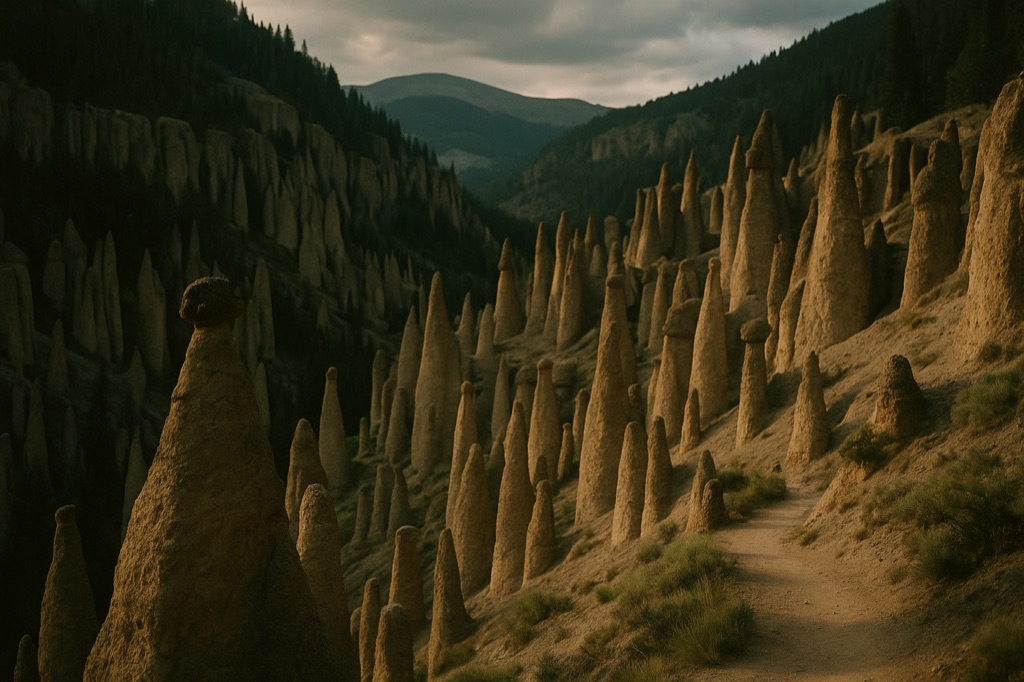 Wheeler Geologic AreaOpen to visit
This was Colorado's very first national monument — designated by Teddy Roosevelt in 1908 — then quietly stripped of that status in 1950 because it was too hard to reach. What Congress abandoned is a silent city of cream-and-ochre volcanic tuff spires erupted from the La Garita caldera, columns and fins and hoodoos that look like something hauled in from Cappadocia and then forgotten. Getting here costs you either an 8.4-mile round-trip hike through spruce and aspen, or a white-knuckle 14-mile 4WD road that earns every inch. Almost nobody comes, which is the whole point.
Wheeler Geologic AreaOpen to visit
This was Colorado's very first national monument — designated by Teddy Roosevelt in 1908 — then quietly stripped of that status in 1950 because it was too hard to reach. What Congress abandoned is a silent city of cream-and-ochre volcanic tuff spires erupted from the La Garita caldera, columns and fins and hoodoos that look like something hauled in from Cappadocia and then forgotten. Getting here costs you either an 8.4-mile round-trip hike through spruce and aspen, or a white-knuckle 14-mile 4WD road that earns every inch. Almost nobody comes, which is the whole point.
-
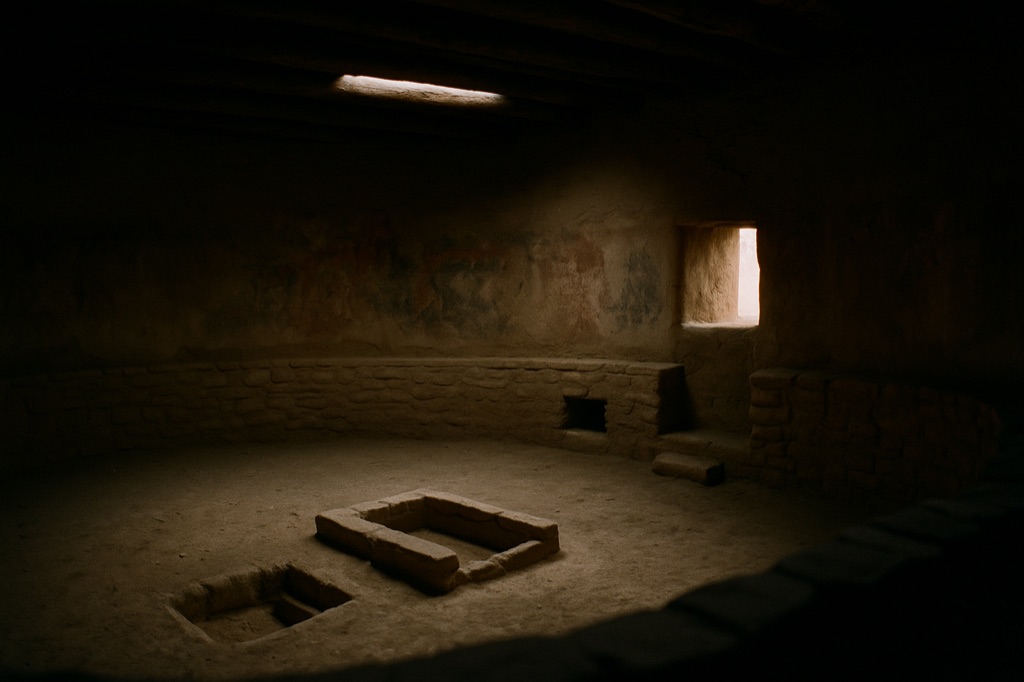 Lowry Pueblo & the Great KivaOpen to visit
The painted murals inside this Great Kiva survived sealed underground for roughly nine centuries, then deteriorated thoroughly within years of the 1970s re-excavation — air finished what time could not. The kiva itself is more than 50 feet across, built to hold around a hundred people despite the pueblo housing only forty, which means it was drawing in communities from across the mesa for ceremonies. Almost no one comes out here: the small gravel lot fits maybe a dozen cars, the access road is unmarked to the casual eye, and the silence on a weekday is complete.
Lowry Pueblo & the Great KivaOpen to visit
The painted murals inside this Great Kiva survived sealed underground for roughly nine centuries, then deteriorated thoroughly within years of the 1970s re-excavation — air finished what time could not. The kiva itself is more than 50 feet across, built to hold around a hundred people despite the pueblo housing only forty, which means it was drawing in communities from across the mesa for ceremonies. Almost no one comes out here: the small gravel lot fits maybe a dozen cars, the access road is unmarked to the casual eye, and the silence on a weekday is complete.
-
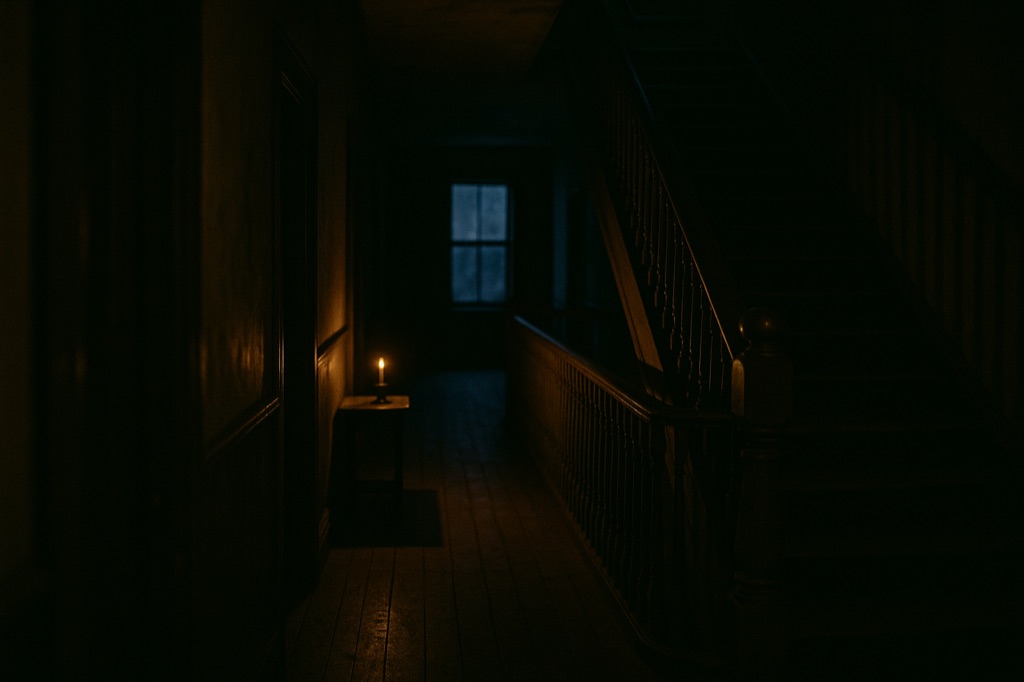 Rico Mine Shaft InnView only
The hotel manager refuses to sleep here alone — and she lives in the third-floor apartment where Zach, a former mining-company bookkeeper, is said to have died after an embezzlement accusation. She's reported beds disheveled overnight, coffee filters launching across the room, and the stereo cranking itself up, all traced to the floor where Zach reportedly spent his last days. The inn itself is a genuine 1890s-era miner's boarding house on Rico's two-block main street, population 172, where the nearest traffic light is an hour away.
Rico Mine Shaft InnView only
The hotel manager refuses to sleep here alone — and she lives in the third-floor apartment where Zach, a former mining-company bookkeeper, is said to have died after an embezzlement accusation. She's reported beds disheveled overnight, coffee filters launching across the room, and the stereo cranking itself up, all traced to the floor where Zach reportedly spent his last days. The inn itself is a genuine 1890s-era miner's boarding house on Rico's two-block main street, population 172, where the nearest traffic light is an hour away.
-
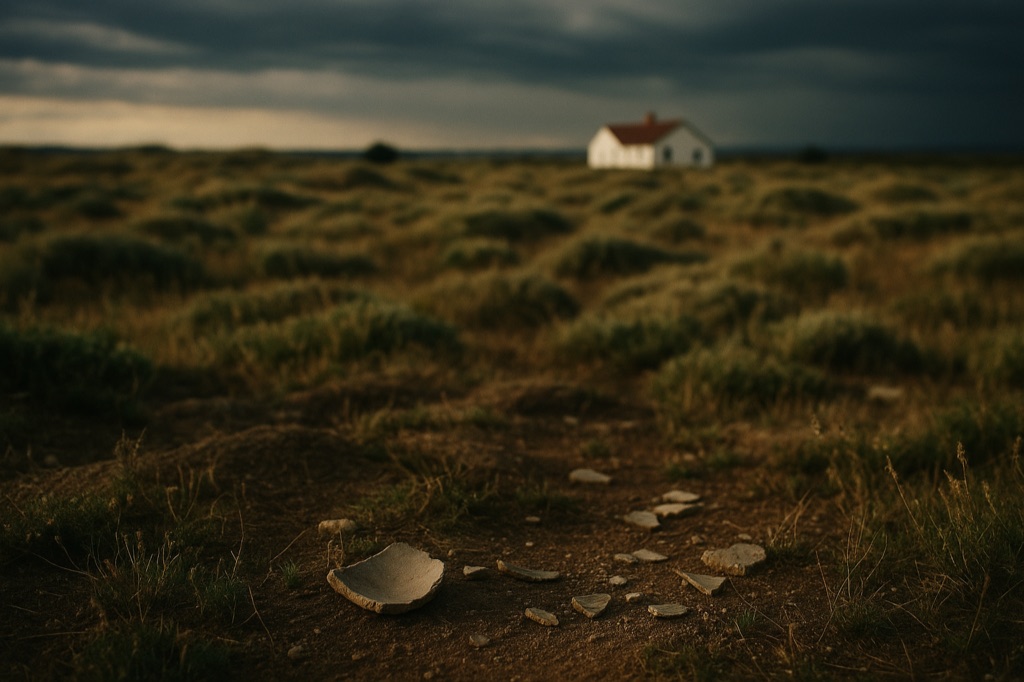 Yucca House National MonumentOpen to visit
This is a full US National Monument — same legal standing as Yellowstone — that looks like an overgrown field. Beneath the low, scrubby mounds lies a 600-room Ancestral Puebloan pueblo with more than 100 kivas, and not one square foot of it has been excavated since the site was protected in 1919. There are no signs, no ranger, no trail markers; you navigate by aiming your car toward a white ranch house with a red roof on the horizon. Pottery shards turn up in the dirt underfoot, and fewer than 1,000 people a year make it here.
Yucca House National MonumentOpen to visit
This is a full US National Monument — same legal standing as Yellowstone — that looks like an overgrown field. Beneath the low, scrubby mounds lies a 600-room Ancestral Puebloan pueblo with more than 100 kivas, and not one square foot of it has been excavated since the site was protected in 1919. There are no signs, no ranger, no trail markers; you navigate by aiming your car toward a white ranch house with a red roof on the horizon. Pottery shards turn up in the dirt underfoot, and fewer than 1,000 people a year make it here.
-
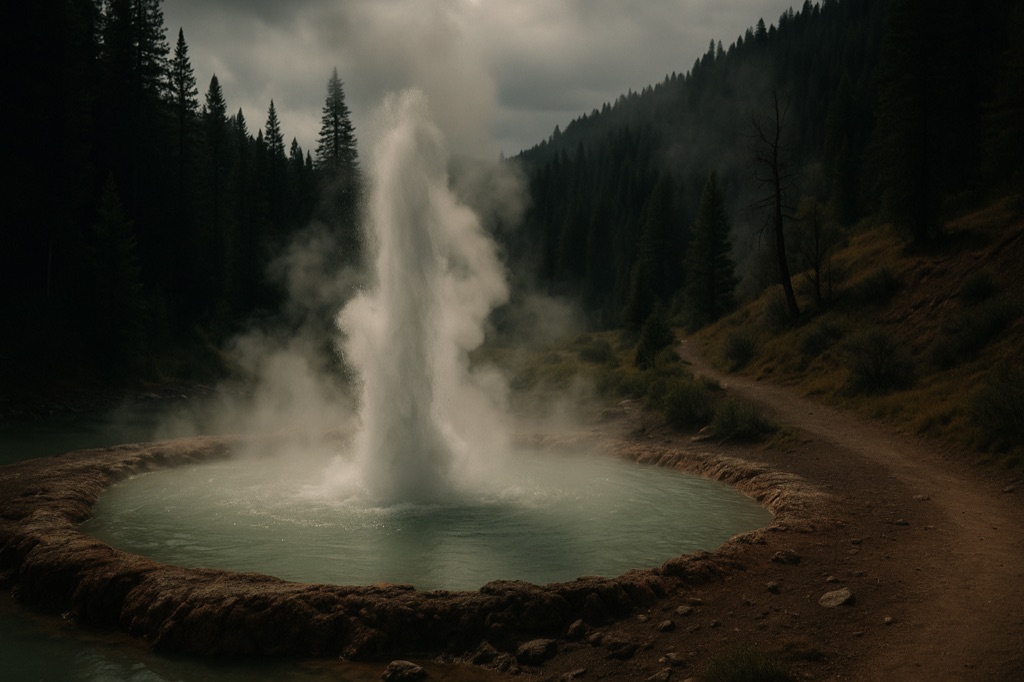 Geyser Spring TrailOpen to visit
Colorado's only active geyser sits at the end of a 1.5-mile hike through San Juan National Forest, erupting every 30-40 minutes into a milky turquoise pool — and the carbon dioxide and hydrogen sulfide venting from the ground means you can't actually get close to it, which is somehow the most honest thing about the place. The trail runs between the small town of Dolores and the ghost-town of Dunton, putting you in the company of hot-spring remnants and old mining-era weirdness the whole way. Watch the pool burp and hiss from a respectful distance while the sulfur smell does the rest of the atmosphere work.
Geyser Spring TrailOpen to visit
Colorado's only active geyser sits at the end of a 1.5-mile hike through San Juan National Forest, erupting every 30-40 minutes into a milky turquoise pool — and the carbon dioxide and hydrogen sulfide venting from the ground means you can't actually get close to it, which is somehow the most honest thing about the place. The trail runs between the small town of Dolores and the ghost-town of Dunton, putting you in the company of hot-spring remnants and old mining-era weirdness the whole way. Watch the pool burp and hiss from a respectful distance while the sulfur smell does the rest of the atmosphere work.
-
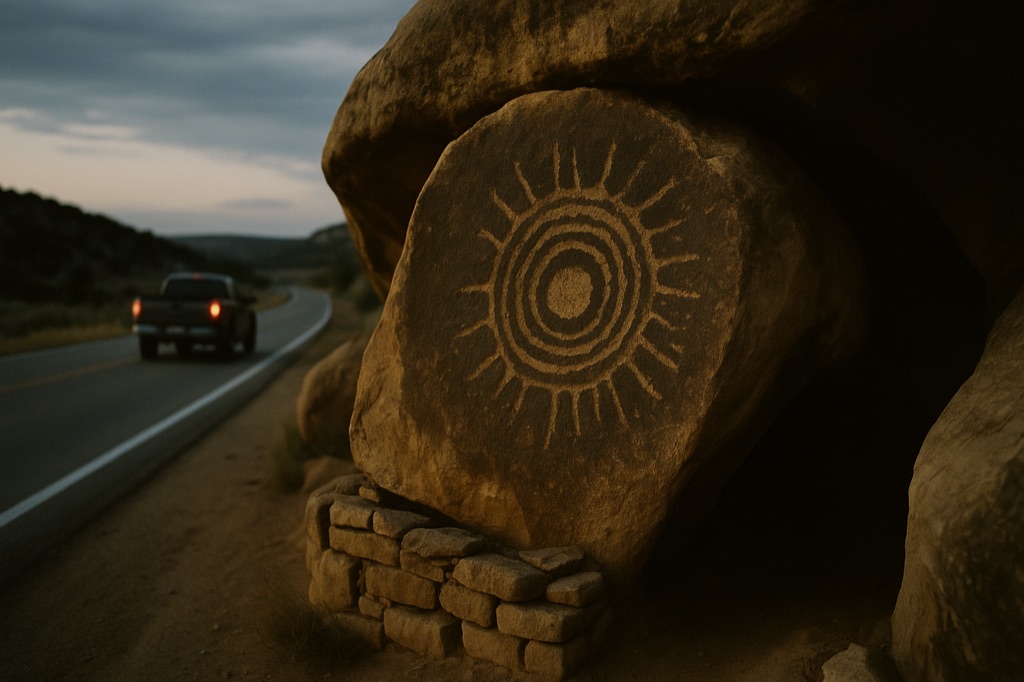 McElmo Canyon Roadside Boulder PetroglyphsOpen to visit
Someone decided the best place for a thousand-year-old petroglyph boulder was directly on the shoulder of County Road G, because moving it would destroy the site — so there it sits, six inches from passing pickup trucks, with concentric circles and a disc ringed by spiral rays carved into its face and zero interpretive signage to explain any of it. The boulder forms a natural rock shelter with neighboring stones; an ancient dry-stacked wall at the entrance suggests people once lived in the gap between them. It's technically part of Canyons of the Ancients National Monument, but the BLM doesn't advertise it and the pull-off is unmarked — you're on your own to find it about 600 feet west of the Cannonball Mesa Ruins trailhead before the road reaches the Utah border.
McElmo Canyon Roadside Boulder PetroglyphsOpen to visit
Someone decided the best place for a thousand-year-old petroglyph boulder was directly on the shoulder of County Road G, because moving it would destroy the site — so there it sits, six inches from passing pickup trucks, with concentric circles and a disc ringed by spiral rays carved into its face and zero interpretive signage to explain any of it. The boulder forms a natural rock shelter with neighboring stones; an ancient dry-stacked wall at the entrance suggests people once lived in the gap between them. It's technically part of Canyons of the Ancients National Monument, but the BLM doesn't advertise it and the pull-off is unmarked — you're on your own to find it about 600 feet west of the Cannonball Mesa Ruins trailhead before the road reaches the Utah border.
-
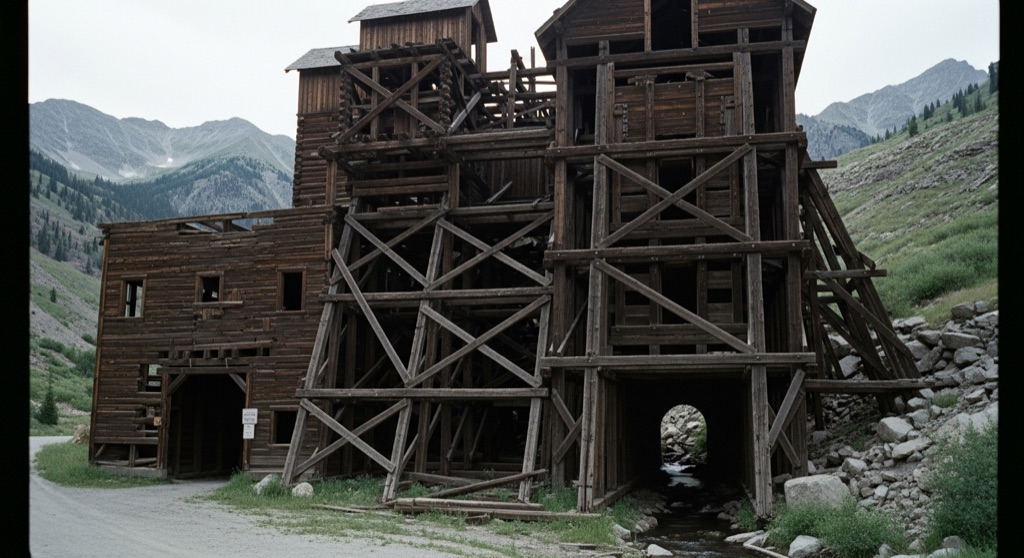 Frisco Mill at Bagley TunnelView only
Constructed in 1912, the Frisco-Bagley Mill is a rare example of a prefabricated concentration mill whose timber components were pre-cut and coded in Silverton before being assembled on-site. The mill operated until the economic crash of 1921, utilizing electricity to process gold, silver, and copper. Today, the skeletal, partially collapsed wooden superstructure stands near the sealed portal of the 7,500-foot Bagley Tunnel, from which a small stream now flows.
Frisco Mill at Bagley TunnelView only
Constructed in 1912, the Frisco-Bagley Mill is a rare example of a prefabricated concentration mill whose timber components were pre-cut and coded in Silverton before being assembled on-site. The mill operated until the economic crash of 1921, utilizing electricity to process gold, silver, and copper. Today, the skeletal, partially collapsed wooden superstructure stands near the sealed portal of the 7,500-foot Bagley Tunnel, from which a small stream now flows.
-
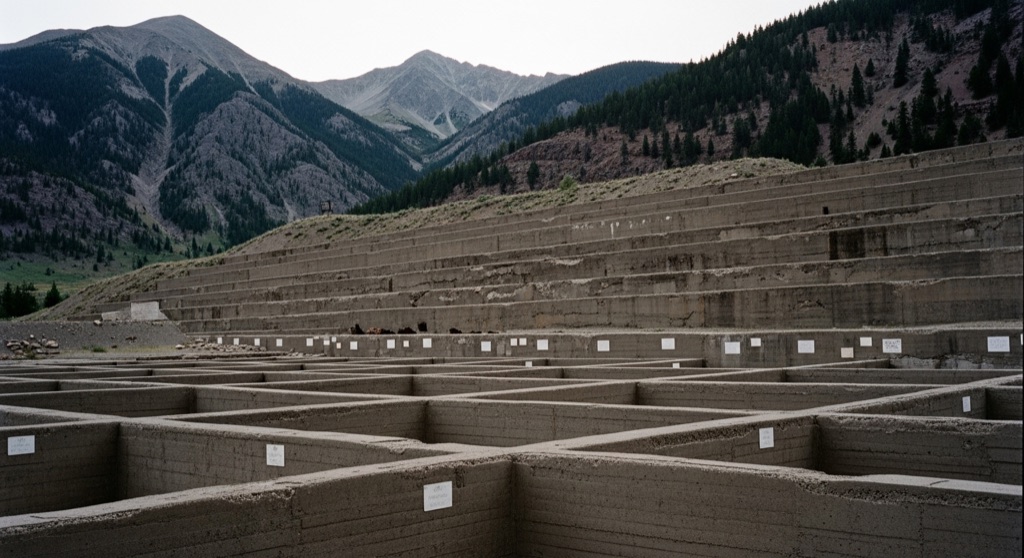 Gold Prince Mill at Animas Forks - building foundationOpen to visit
Constructed in 1905 at a cost of $500,000, the Gold Prince Mill was once the largest and most technologically advanced ore-processing facility in Colorado, featuring 100 stamps and a structural steel frame. The mill only operated until 1910, and by 1917, its machinery and structural steel were dismantled and relocated to Eureka. Today, all that remains of this massive facility at the southern edge of the Animas Forks ghost town is its sprawling, terraced concrete foundation.
Gold Prince Mill at Animas Forks - building foundationOpen to visit
Constructed in 1905 at a cost of $500,000, the Gold Prince Mill was once the largest and most technologically advanced ore-processing facility in Colorado, featuring 100 stamps and a structural steel frame. The mill only operated until 1910, and by 1917, its machinery and structural steel were dismantled and relocated to Eureka. Today, all that remains of this massive facility at the southern edge of the Animas Forks ghost town is its sprawling, terraced concrete foundation.
-
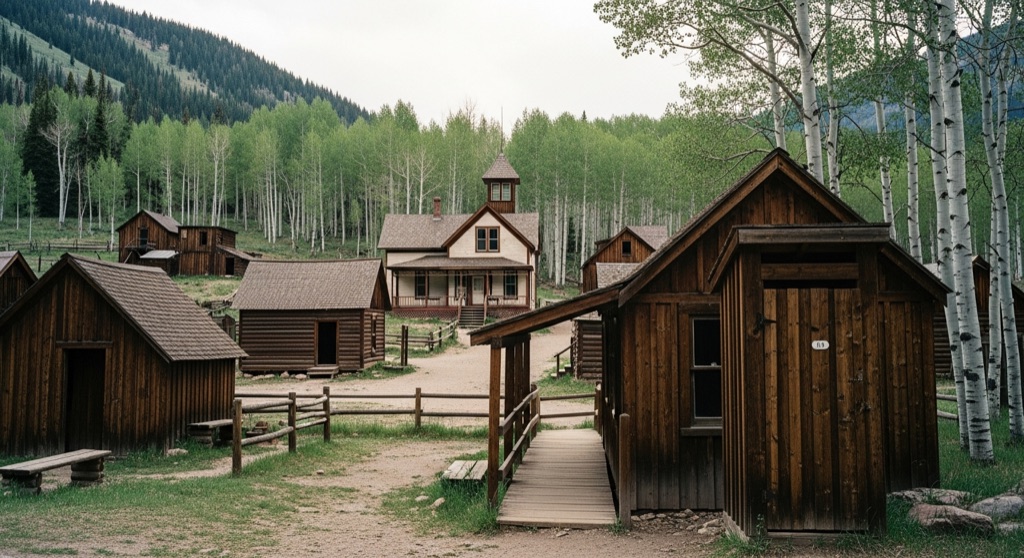 Ironton TownsiteOpen to visit
Founded in 1883, Ironton was a bustling transportation hub and supply town in the Red Mountain Mining District that once boasted over 1,000 residents. The town slowly declined after the silver crash and was completely abandoned by the mid-1960s when its last resident passed away. Today, about a dozen wooden structures remain standing among the aspen trees, including a prominent Victorian-style home and a cabin with a covered walkway to its outhouse.
Ironton TownsiteOpen to visit
Founded in 1883, Ironton was a bustling transportation hub and supply town in the Red Mountain Mining District that once boasted over 1,000 residents. The town slowly declined after the silver crash and was completely abandoned by the mid-1960s when its last resident passed away. Today, about a dozen wooden structures remain standing among the aspen trees, including a prominent Victorian-style home and a cabin with a covered walkway to its outhouse.
-
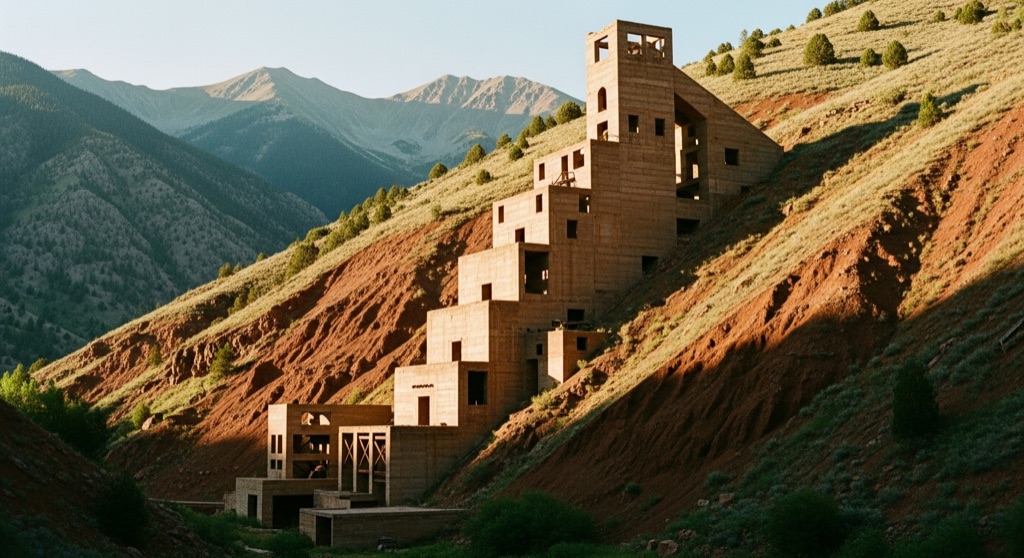 Sunnyside Mill foundation & ruinsView only
Located in the ghost town of Eureka along the scenic Alpine Loop, the Sunnyside Mill was once a massive ore-processing facility that served Colorado's largest gold mine. After the mill permanently closed in 1939, the town was quickly abandoned, and the wooden superstructure of the mill was eventually dismantled. Today, all that remains of this industrial giant are its colossal, multi-tiered concrete foundations cascading down the red-mineral hillside.
Sunnyside Mill foundation & ruinsView only
Located in the ghost town of Eureka along the scenic Alpine Loop, the Sunnyside Mill was once a massive ore-processing facility that served Colorado's largest gold mine. After the mill permanently closed in 1939, the town was quickly abandoned, and the wooden superstructure of the mill was eventually dismantled. Today, all that remains of this industrial giant are its colossal, multi-tiered concrete foundations cascading down the red-mineral hillside.
-
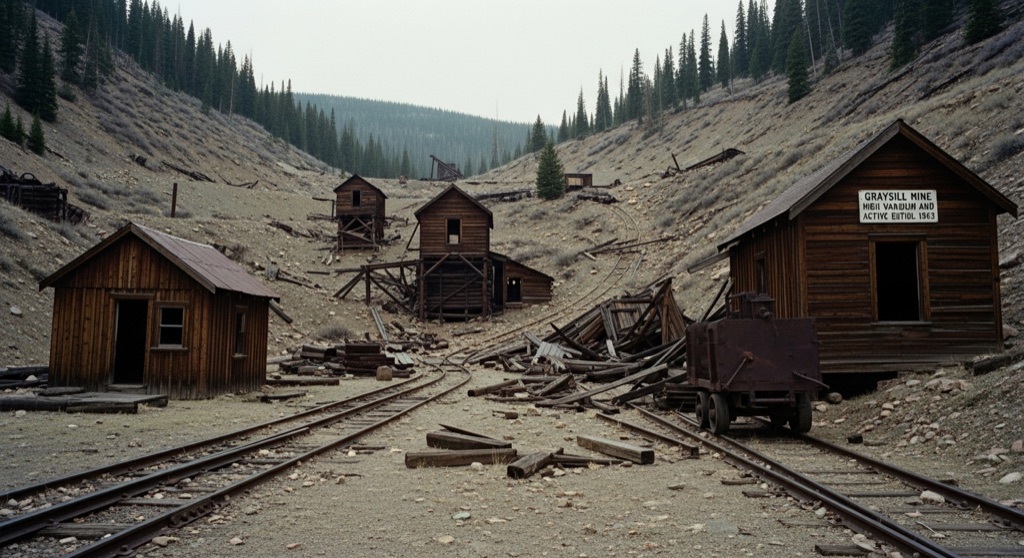 Graysill MineView only
Established in 1945 during the post-WWII atomic rush, Graysill Mine was a high-altitude vanadium and uranium operation that once supported hundreds of claims. Active until 1963, the remote site was notorious for its harsh winter conditions and the invisible threat of radioactive radon gas. Today, a few weathered wooden cabins, collapsed structures, and rusted track remnants linger in the San Juan National Forest.
Graysill MineView only
Established in 1945 during the post-WWII atomic rush, Graysill Mine was a high-altitude vanadium and uranium operation that once supported hundreds of claims. Active until 1963, the remote site was notorious for its harsh winter conditions and the invisible threat of radioactive radon gas. Today, a few weathered wooden cabins, collapsed structures, and rusted track remnants linger in the San Juan National Forest.
-
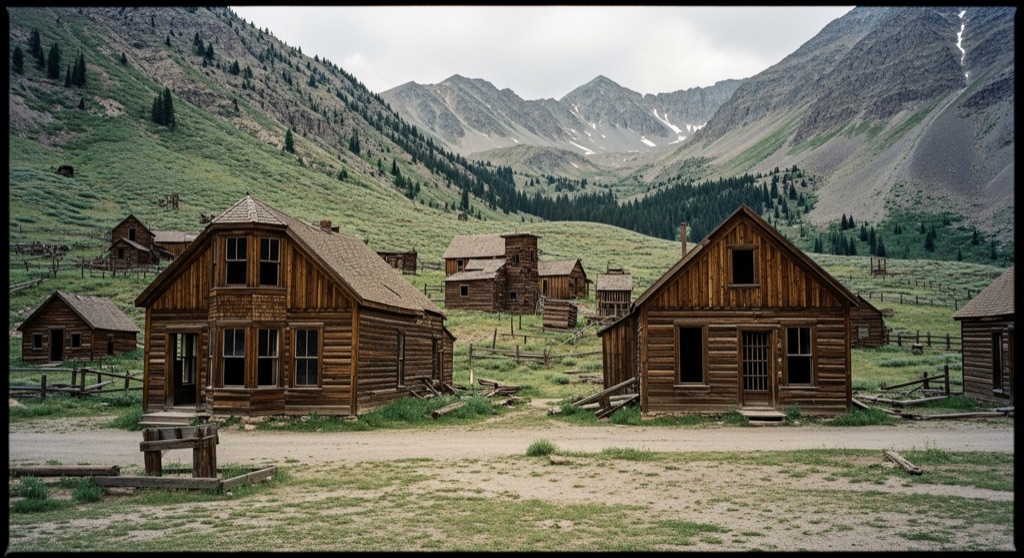 Animas Forks Mine and Ghost TownOpen to visit
Perched at 11,200 feet in the San Juan Mountains, Animas Forks is a remarkably well-preserved ghost town that boomed during the late-1800s silver and gold rush. Established in 1874, the mining camp once housed hundreds of residents who famously dug tunnels through 25 feet of snow to navigate brutal winters. Today, visitors can explore several standing wooden structures managed by the BLM, including the iconic Duncan House with its distinct bay window, a small jail, and nearby mill ruins.
Animas Forks Mine and Ghost TownOpen to visit
Perched at 11,200 feet in the San Juan Mountains, Animas Forks is a remarkably well-preserved ghost town that boomed during the late-1800s silver and gold rush. Established in 1874, the mining camp once housed hundreds of residents who famously dug tunnels through 25 feet of snow to navigate brutal winters. Today, visitors can explore several standing wooden structures managed by the BLM, including the iconic Duncan House with its distinct bay window, a small jail, and nearby mill ruins.
-
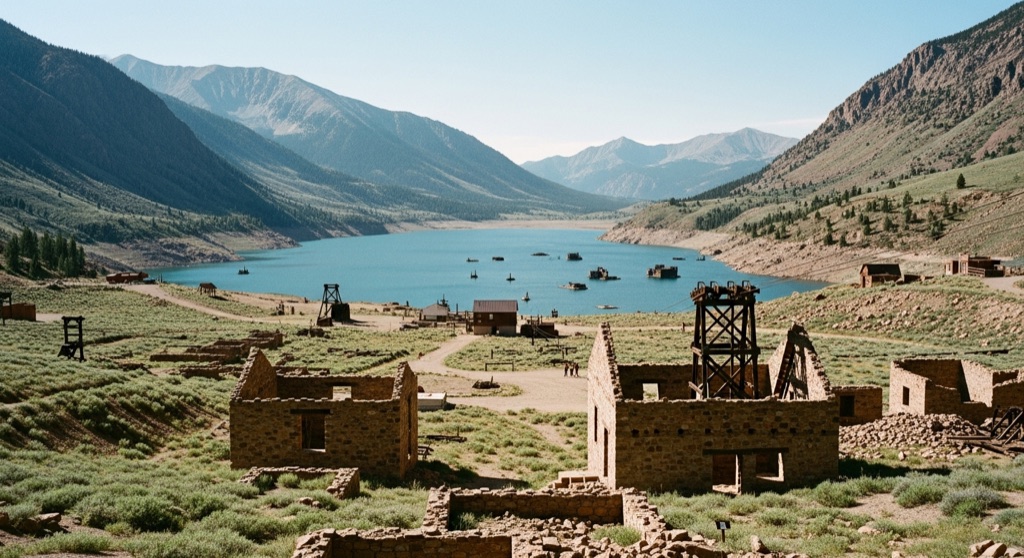 Sunnyside MineView only
Established in 1873, the Sunnyside Mine was once one of Colorado's most productive gold and silver operations. In 1978, a catastrophic event occurred when the floor of Lake Emma collapsed directly into the mine tunnels, completely draining the lake and flooding the underground workings. Today, visitors can explore the dramatic empty lake basin and view the scattered remains of old mine foundations and aerial tramway structures.
Sunnyside MineView only
Established in 1873, the Sunnyside Mine was once one of Colorado's most productive gold and silver operations. In 1978, a catastrophic event occurred when the floor of Lake Emma collapsed directly into the mine tunnels, completely draining the lake and flooding the underground workings. Today, visitors can explore the dramatic empty lake basin and view the scattered remains of old mine foundations and aerial tramway structures.
-
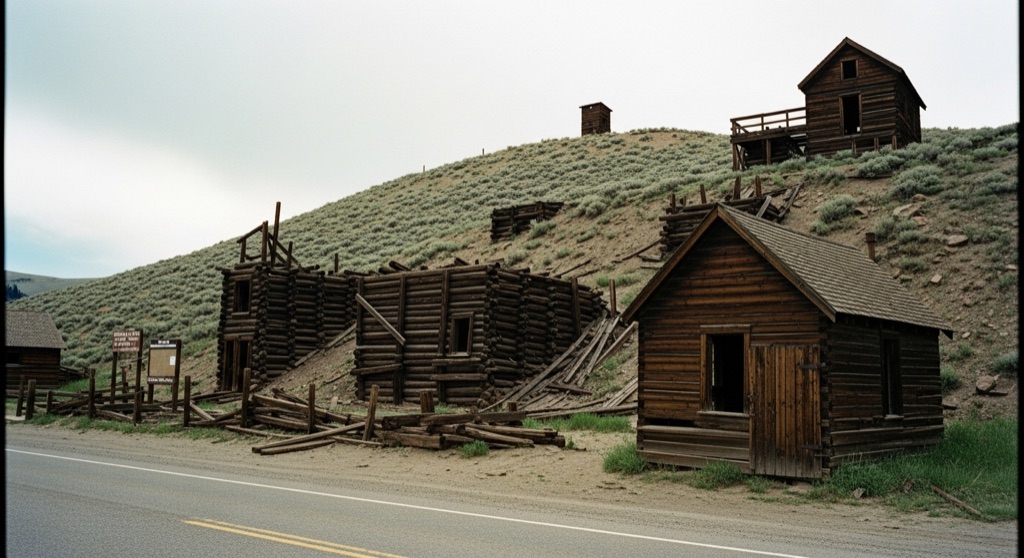 National Belle MineView only
Perched atop a geological outcropping known as 'the Knob' in the Red Mountain Mining District, the National Belle Mine was established in 1883 after miners discovered a massive cavern rich in silver and galena. The mine once overlooked the bustling, rowdy settlement of Red Mountain Town before closing after the silver crash of 1893. Today, visitors can see the mine's crumbling timber remnants, tailings, and the nearby windowless historic town jail.
National Belle MineView only
Perched atop a geological outcropping known as 'the Knob' in the Red Mountain Mining District, the National Belle Mine was established in 1883 after miners discovered a massive cavern rich in silver and galena. The mine once overlooked the bustling, rowdy settlement of Red Mountain Town before closing after the silver crash of 1893. Today, visitors can see the mine's crumbling timber remnants, tailings, and the nearby windowless historic town jail.
-
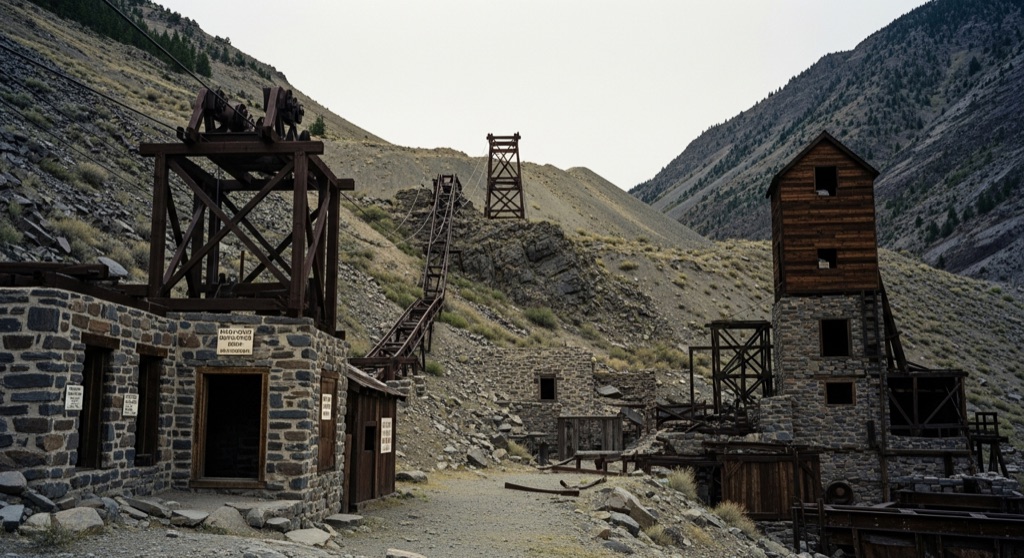 San Bernardo MineView only
Established in the late 1880s, the San Bernardo Mine was a gold, silver, and lead producer located on the slopes of San Bernardo Mountain. It operated sporadically until the late 1960s, utilizing an aerial tramway to transport ore across the Lake Fork of the San Miguel River to the nearby Matterhorn Mill. Today, the mine workings are abandoned, leaving behind structural ruins, waste rock piles, and historic tramway remnants.
San Bernardo MineView only
Established in the late 1880s, the San Bernardo Mine was a gold, silver, and lead producer located on the slopes of San Bernardo Mountain. It operated sporadically until the late 1960s, utilizing an aerial tramway to transport ore across the Lake Fork of the San Miguel River to the nearby Matterhorn Mill. Today, the mine workings are abandoned, leaving behind structural ruins, waste rock piles, and historic tramway remnants.
-
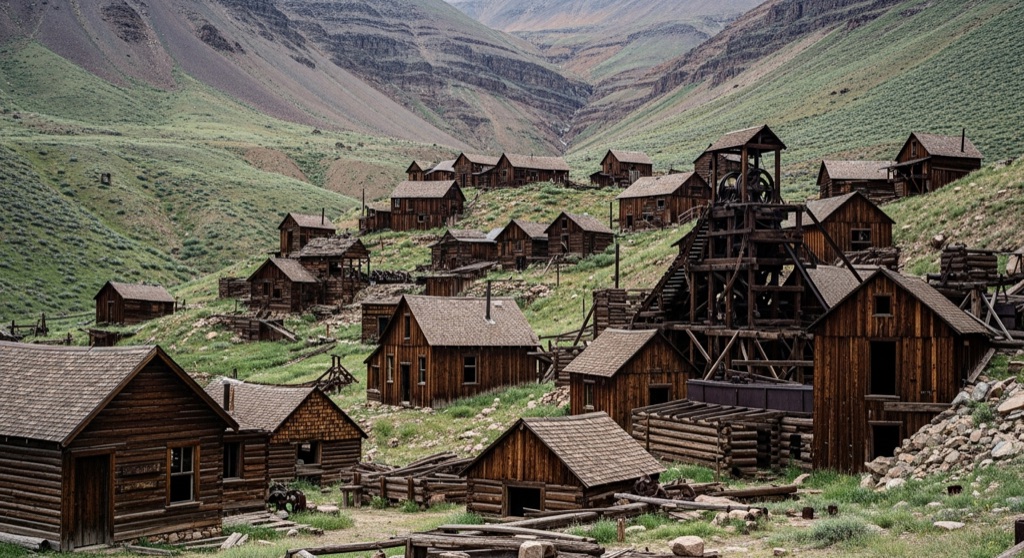 Old Tomboy MineView only
Established in 1880 at an elevation of 11,500 feet in Savage Basin, Tomboy was once a booming gold mining town housing over 1,000 residents before its abandonment in 1927. Today, the high-altitude ghost town features extensive weathered wooden cabins, rusted mining machinery, and the skeletal remains of the mill. Located along the rugged Imogene Pass, it stands as one of the highest and most dramatic historic mining sites in Colorado.
Old Tomboy MineView only
Established in 1880 at an elevation of 11,500 feet in Savage Basin, Tomboy was once a booming gold mining town housing over 1,000 residents before its abandonment in 1927. Today, the high-altitude ghost town features extensive weathered wooden cabins, rusted mining machinery, and the skeletal remains of the mill. Located along the rugged Imogene Pass, it stands as one of the highest and most dramatic historic mining sites in Colorado.
-
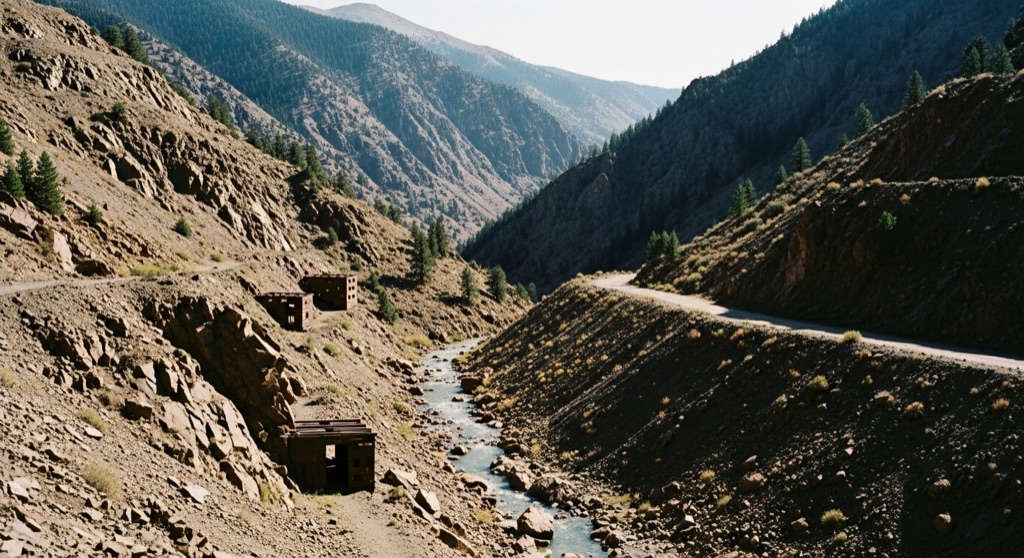 Old Man MineAccess unclear
Located in the rugged San Miguel Canyon near Sawpit, the Old Man Mine is a historic, defunct underground mining site that once produced zinc and gold. Dating back to Colorado's historic mining boom, the site has long since been abandoned and reclaimed by the surrounding wilderness. Today, no prominent above-ground structures remain, leaving only geological traces of its active past.
Old Man MineAccess unclear
Located in the rugged San Miguel Canyon near Sawpit, the Old Man Mine is a historic, defunct underground mining site that once produced zinc and gold. Dating back to Colorado's historic mining boom, the site has long since been abandoned and reclaimed by the surrounding wilderness. Today, no prominent above-ground structures remain, leaving only geological traces of its active past.
-
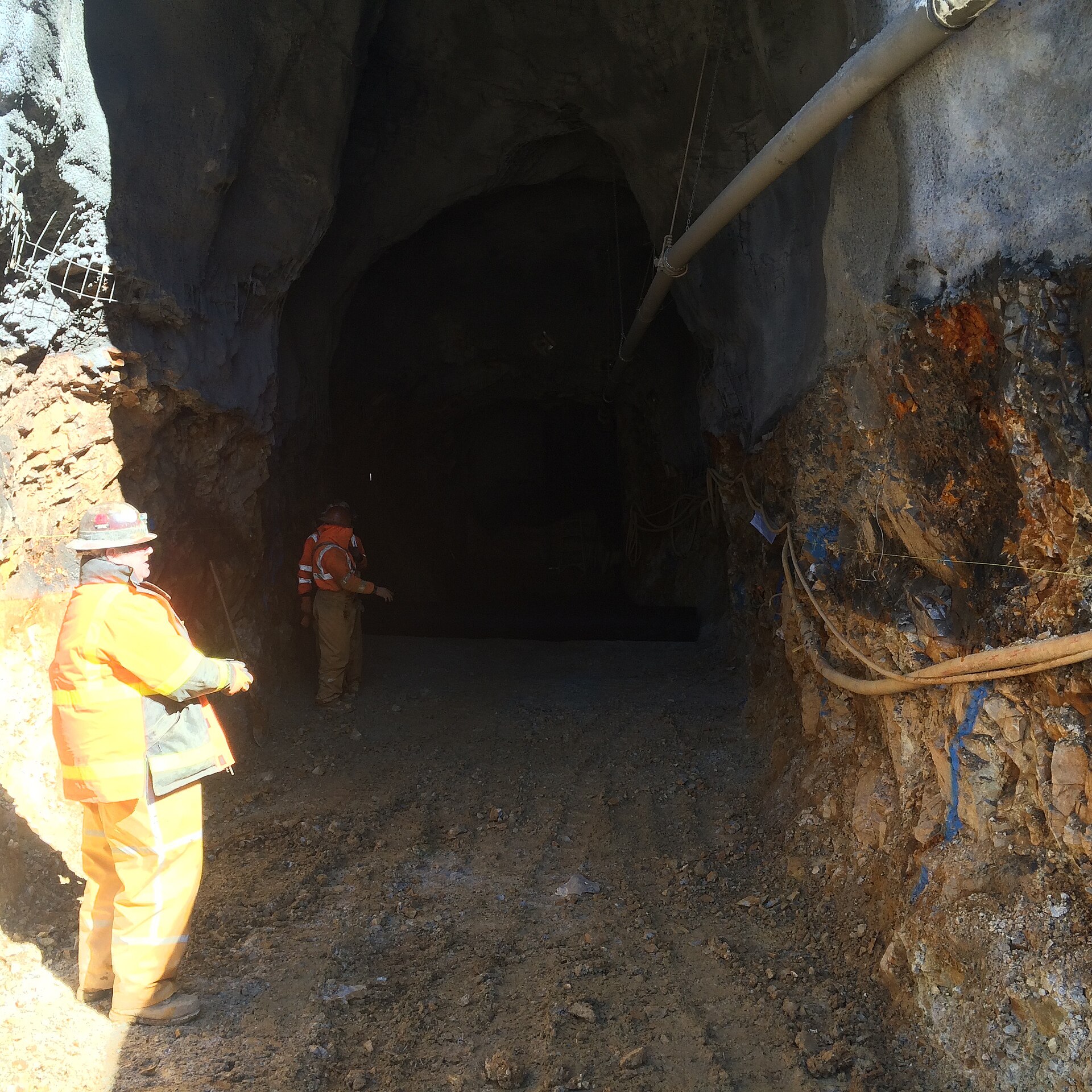 Gold King MineDo not enter
Discovered in 1887 near Silverton, Colorado, the Gold King Mine was a major producer of gold and silver ore before closing in the early 1920s. The site gained international notoriety in August 2015 when an EPA-contracted crew accidentally breached a collapsed portal, releasing three million gallons of toxic, orange-colored wastewater into Cement Creek and the Animas River. Today, the mine remains inactive and is part of the Bonita Peak Mining District Superfund site, where ongoing water treatment and environmental monitoring take place.
Gold King MineDo not enter
Discovered in 1887 near Silverton, Colorado, the Gold King Mine was a major producer of gold and silver ore before closing in the early 1920s. The site gained international notoriety in August 2015 when an EPA-contracted crew accidentally breached a collapsed portal, releasing three million gallons of toxic, orange-colored wastewater into Cement Creek and the Animas River. Today, the mine remains inactive and is part of the Bonita Peak Mining District Superfund site, where ongoing water treatment and environmental monitoring take place.
-
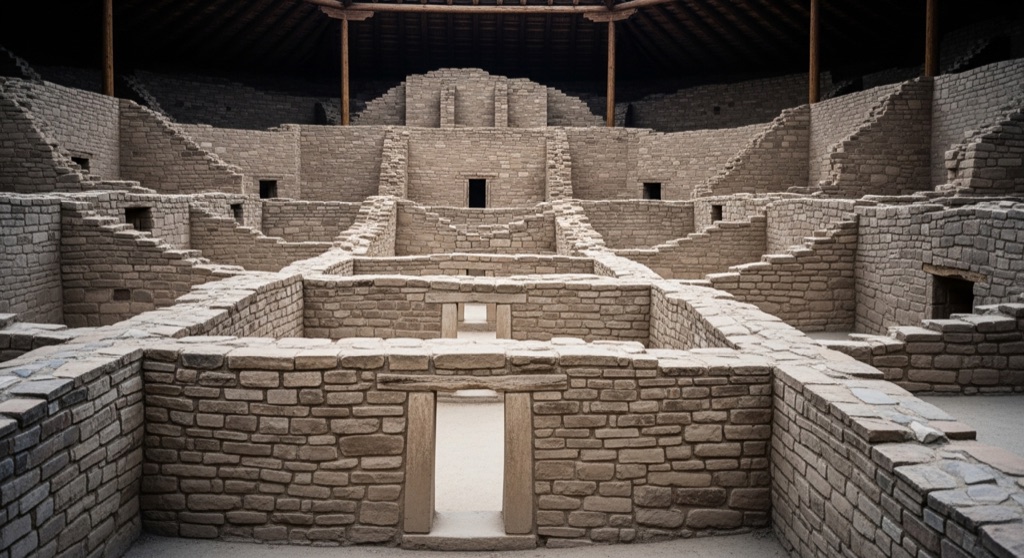 Aztec Ruins National MonumentOpen to visit
Aztec Ruins National Monument preserves a massive 12th-century Ancestral Puebloan community that was mistakenly named by 19th-century settlers who assumed the Aztecs built it. The site features the remains of Aztec West, a three-story great house that once contained over 500 rooms, and a fully reconstructed Great Kiva. Visitors can walk through original doorways and see 900-year-old wooden roof beams still intact.
Aztec Ruins National MonumentOpen to visit
Aztec Ruins National Monument preserves a massive 12th-century Ancestral Puebloan community that was mistakenly named by 19th-century settlers who assumed the Aztecs built it. The site features the remains of Aztec West, a three-story great house that once contained over 500 rooms, and a fully reconstructed Great Kiva. Visitors can walk through original doorways and see 900-year-old wooden roof beams still intact.
-
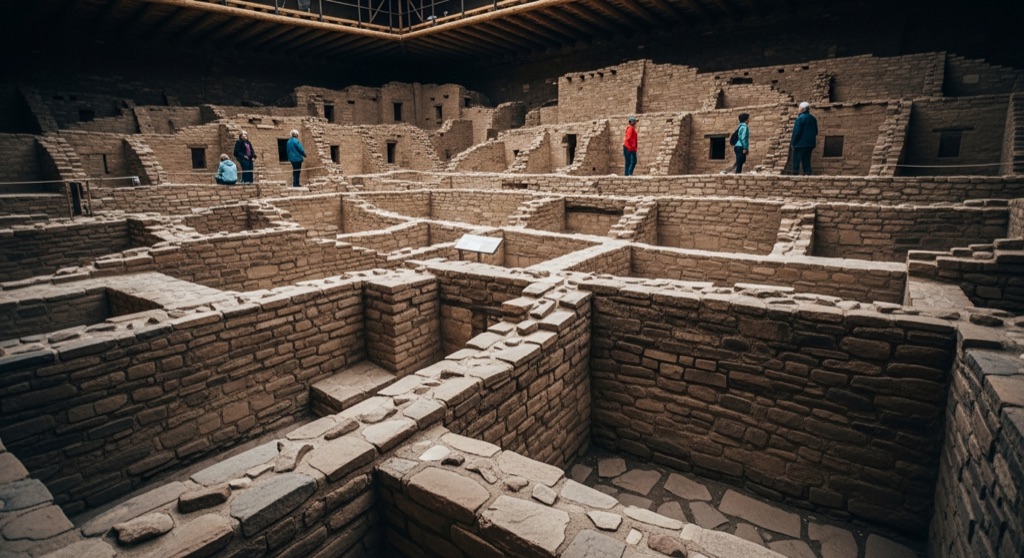 Aztec Ruins National Monument Visitor CenterOpen to visit
This site preserves a massive 900-year-old Ancestral Puebloan public, ceremonial, and residential center that was completely abandoned by 1300 AD. The archaeological site features the West Ruin, a great house with over 400 masonry rooms, original wooden roof timbers, and North America's largest reconstructed Great Kiva. Visitors can walk through the ancient interconnected rooms and passageways on a self-guided trail.
Aztec Ruins National Monument Visitor CenterOpen to visit
This site preserves a massive 900-year-old Ancestral Puebloan public, ceremonial, and residential center that was completely abandoned by 1300 AD. The archaeological site features the West Ruin, a great house with over 400 masonry rooms, original wooden roof timbers, and North America's largest reconstructed Great Kiva. Visitors can walk through the ancient interconnected rooms and passageways on a self-guided trail.
-
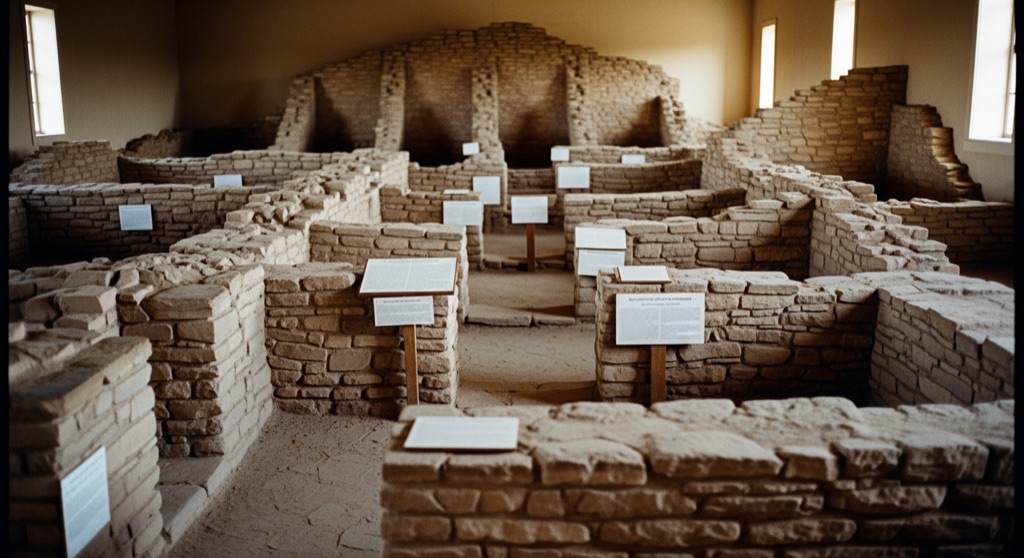 Salmon Ruins MuseumOpen to visit
Salmon Ruins is an ancient Chacoan great house built around 1090 CE by migrants from Chaco Canyon. The site originally featured a three-story pueblo with up to 300 rooms, an elevated tower kiva, and a great kiva, but it was destroyed by fire and abandoned in the 1280s. Today, visitors can walk among the excavated stone walls, explore the adjacent museum, and view the historic 19th-century Salmon family homestead.
Salmon Ruins MuseumOpen to visit
Salmon Ruins is an ancient Chacoan great house built around 1090 CE by migrants from Chaco Canyon. The site originally featured a three-story pueblo with up to 300 rooms, an elevated tower kiva, and a great kiva, but it was destroyed by fire and abandoned in the 1280s. Today, visitors can walk among the excavated stone walls, explore the adjacent museum, and view the historic 19th-century Salmon family homestead.
-
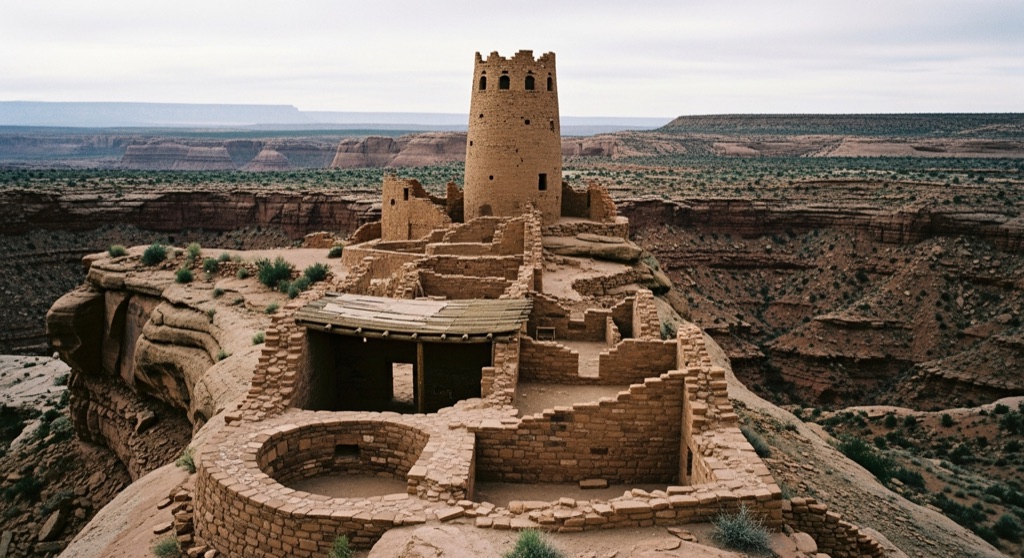 Frances Canyon RuinsOpen to visit
Dating back to the early 18th century, this remarkably preserved Navajo defensive site was built to protect the Diné people from Spanish and Ute raiders. The sandstone complex once contained roughly 40 rooms, including a prominent three-story stone tower perched dramatically on a canyon rim. Visitors can still see intact wooden roof beams, Spanish-style hooded fireplaces, and ancient rock art surrounding the ruins.
Frances Canyon RuinsOpen to visit
Dating back to the early 18th century, this remarkably preserved Navajo defensive site was built to protect the Diné people from Spanish and Ute raiders. The sandstone complex once contained roughly 40 rooms, including a prominent three-story stone tower perched dramatically on a canyon rim. Visitors can still see intact wooden roof beams, Spanish-style hooded fireplaces, and ancient rock art surrounding the ruins.
Abandoned places in Durango — FAQ
Is it legal to visit abandoned places around Durango?
It depends on the site, and each listing here says explicitly — with the reason. Of the 26 with a verified access status: 14 are legal to enter (like Fort Peabody Ruins (Imogene Pass) and Ophir Town & Post Office), 10 are view-only from public land or roadside, and 2 are private property or genuinely unsafe — those are marked "do not enter" rather than romanticised.
Which abandoned & forgotten places in Durango are the strangest?
Ranked by how strange they actually are: Alta Ghost Town, Rico Mine Shaft Inn and Ophir Town & Post Office. Alta Ghost Town — Perched at 11,800 feet above sea level in a tight alpine basin south of Telluride, Alta operated from 1877 until a mill fire ended it in 1948.
Where in Durango are they?
Across Ouray, Durango, Ophir, South Fork / Creede and Cortez (Canyons of the Ancients NM) and 17 more. Each listing gives the neighborhood and address so you can cluster a couple into one outing.
Are any of the abandoned & forgotten places in Durango free?
Yes — 23 are free to visit, including Yankee Girl Mine Headframe, Fort Peabody Ruins (Imogene Pass) and Wheeler Geologic Area. The rest are mostly low-cost.
Is this a good weird date in Durango?
That's what the list is built for. Every entry has a specific move rather than a vague recommendation — at Alta Ghost Town, for instance: Drive the rough Alta Lakes Road together, park among the ruins, and wander the boardinghouse and scattered cabins at 11,800 feet. Pack a lunch and eat where miners once slept. Continue the extra mile to Alta Lakes if your vehicle can handle it.
How were these abandoned & forgotten places chosen?
An agentic research system digs for the genuinely obscure — the spots even locals miss — and every one is verified against real sources before it makes the list. We deliberately skip the landmarks already on every Durango guide.