Entry No. 62 — the Jacksonville & Mayport file — filed under: miscellanea
Durkeeville History Museum
This neighborhood-scale museum preserves the history of Durkeeville, one of Jacksonville’s historic Black neighborhoods. The same historical society runs the nearby museum devoted to the J.P. Small ballpark.
→ Three more unusual museums & collections in Jacksonville & Mayport — never the same twice
The story
Durkeeville did not happen by accident. In the mid-1930s, after civic leaders like Abraham Lincoln Lewis and humanitarian Eartha M.M. White documented the grim living conditions forced on Black residents in neglected pockets of Jacksonville—where families lived without running water or sealed windows—federal New Deal funding backed the construction of a planned Black residential community. Built between 1936 and 1937, Durkeeville quickly grew into a self-sustaining middle-class enclave of brick homes, bustling churches, and neighborhood schools like Stanton High, insulated from the hostile Jim Crow apparatus operating just beyond its perimeter.
While institutional downtown museums tend to flatten local Black history into broad regional brushstrokes, the Durkeeville History Museum—founded by Dr. Carolyn Williams and stewarded by the Durkeeville Historical Society—operates at eye level. Housed in an unassuming neighborhood building on West 19th Street, it is an archive built almost entirely out of attics, family cedar chests, and kitchen drawers. Instead of sterile didactic panels behind ropes, you get dense, floor-to-ceiling clusters of neighborhood artifacts: personal wedding portraits, high school football pennants, and handwritten notes preserving local luminaries like songwriter Charles 'Hoss' Singleton (who co-wrote 'Strangers in the Night').
The museum also holds the domestic flip side of Jacksonville's athletic lore. When a nineteen-year-old Hank Aaron arrived in 1953 to play for the Jacksonville Braves—enduring daily death threats as he, Félix Mantilla, and Horace Garner integrated the South Atlantic League—he could not sleep in downtown hotels. Aaron lived right here with a family in Durkeeville, walked to nearby Durkee Field for games, and met his future wife, Barbara Lucas, in the neighborhood. That unvarnished, residential scale is what the society preserves before outside developers rebrand the streets.
What it's like
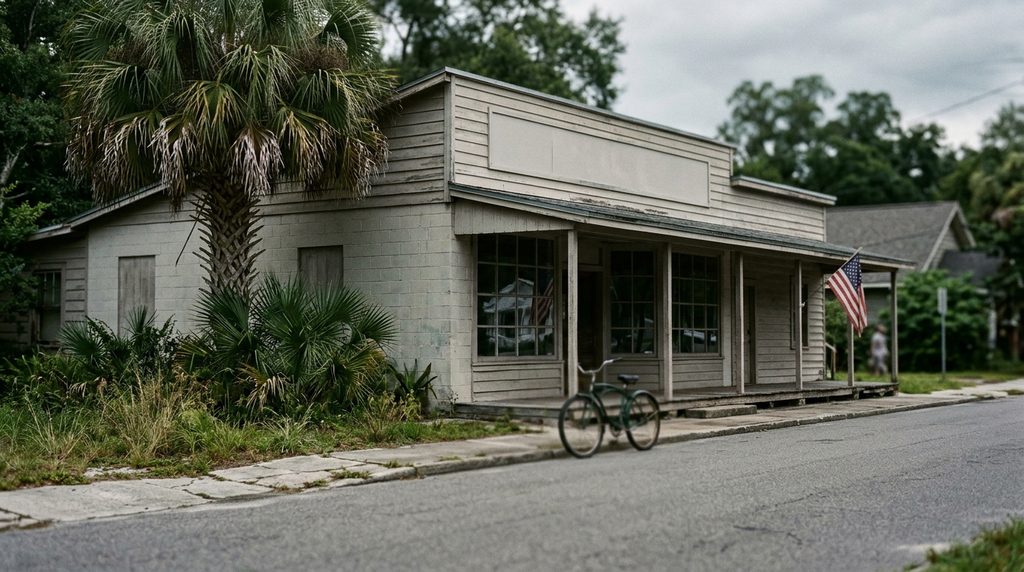
Do not look for a museum marquee or ticket booth; you are pulling up to a modest, domestic-scale structure on West 19th Street that looks like a neighborhood outpost. Inside, the rooms are packed elbow-to-elbow with framed photographs, vintage school uniforms, and metal file drawers filled with scrapbooks you can gently leaf through. You will almost certainly be greeted directly by one of the society's officers—such as longtime president Lloyd Washington—who treat visitors like guests in a family parlor rather than museum patrons. If you arrive with children, local tradition means they will not walk out empty-handed; the society makes a point of giving every kid a free book. Drop-in public hours are extremely sparse (traditionally limited to mid-day on Saturdays and select weekday afternoons), so call ahead to verify someone is on site before you drive out.
The move: Find the house-sized museum on West 19th Street, take a close look at the vintage school uniforms, then gently leaf through the neighborhood scrapbooks together.
- 📍 Durkeeville, Jacksonville
- 💸 $
- ⚡ Up for anything
- 🌗 Indoors
Where: 1293 West 19th Street, Jacksonville, FL 32209
Hours: Added 2026-11-17 — confirm current hours before you go.
Pair it with
- J.P. Small Memorial Park Baseball Museum — Run by the exact same historical society just four-tenths of a mile away, this grandstand museum covers Durkee Field's Negro League history and the season Hank Aaron integrated baseball in the Deep South.
- Spiritual Lighthouse Church — A five-minute drive southeast leads to Jacksonville's only surviving Spiritualist church, offering a very different kind of grassroots community sanctuary founded in the 1920s.
- Old City Cemetery of Jacksonville — Two miles east, this 1852 burial ground preserves Jacksonville's stark historic racial divide across walled, segregated burial plots dating from the Civil War through the 1901 Great Fire.
More weird in Jacksonville & Mayport
Good to know
How much does admission cost?
Admission is free, though donations to help the volunteer-run Durkeeville Historical Society keep the lights on are customary and appreciated.
When is the museum open?
Public drop-in hours are typically limited to Saturdays from roughly 12:00 p.m. to 3:00 p.m., with sporadic weekday afternoon availability. Because the facility is entirely volunteer-staffed, call (904) 598-9567 in advance to ensure the doors are unlocked.
Is this the same place as the J.P. Small ballpark museum?
No, but they are siblings. The baseball museum is located four-tenths of a mile away inside the historic J.P. Small grandstands on Myrtle Avenue; this West 19th Street site serves as the historical society's primary neighborhood archive.
Can I donate family items or research local genealogy here?
Yes. Much of the museum's permanent collection came directly from current and former Durkeeville families donating portraits, yearbooks, and ephemera. Staff frequently help visitors trace neighborhood roots through their localized photo albums and school rosters.
Plan a visit & invite your people →
Further reading: thejaxsonmag.com · visitjacksonville.com · jaxdailyrecord.com · news4jax.com · unfspinnaker.com · Official site
last checked: 2026-11-17