Entry No. 49 — the London, UK file — filed under: miscellanea
British Optical Association Museum
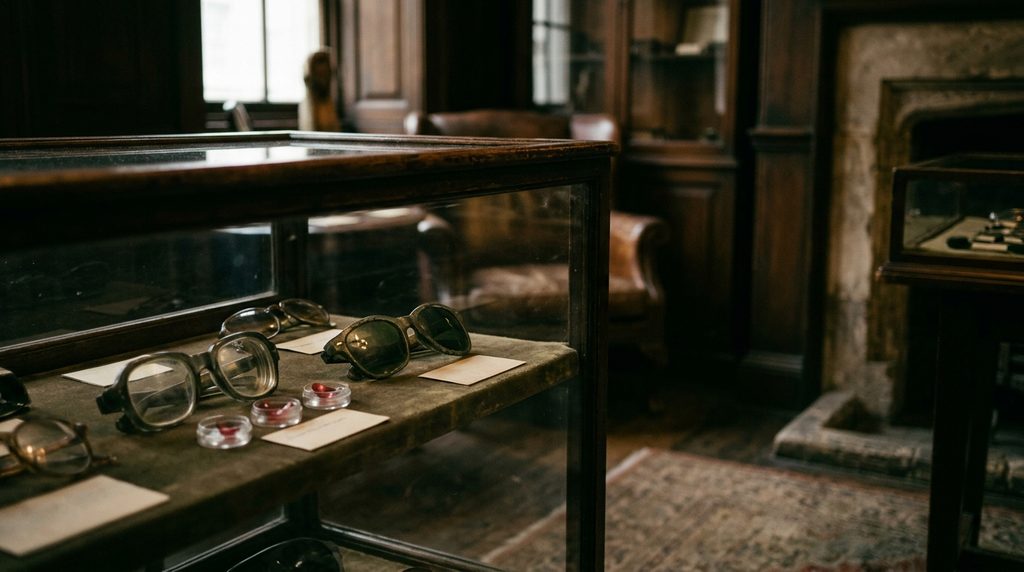
This appointment-only townhouse museum of optical curiosities has Ronnie Corbett’s spectacles, a Venetian gondolier’s sunglasses and contact lenses used to stop chickens fighting.
→ Three more oddity shops & curiosities in London, UK — never the same twice
The story
Ring the brass buzzer at number 42 Craven Street—a discreet 1730s Georgian townhouse tucked into the narrow slipway behind Charing Cross station—and you are entering the oldest optical museum in the world. Founded in 1901 by J. H. Sutcliffe under the British Optical Association, the collection holds upwards of 28,000 items tracking humanity's battle against failing eyesight. Since 1980 it has been under the stewardship of the College of Optometrists, who maintain the townhouse as working professional headquarters where clinical offices sit directly above centuries of spectacle craft.
The archive avoids dry institutional pedantry by leaning into genuine oddity and historical vanity. Alongside Samuel Johnson’s heavy 1784 reading glasses and 18th-century green-tinted Venetian gondolier shades designed to stop water glare, the vitrines house aluminum poultry spectacles—literally clipped to chickens to keep aggressive birds from gouging out their coop-mates' eyes. You will find early hand-blown glass contact lenses that covered the entire eyeball, wax and plaster models of ocular diseases, spectacles crafted from Thames-mudlarked bullets, and Ronnie Corbett’s trademark heavyweight frames displayed not far from sunglasses worn in The Matrix.
What it's like
This is strictly an appointment-only affair; knock on the door without a booking and you will be turned away. You are buzzed into an austere Georgian foyer, met by museum curator Dr. Neil Handley or a guide, and led downstairs into the compact Giles and Sutcliffe rooms for a private, hour-long tour. The atmosphere is quiet, academic, and deeply personal, with zero museum crowds jostling for a glimpse into the display cases. Standard cellar tours are free, but you should request your weekday slot via their online form at least two weeks out.
The move: Book your tour, ring the brass buzzer at 42 Craven Street and head downstairs together to compare a Venetian gondolier’s green-tinted shades with the aluminium spectacles made for chickens.
- 📍 Charing Cross
- 💸 $
- ⚡ Up for anything
- 🌗 Indoors
Where: 42 Craven Street, London WC2N 5NG
Hours: Added 2026-11-18 — confirm current hours before you go.
Pair it with
- Gordon's Wine Bar — A one-minute walk down to Watergate Walk lets you trade sterile optical history for a candlelit bottle in London's oldest underground wine cellar.
- Farting Lane — Stroll five minutes east behind the Savoy to inspect London's last operating Victorian sewer gas destructor lamp burning round the clock.
- Hunterian Museum — Walk fifteen minutes north to Lincoln's Inn Fields to continue the clinical rabbit hole among thousands of John Hunter's anatomical specimens preserved in glass jars.
More weird in London, UK

Good to know
Can I visit without an advance booking?
No. The museum is housed inside working professional offices and is accessible strictly via pre-booked guided tours.
How much does admission cost?
The standard one-hour tour of the museum display rooms is free of charge, though donations are encouraged. An extended two-hour tour covering the upper Georgian meeting rooms is £10 per person.
When is the museum open?
Tours run Monday through Friday from 10:00 am to 4:00 pm (last entry). It is closed on weekends, barring rare open days during the annual London Open House Festival.
How do I book a tour?
Submit a request through the tour form on the College of Optometrists website or email [email protected] with your preferred weekday dates.
Plan a visit & invite your people →
Further reading: theguardian.com · Wikipedia · londonist.com · ianvisits.co.uk · college-optometrists.org · livinglondonhistory.com
last checked: 2026-11-18