Entry No. 60 — the London, UK file — filed under: miscellanea
Pimlico Priapus
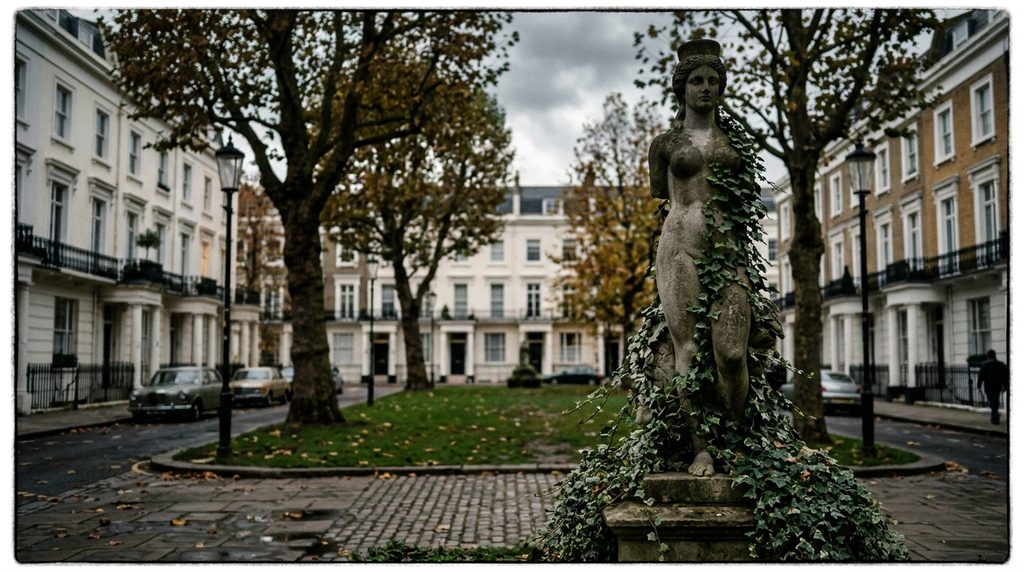
A surreal, sanitized rendering of a Greek fertility god looks over a residential square.
→ Three more weird outdoor & roadside oddities in London, UK — never the same twice
The story
When the former Rochester Row police station at 68 Vincent Square was redeveloped into upscale apartments in 2007, planning obligations required the developers to include a work of public art. Neoclassical architect John Simpson tapped Scottish sculptor Alexander Stoddart for the commission. Looking out across the street at the massive, gated sports fields of Westminster School and the nearby headquarters of the Royal Horticultural Society, Stoddart settled on an unexpected ancient protector: Priapus, the Greco-Roman god of gardens, orchards, viticulture, and apiculture.
In antiquity, Priapus was traditionally carved as a herm—a tapering pillar topped with a bearded head, complete with gardening tools and a famously outsized, erect phallus designed to ward off thieves and guarantee fruitful harvests. Stoddart faithfully sculpted the ancient archetype, crowning the god in grapevine tendrils, handing him pruning shears and finger cymbals, and detailing the bronze post with crawling bees and exposed bare feet. But Westminster residential planning was never going to approve the god's most celebrated anatomical feature. Rather than fight an inevitable obscenity complaint, Stoddart cast the phallus separately and tucked it into a drawer in his studio in Scotland, later railing to the press about a culture comfortable with modern street vulgarity that could not bear a classical garden god.
What stands on the Vincent Square pavement is an exercise in dry neoclassical satire. Chiseled across the bronze torso is an English translation from Virgil's Eclogues: 'Now we have raised thee Priapus of bronze, such as the times admit; but if births make full the flock, then you shall be of gold'. It is a permanent inside joke hiding in plain view—a fertility god stripped of his fertility, perpetually supervising schoolboy cricket matches across an English lawn.
What it's like
Vincent Square is a quiet, leafy residential quadrant buffered from the roar of Vauxhall Bridge Road, usually deserted except for dog walkers and Westminster School groundskeepers. Priapus stands on a low pedestal flush against the railings outside Number 68, just south of Vane Street. There are no interpretation panels or tour markers, so you can walk right up to examine the fine detail: bronze snails and honeybees creeping down the pillar shaft, the clunky garden shears tucked in his right hand, and the conspicuously blank, flat patch where antiquity demanded something entirely different.
The move: Stroll through quiet Vincent Square to inspect the bronze statue of Priapus flush against the apartment railings, examining the ancient fertility god crowned in sculpted grapevine tendrils.
- 📍 Pimlico, London
- 💸 Free
- ⚡ Up for anything
- 🌗 Outdoors
Where: 68 Vincent Square, London SW1P 2PA
Hours: Added 2026-11-18 — confirm current hours before you go.
Pair it with
- Garden Museum — Cross Lambeth Bridge to follow Priapus's horticultural patron role to this deconsecrated church, where garden tools sit alongside an eccentric permanent collection.
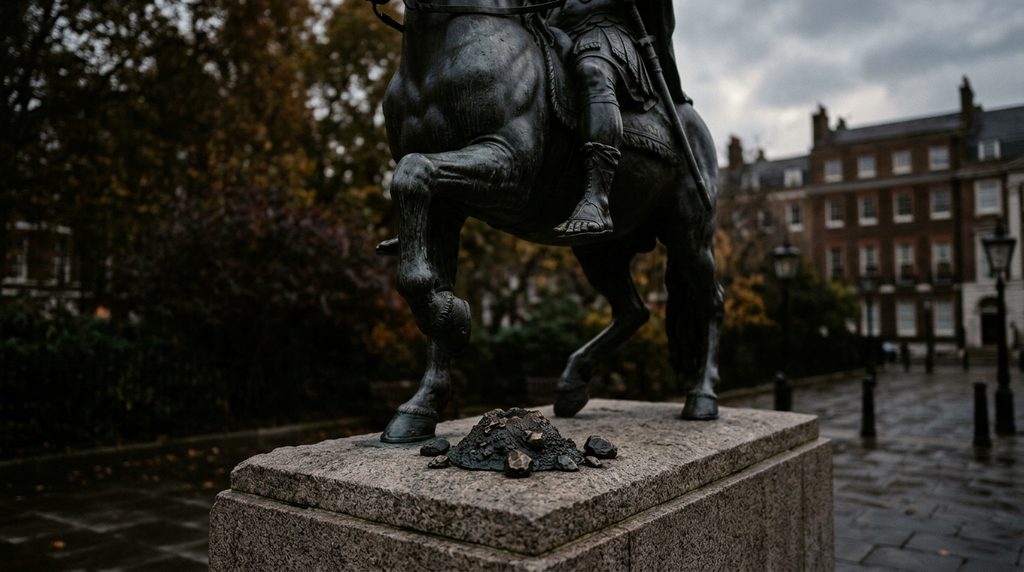
- The Molehill on the Equestrian Statue of William III — Walk north to St James's Square for another neoclassical London bronze that conceals a subversive punchline at its base.
- Giro, the Nazi Dog’s Grave — Head ten minutes north toward Carlton House Terrace to track down another outdoor oddity hiding in Westminster's most dignified corners.
More weird in London, UK
Good to know
Who created the statue and when?
It was sculpted by Scottish neoclassical artist Alexander Stoddart and installed in 2007 as the required public art component for the 68 Vincent Square housing development.
Why is Priapus missing his defining physical trait?
Alexander Stoddart anticipated objections from local council planners and chose not to attach the cast bronze phallus, keeping it locked away in a drawer in his studio instead.
What does the inscription on the front mean?
It quotes Virgil's Eclogue VII: 'Now we have raised thee Priapus of bronze, such as the times admit; but if births make full the flock, then you shall be of gold'—a poetic lament on modern modesty and modest budgets.
Is the statue accessible to the public?
Yes. It stands directly on the public sidewalk outside 68 Vincent Square and can be visited freely at any time of day or night.
Plan a visit & invite your people →
Further reading: Atlas Obscura · ianvisits.co.uk · photo12.com · telegraph.co.uk
last checked: 2026-11-18